Email
WhatsApp

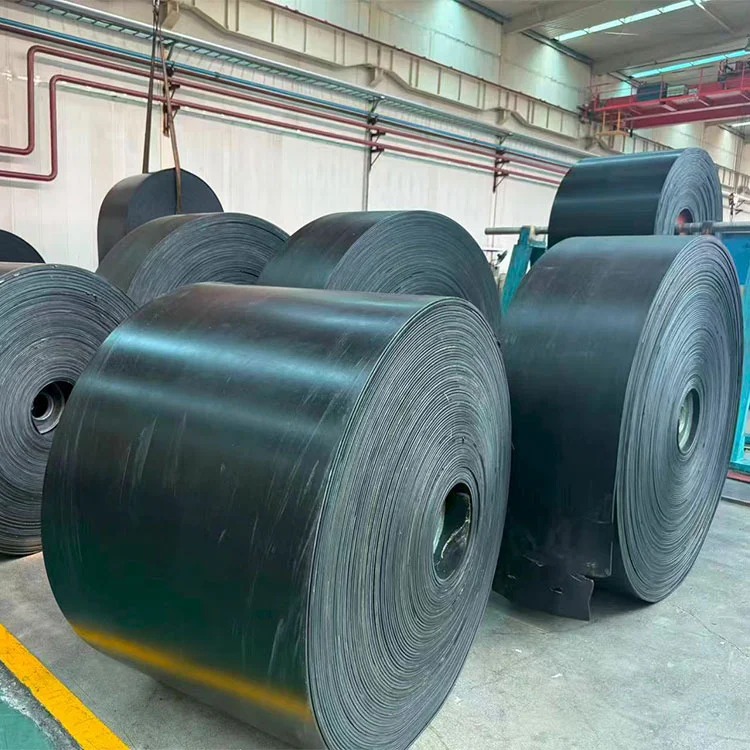
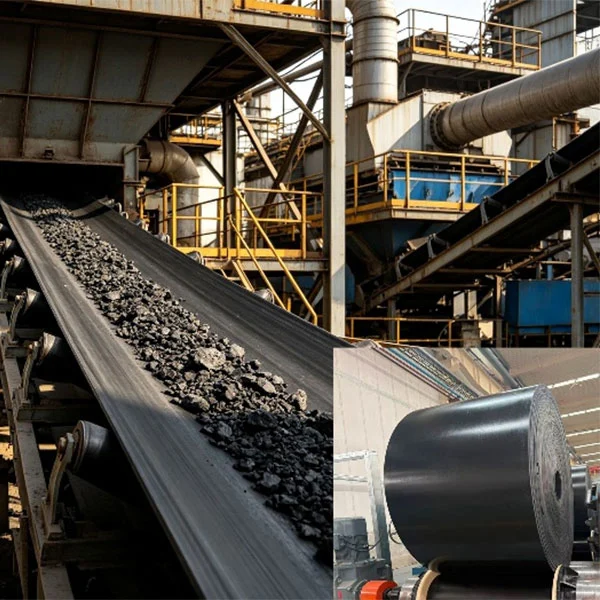
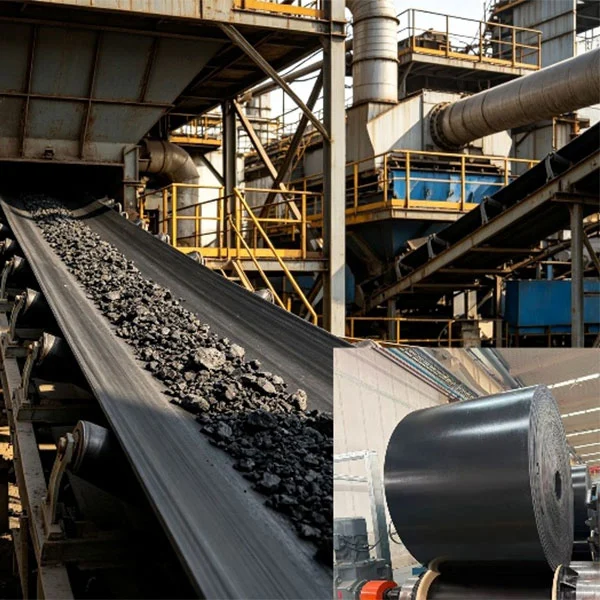
Flame resistance limits how far a fire travels along the belt. It does not make the belt fireproof. That distinction matters in coal-fired plants, where belts run through enclosed galleries, transfer towers and bunker areas where an ignition source and a combustible load can occupy the same space. This flame resistant conveyor belt for power plants pairs a flame-retardant cover with a fabric carcass sized to the conveyor, and the flame test method is agreed in writing before production starts.
Cover compound: flame-retardant rubber is specified to a named test method—ISO 340, MSHA 30 CFR Part 14, GB/T 10822 or the plant's own specification. The same cover has to survive coal abrasion and impact at the loading point, so compound and thickness are selected for both duties together. A cover that passes the flame test but wears through in eighteen months has not solved the plant's problem.
Carcass: EP, NN and EE constructions are available. The choice follows conveyor tension, pulley diameters, trough transitions and splice type, not the flame requirement. A belt that meets the flame test but is under-strength for the duty fails early for reasons that have nothing to do with fire.
Static and temperature: antistatic performance (surface resistance to ISO 284) and heat resistance are separate properties from flame resistance and are confirmed separately where the plant requires them. Temperature limits are always quoted against a stated basis—ambient, material or belt surface—because −30°C to +100°C means something different under each.
Splice: a vulcanised joint carries the same flame requirement as the belt body. Splice material, step length and cure data are supplied with the order, so the joint does not become the finding in a site inspection.
| Item | Specification |
| Product Name | Flame Resistant Conveyor Belt for Power Plants |
| Cover Compound | Flame-retardant rubber; grade and acceptance limits agreed per order |
| Flame Test Method | ISO 340 / MSHA 30 CFR Part 14 / GB/T 10822, or the plant specification |
| Antistatic Performance | Optional; surface resistance to ISO 284, tested separately from flame resistance |
| Fabric Carcass | EP, NN or EE; type, ply count and strength selected for duty |
| Belt Width | Matched to throughput, lump size and conveyor layout |
| Operating Temperature | −30°C to +100°C for suitable grades; temperature basis confirmed in writing |
| Cover Thickness | Selected for coal abrasion and transfer-point impact |
| Test Records | Flame, adhesion, tensile and elongation data supplied per batch |
| Standard Lead Time | 25–30 days |
| Certification | ISO 9001, ISO 14001, ISO 45001, MA coal safety certification |
| Item | What It Means in Service |
| Flame Propagation Resistance | Cover compound is tested to the agreed method, and the report goes out with the batch—so the flame claim can be checked by the plant, not taken on trust. |
| Antistatic Option | Surface resistance to ISO 284 is measured on the finished belt where specified. Flame resistance and antistatic performance are separate tests and are reported separately. |
| Fabric Reinforcement Choice | EP, NN and EE constructions let the belt be matched to actual tension, elongation behaviour, impact and pulley arrangement instead of a stock specification. |
| Coal Handling Wear Protection | Cover thickness and compound are chosen against coal abrasion and loading impact together, which is where most belt cost is actually spent. |
| Dimensional Consistency | Automated cutting and vulcanisation hold width and length tolerance, which keeps tracking stable and splice preparation predictable on site. |
| Batch Traceability | Every roll carries a batch number linked to its test records, so a disputed roll can be traced back to compound batch and test data. |
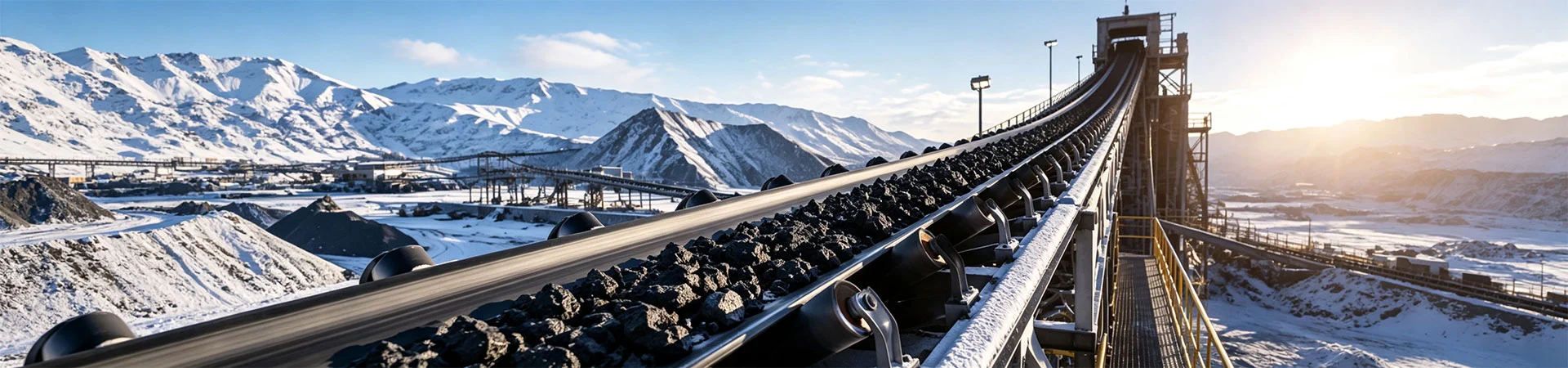
Coal receiving: belts moving coal from unloading hoppers and receiving stations into the fuel-handling network, where impact at the discharge point usually sets the cover specification.
Stockyard transfer: stacker, reclaimer and yard conveyors, where covers are selected for coal abrasion, site exposure and the maintenance access actually available.
Crushing, screening and bunker feeding: transfer belts between size-reduction stages and storage bunkers upstream of the fuel preparation system, including enclosed galleries where flame propagation is the governing risk.

Engineering support: belt strength assessment, tension calculation and review of transfer impact, pulley geometry and splice requirements. The service scope is defined per project, so it is clear what is included and what is not.
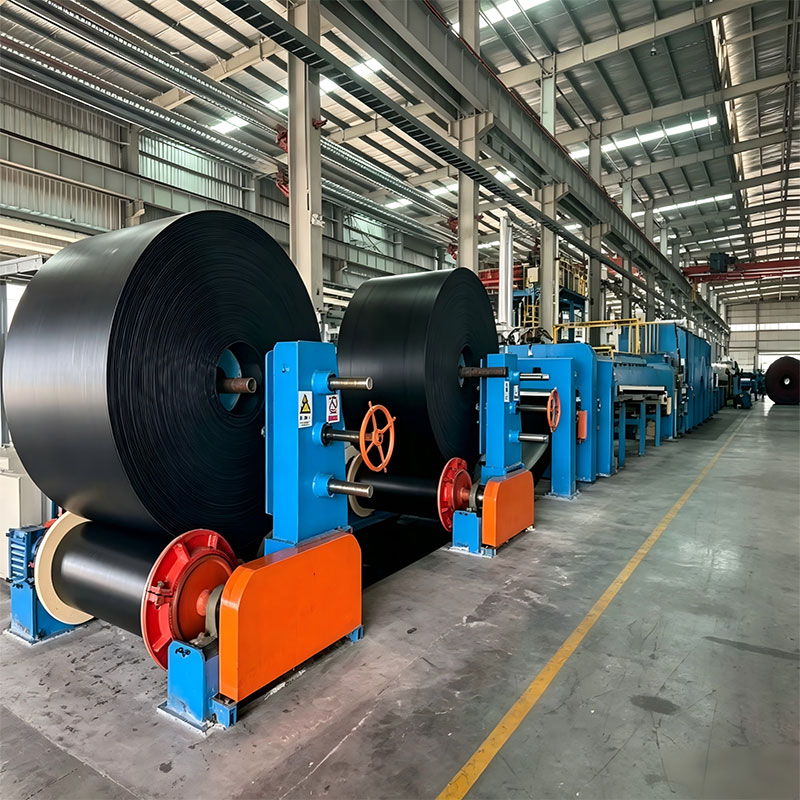
Manufacturing base: production runs across four domestic branches and an overseas plant in Thailand, with 660,000 m² of manufacturing area, 24 workshops and more than 100 production lines operated by 1,300+ staff. Annual capacity of 21 million m² absorbs project volumes without pushing the lead time, and products are already exported to more than 50 countries.
R&D and testing: a 36-person engineering and research team works on flame-retardant and wear-resistant rubber formulations, supported by more than 20 manufacturing patents. The in-house laboratory runs DIN abrasion, servo-controlled tensile, ozone resistance, low-temperature, Mooney viscometer and rotorless rheometer testing—flame, adhesion and tensile data therefore come from equipment we control, not a third-party queue.
Compliance and documentation: applicable DIN, ISO or GB/T requirements and the flame test method are written into the technical agreement. Mechanical, adhesion and flame-performance records, plus antistatic results where ordered, form part of the delivery documentation.
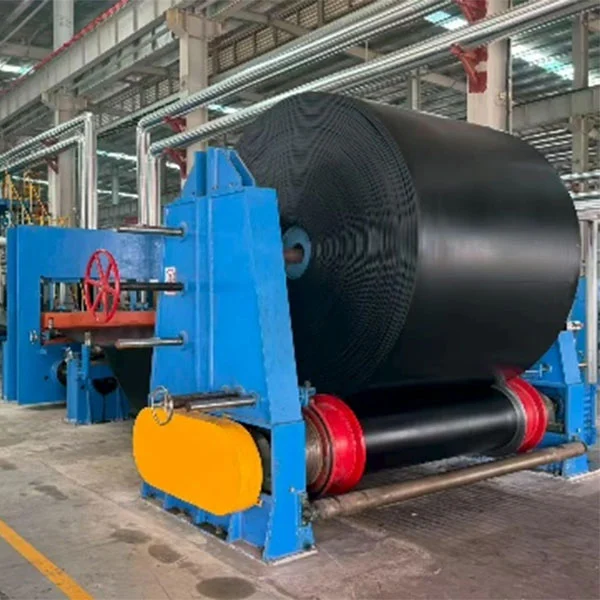
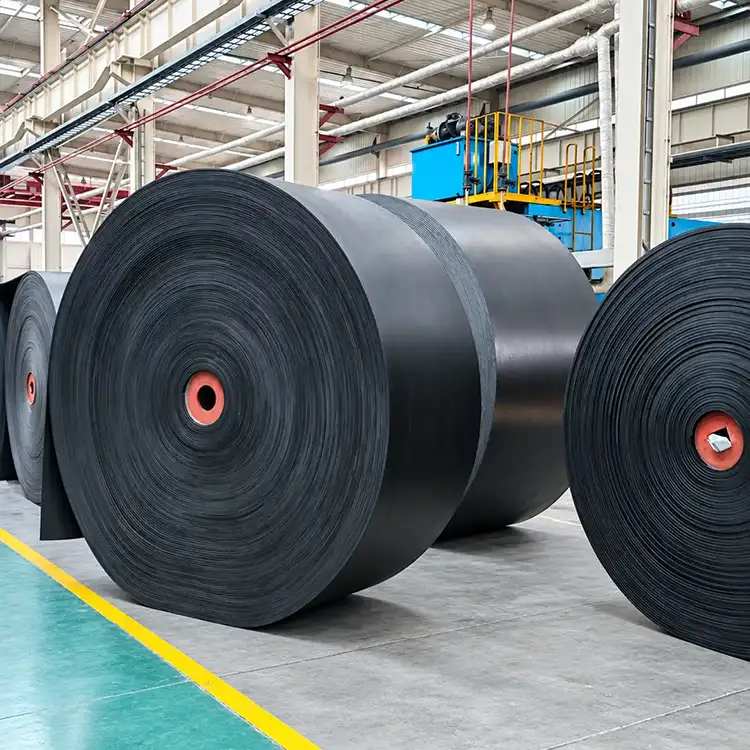
Production and inspection: carcass construction, flame-retardant covers and dimensions are specified for the fuel-handling duty. Pre-shipment checks cover dimensions, appearance and the agreed mechanical and flame tests, with batch traceability defined in the order.
Flame performance defined in writing: the plant's requirement is converted into a named test method and measurable acceptance limits for the selected cover and carcass combination, so acceptance is not left to interpretation.
Selection around the conveyor, not the catalogue: coal flow, tension, transfer-point conditions and route layout decide the construction of this flame resistant conveyor belt for power plants, from receiving through stockyard to bunker feeding.
Test data from our own laboratory: flame, adhesion, tensile and abrasion results are produced in-house and shipped with the batch, which shortens supplier audits and settles disputes with records rather than opinion.
Auditable supply chain: ISO 9001, ISO 14001 and ISO 45001 certification, MA coal safety certification, a Thailand production base and 21 million m² annual capacity give procurement a documented chain to verify.

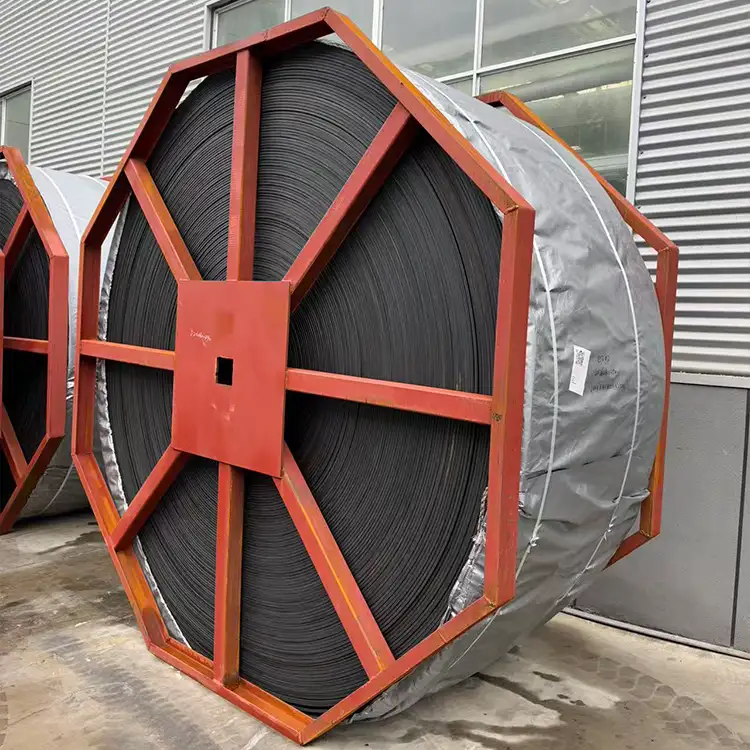
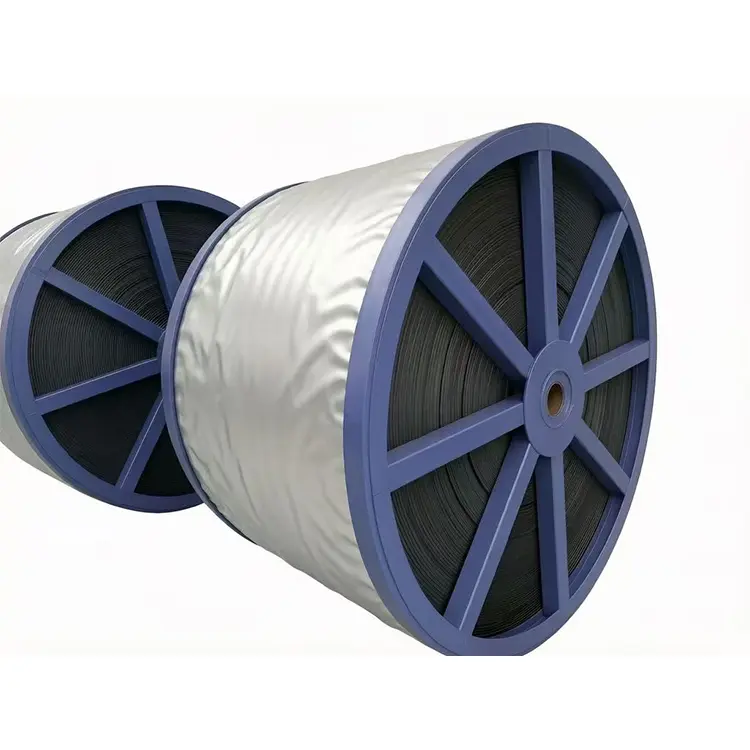
Roll protection: protective wrapping suitable for transport and storage. Rolls are stored away from ignition sources, direct sunlight, standing water and incompatible chemicals.
Handling arrangement: reel or support structure, lifting method and allowable roll dimensions are agreed in advance to suit shipment and site access.
Identification: roll labels show the order reference, belt specification, roll length and traceable batch or roll number.
Transport securing: blocking and securing are specified to prevent roll movement and damage in transit.
A1: No. Flame resistance limits flame propagation under the specified test conditions. It does not prevent every ignition scenario and does not replace fire detection, suppression, housekeeping or safe operating procedures. Any supplier claiming otherwise is overstating the product.
A2: No, these are three separate properties. Where the plant needs heat resistance or electrical conductivity, they are specified and tested separately, and the belt has to satisfy each one on its own evidence.
A3: From conveyor load, tension, impact, elongation behaviour and pulley arrangement. The flame requirement does not decide carcass type, and selecting on temperature or flame alone usually leads to a belt that is either over-specified or under-strength.
A4: It depends on the stated basis—ambient, material or belt surface temperature. Confirm which basis applies and what the allowable exposure is for the proposed grade, rather than treating the range as a universal limit.
A5: Flame, adhesion, tensile and elongation records are supplied per batch as agreed in the technical annex, with antistatic results added where ordered. Standard lead time is 25–30 days; larger project volumes are scheduled against the 21 million m² annual capacity across the domestic branches and the Thailand plant.
Address
Nancun Industrial district, Qingdao, Shandong, China
Tel