Email
WhatsApp

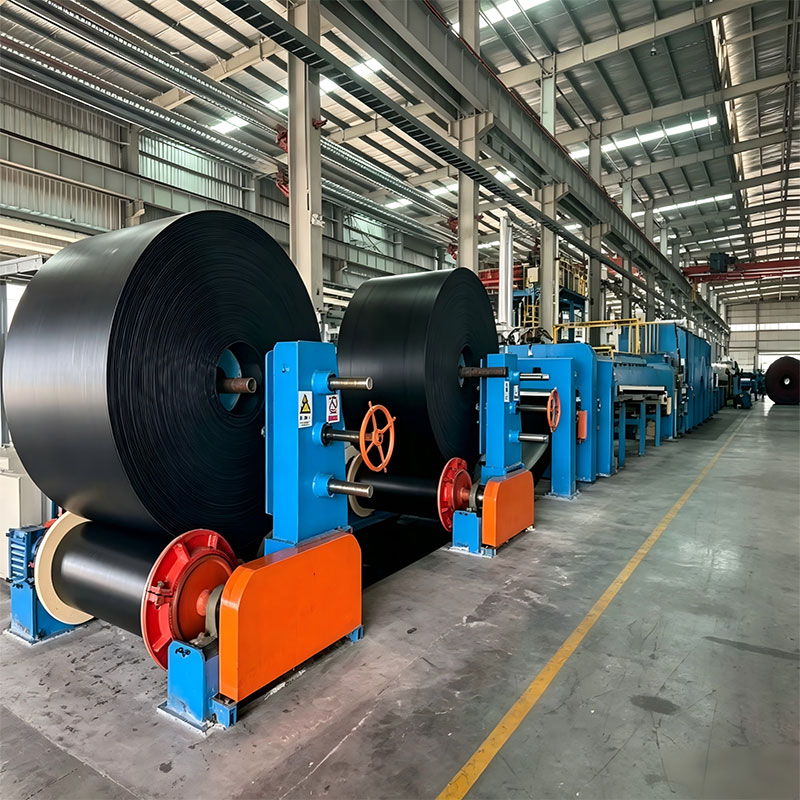
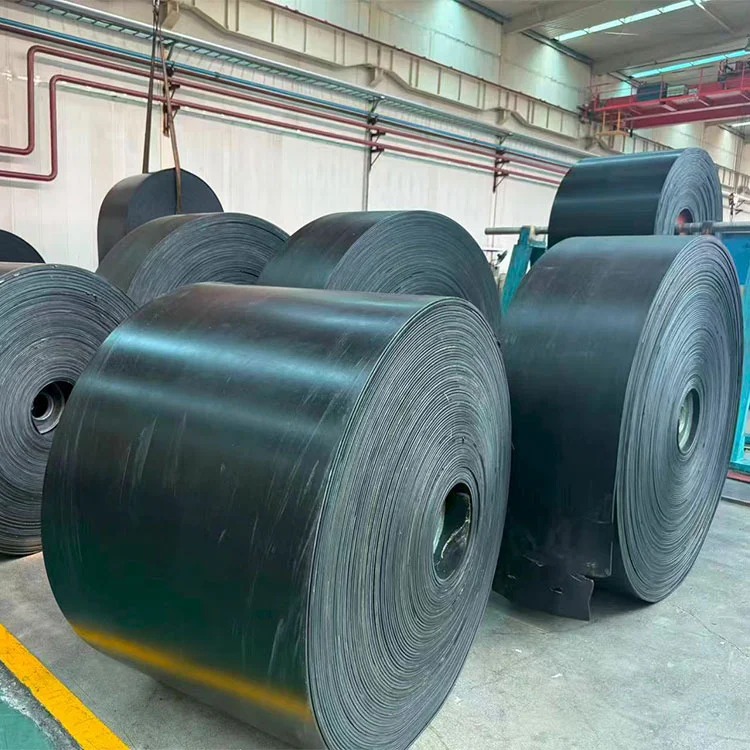
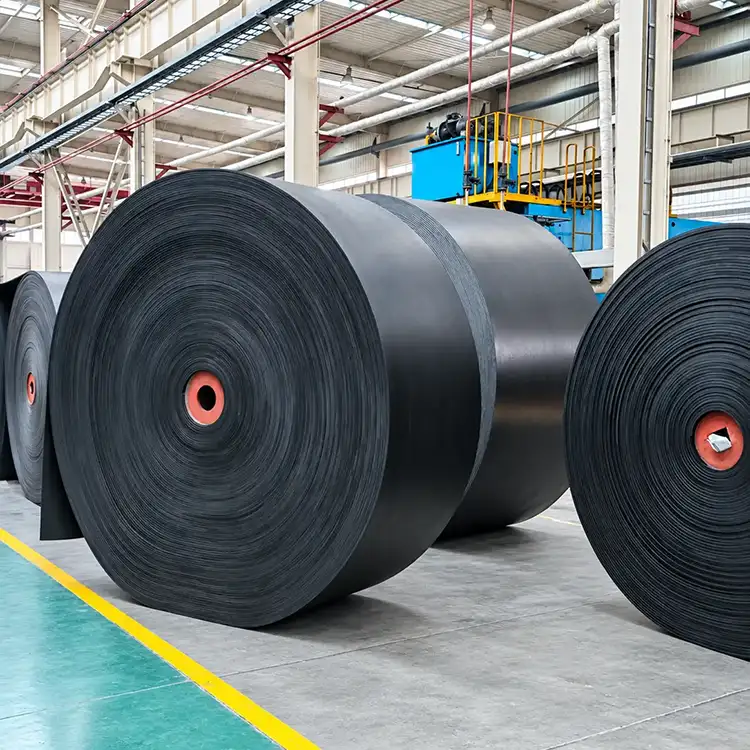
Qingdao Global Belting Group Co., Ltd. is a conveyor belt manufacturer, supplier and exporter working from our own factory in Qingdao, China. The fire resistant conveyor belt for coal mine shown on this page is produced to the fire-performance requirements agreed with the buyer, then documented so it can be checked line by line against the mine specification before it ships.
Most buyers arrive here with a belt marking, a tender document or a sample cut from the belt currently in service. We read it, confirm which construction and which test evidence apply, and quote against it. If something is missing, we say what is missing rather than guess.
Six points decide the price and lead time on a coal mine order. Send them and the quotation can be issued without a second round of questions.
Standard cover grades from our flame resistant conveyor belts range are usually available for short lead times; anything tied to a specific mine approval is scheduled after the documents are agreed.
Flame retardance is not one additive stirred into one layer. It sits in the cover compound, in the bonding layers between plies, and in the splice material, and all three have to be consistent with each other. Producing them under one quality plan in the same factory is what keeps that consistency.
The cover carries the flame-retardant package and absorbs the coal abrasion. Grade and thickness are chosen together, because a thicker cover for wear resistance changes the fire performance and the belt weight.
The carcass carries tension and holds the belt together under impact at the loading point. Adhesion between plies is controlled during calendering and vulcanising, not inspected afterwards.
Splice design follows the construction. A splice made with incompatible material can undo the fire performance of the belt body, so splice stock is quoted with the belt rather than sourced later.
Fire resistance is a tested performance property, not a guarantee that a belt cannot burn. Underground use requires the appropriate construction, the correct electrical safety properties and valid documentation for the specific mine and market.
Start with four questions: above ground or underground, destination country, mine specification, and atmosphere classification. Then confirm the fire and electrical resistance tests required for the complete belt. Underground suitability cannot be inferred from a flame test or from a cover description alone.
After that comes the mechanical side: coal size, moisture, abrasion, capacity, belt speed, loading impact and conveyor tension. Heat resistance and oil resistance are separate properties and are quoted separately — high-temperature duties are covered under our heat resistant conveyor belts.
Construction usually narrows to multi-ply EP or NN fabric, solid-woven PVC/PVG, or steel cord. On long overland runs with high tension, steel cord conveyor belts reduce the number of splices in the line; on shorter transfer runs, EP conveyor belts are usually sufficient. Both can be supplied with flame-retardant covers.
A flame test result applies to the construction that was tested. If the cover grade, ply count, or splice design changes after approval, the test evidence has to change with it.
|
Item |
Specification |
|
Construction |
Selected for the coal duty and required safety documentation |
|
Belt strength |
Specified in N/mm against calculated conveyor tension |
|
Width and length |
Specified for the conveyor; confirm available dimensions |
|
Covers |
Grade and thickness selected for fire performance and wear |
|
Fire performance |
Required test methods and acceptance criteria agreed for the mine |
|
Electrical properties |
Confirm the required electrical resistance criteria and reports |
|
Splice |
Construction-specific design with compatible materials |
|
Documentation |
Confirm applicable test reports and mine or market approvals |
Selected against the required test criteria for the whole belt, cover and carcass together.
Cover grade is matched to coal and the associated abrasive material on the line, not to a generic standard.
Belt strength and roll dimensions are set against the conveyor design instead of a stock size.
Reviewed at the same time as the belt specification, so approval covers what is actually installed.
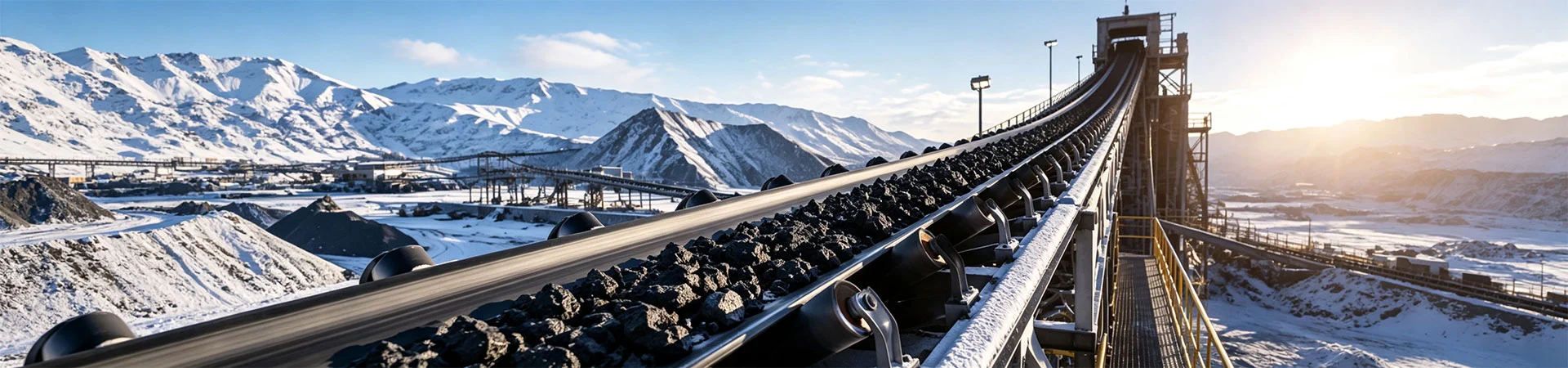
Coal transfer within underground workings, only where the supplied construction and documentation satisfy the applicable mine and market requirements.
Moving coal between extraction, crushing and storage areas where the site specification requires flame-retardant belting.
Conveying suitable coal streams through screening, washing and transfer operations. Moisture, wear and the site's fire-safety specification are reviewed together.
Transferring coal between storage, reclaiming and loading systems. Enclosed-conveyor requirements and the specified belt safety category are confirmed at quotation.
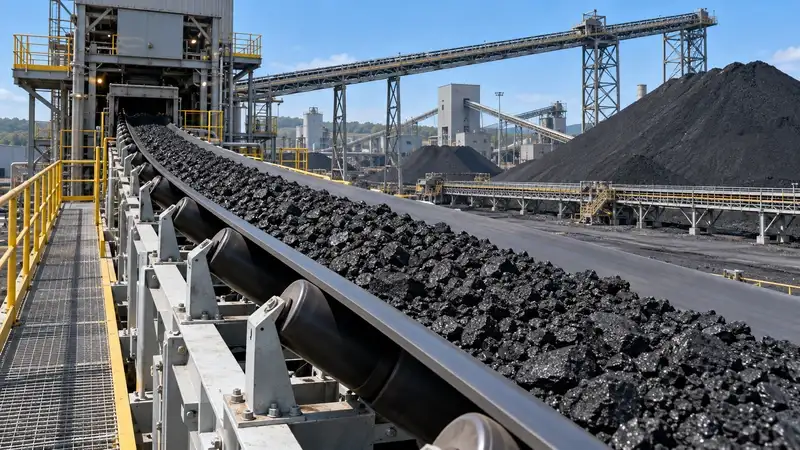
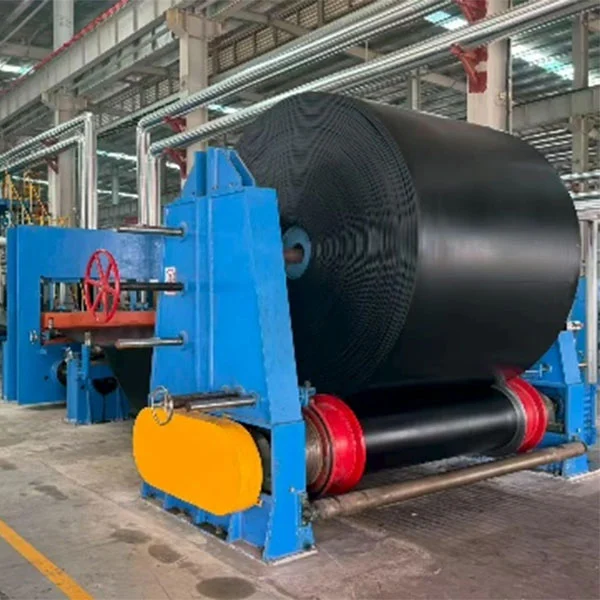
The belt is made in China at our own Qingdao plant — calendering, vulcanising, finishing and testing under one roof. We are not a trading desk reselling from a third-party mill, which is why the construction on the quotation is the construction that gets built.
A low price on this belt comes from how it is made, not from what has been left out. Because we calender and vulcanise in-house, standard widths and cover grades can be offered at factory direct pricing, and customized specifications are quoted when the mine document requires them.
We do not compete on cheap belts that fail early. A belt replaced twice on a coal line costs more than a belt bought once, and the downtime is never in the price list. If one quotation is far below the others, ask which layer changed — cover thickness, ply count, or the splice material.
A free sample of the available cover compound can be sent for evaluation, and a short length for splice trials where the order size supports it. Sample dispatch is normally 5–7 working days.
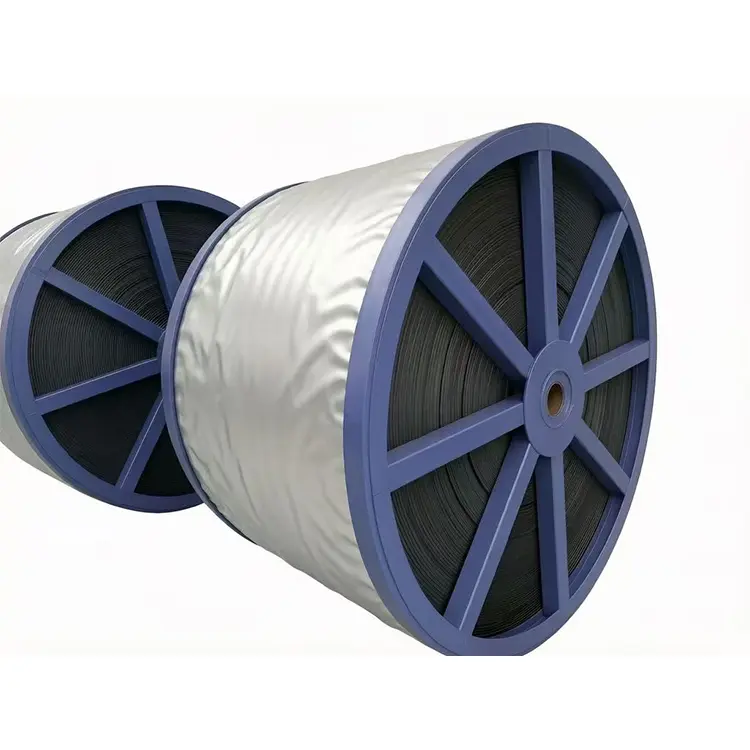
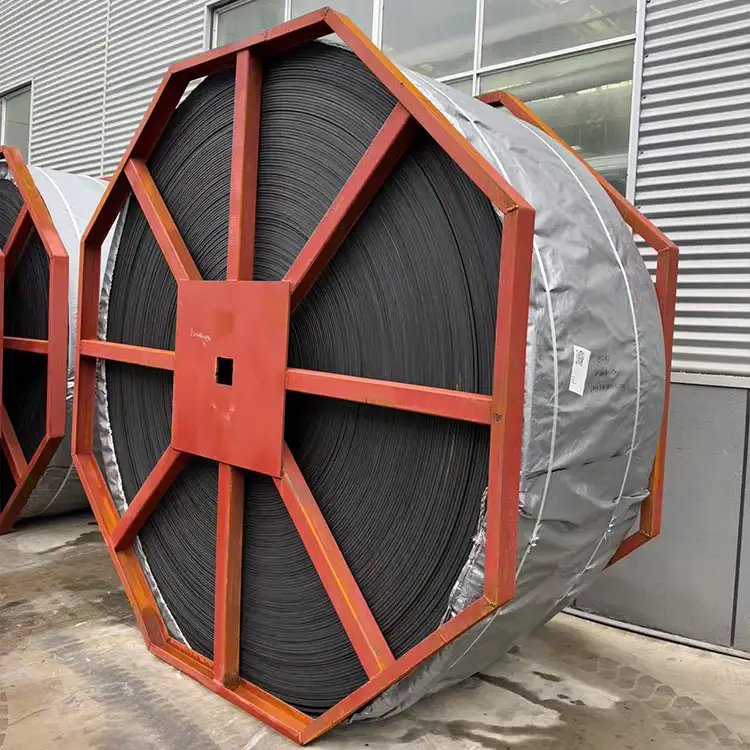
Protective wrapping and reinforced supports are reviewed for roll weight and shipment conditions. Labels identify belt type, strength, dimensions, cover grade, roll and batch. Required safety markings must match the verified product documentation.
Send the destination country, surface or underground duty, required mine specification, material, capacity, belt speed, dimensions, strength, covers and quantity. Attach the existing belt marking, drawings and required approval documents where you have them — that shortens the technical review considerably.
No. A fire-resistant belt is evaluated against defined test criteria. It still requires suitable conveyor protection and maintenance.
No. Underground suitability depends on the complete construction, the required tests and valid approvals for the specific mine and market.
Do not assume it. Confirm the required electrical resistance criteria and the supporting reports for the supplied belt.
Select the construction from conveyor tension, layout, material conditions and the mine's safety requirements. Confirm product availability and documentation before ordering.
|
Factor |
General purpose belt |
Fire resistant belt |
|
Selection basis |
Routine conveying duty |
Duty plus specified fire-performance criteria |
|
Electrical properties |
Confirm separately |
Confirm against required safety criteria |
|
Underground suitability |
Must not be assumed |
Requires suitable construction and valid documentation |
|
Other resistance |
Specified separately |
Heat and oil resistance also specified separately |
Address
Nancun Industrial district, Qingdao, Shandong, China
Tel