Email
WhatsApp

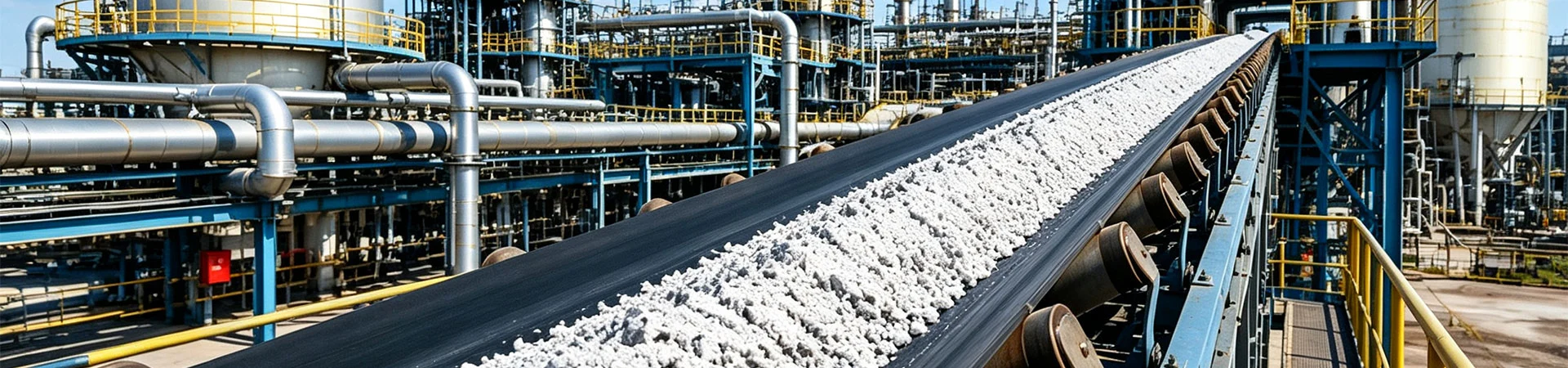
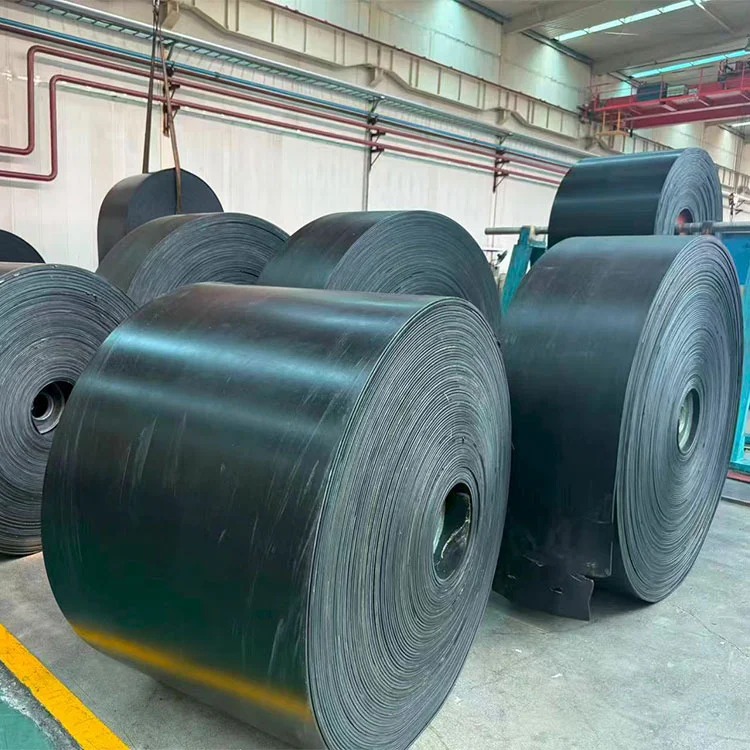
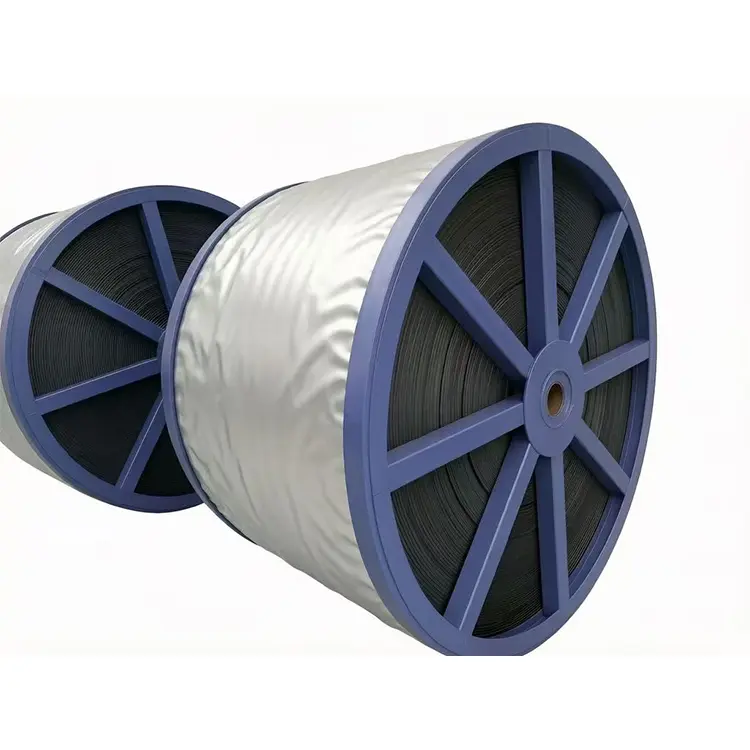
NN Conveyor Belts, also called Nylon Conveyor Belt, uses nylon fabric as the carcass material with nylon fibers arranged in both warp and weft directions. This structure provides excellent flexibility, impact resistance and load adaptability, allowing the belt to perform reliably when transporting heavy and abrasive materials.
Unlike polyester-based fabric belts that focus more on dimensional stability and lower elongation, nylon reinforced belts are designed to absorb impact energy and adapt to demanding conveying conditions.
The carcass is the main tension-bearing component of the belt. In nylon fabric construction, fibers are interwoven in longitudinal and transverse directions to create a balanced reinforcement structure.
During operation, the longitudinal nylon fibers transfer the pulling force generated by the conveyor drive system, while the transverse fibers improve flexibility and resistance to impact. When large or heavy materials fall onto the belt surface, the nylon structure helps distribute impact forces and reduces concentrated stress on the belt body.
The rubber cover protects the internal fabric layer from abrasion, impact and environmental damage. Different rubber compounds can be selected according to material characteristics and working conditions.
When conveying large-size materials such as ore, coal and crushed stone, the belt is frequently exposed to impact at loading points.
The elasticity of nylon fibers allows the belt to absorb impact forces more effectively. This helps reduce damage caused by sudden loading and improves reliability in heavy-duty conveying systems.
Nylon fabric has excellent flexibility, allowing the belt to adapt to conveyor pulleys, idlers and curved sections during operation.
This characteristic helps maintain smooth running performance and makes it suitable for systems where frequent bending and dynamic loading occur.
In industries such as mining and quarrying, transported materials can cause continuous wear on the belt surface.
By combining nylon fabric reinforcement with suitable rubber cover compounds, the belt can achieve improved resistance against abrasion and extend service life in harsh environments.
EP and NN are two widely used fabric reinforcement structures in industrial conveyor belts. Although both are designed for bulk material transportation, their internal construction gives them different operating characteristics.
EP Conveyor Belt uses polyester fibers in the longitudinal direction and nylon fibers in the transverse direction. It provides good tensile stability, lower elongation and reliable performance for general industrial applications.
NN Conveyor Belt uses nylon fibers in both directions. The fully nylon structure provides better flexibility and impact absorption, making it more suitable for applications involving heavy loading, large material size and frequent impact.
| Comparison | EP Conveyor Belt | NN Conveyor Belt |
|---|---|---|
| Reinforcement | Polyester Warp / Nylon Weft | Nylon Warp / Nylon Weft |
| Main Advantage | Lower elongation and dimensional stability | Flexibility and impact absorption |
| Flexibility | Good | Excellent |
| Impact Resistance | Good | Higher |
| Running Stability | Higher | Good |
| Suitable Conditions | General bulk conveying | Heavy impact and demanding environments |
For long-distance conveying systems where belt stability and reduced adjustment are important, EP construction is commonly selected.
For applications involving heavy impact, large materials or difficult loading conditions, NN construction provides better adaptability.
The final selection should be based on conveyor length, material characteristics, loading method, operating speed and environmental conditions.
NN fabric reinforced belts are widely used in industries requiring reliable transportation under demanding conditions.
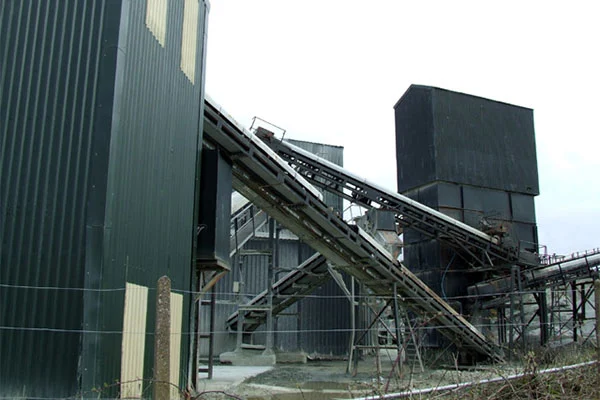
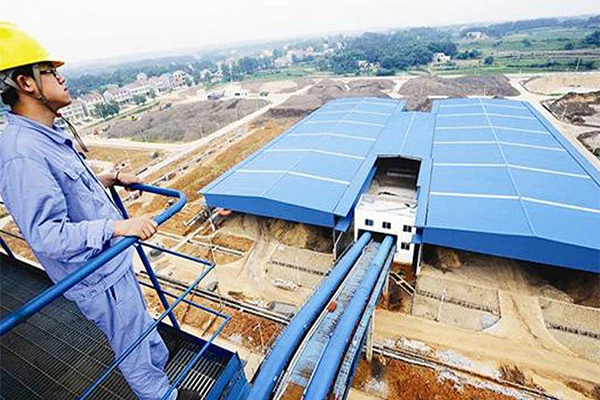
In mining operations, they are used for conveying coal, iron ore, limestone and other bulk materials from extraction areas to processing facilities.
In cement plants, they handle raw materials, clinker and aggregates throughout production processes.
In steel plants, chemical factories and quarry operations, these belts support continuous transportation where impact resistance and flexibility are important.
The reinforcement layer determines the mechanical strength of the belt, while the rubber cover provides protection against external working conditions.
For highly abrasive materials, wear-resistant rubber compounds help reduce surface damage.
For elevated temperature environments, heat-resistant covers maintain belt performance during hot material transportation.
For special applications involving oil, chemicals or fire risks, customized rubber compounds are available according to operating requirements.
Qingdao Global selects suitable cover materials based on actual application conditions instead of using one standard rubber formulation for all projects.
| Item | Specification |
|---|---|
| Reinforcement Material | Nylon Warp / Nylon Weft |
| Fabric Structure | Multi-Ply Nylon Fabric |
| Strength Grade | NN100 - NN630 |
| Ply Number | 2-6 Ply |
| Belt Width | 300-2500 mm |
| Cover Thickness | Customized |
| Cover Rubber | Abrasion Resistant, Heat Resistant, Oil Resistant, Flame Resistant |
| Grade | Tensile Strength |
|---|---|
| NN100 | 100 N/mm |
| NN125 | 125 N/mm |
| NN150 | 150 N/mm |
| NN200 | 200 N/mm |
| NN250 | 250 N/mm |
| NN300 | 300 N/mm |
| NN350 | 350 N/mm |
| NN400 | 400 N/mm |
| NN500 | 500 N/mm |
| NN630 | 630 N/mm |
Different fabric layers and strength grades can be selected according to conveyor capacity, transportation distance and operating conditions.
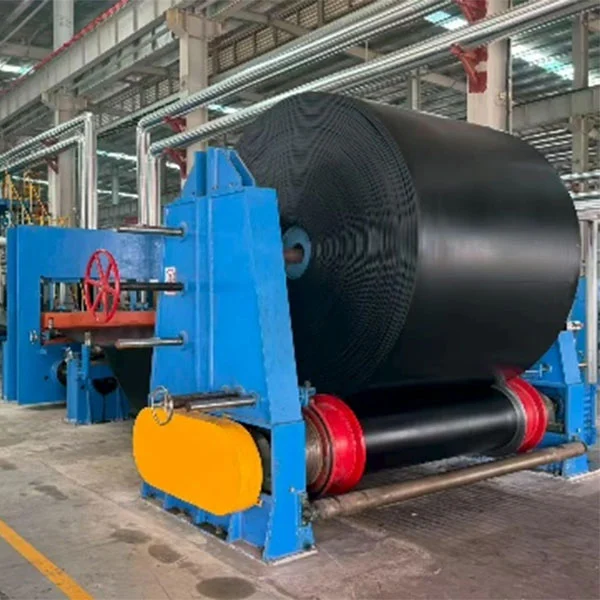
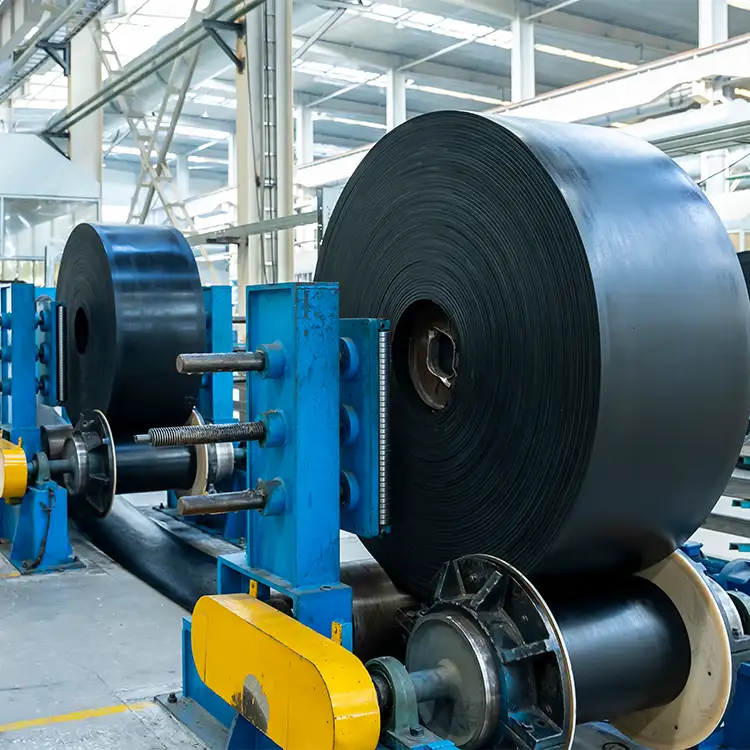
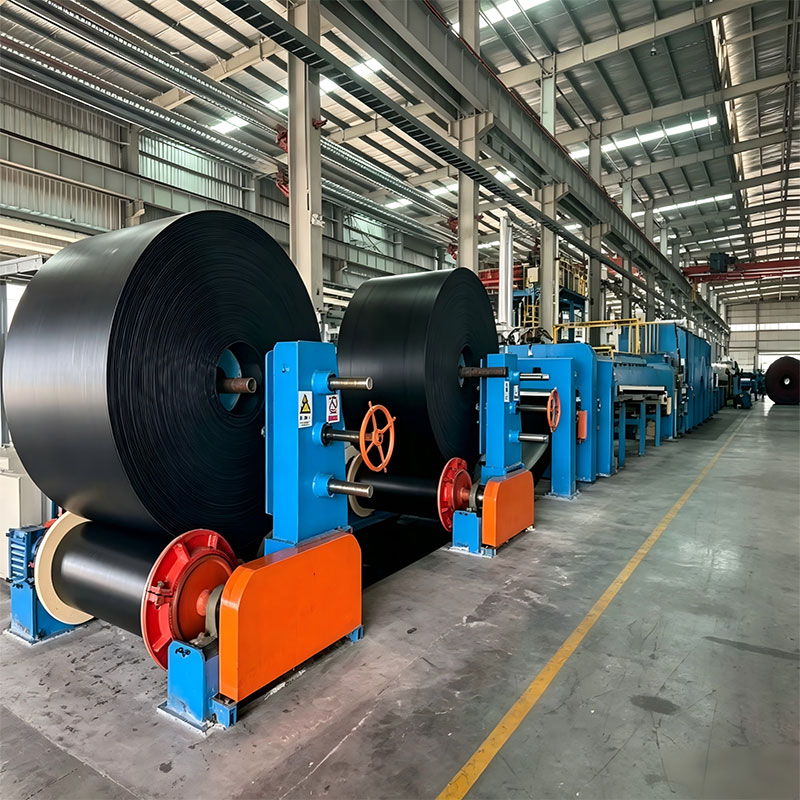
Qingdao Global Belting Group Co., Ltd. manufactures industrial conveyor belts through complete production processes including rubber mixing, fabric preparation, calendering, belt forming, vulcanization and finished product inspection.
Founded in 2008, the company operates manufacturing facilities covering 660,000 square meters with 24 workshops and more than 100 production lines. Annual production capacity reaches 21 million square meters.
Quality control covers raw material inspection, fabric bonding, tensile performance, abrasion resistance and finished belt testing.
The company operates according to ISO 9001, ISO 14001 and ISO 45001 management systems, with products supplied to customers in more than 50 countries and regions.
Different industries require different belt structures. Qingdao Global provides customized solutions according to customer requirements, including belt strength selection, fabric layers, cover rubber formulation and belt dimensions.
With experience serving mining, cement, metallurgy, ports, power generation and recycling industries, Qingdao Global helps customers select suitable conveyor belt solutions for long-term operation.