Email
WhatsApp

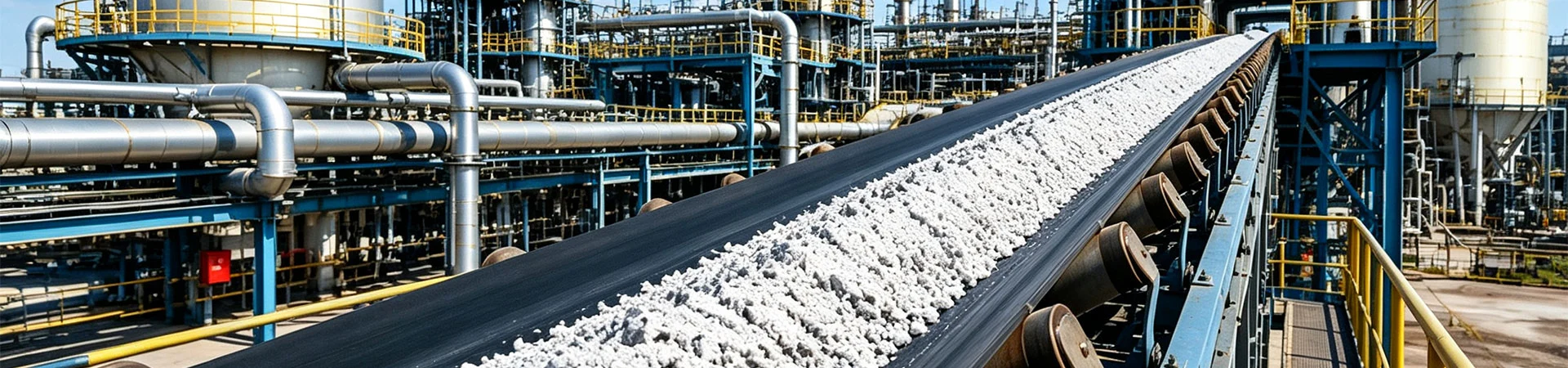
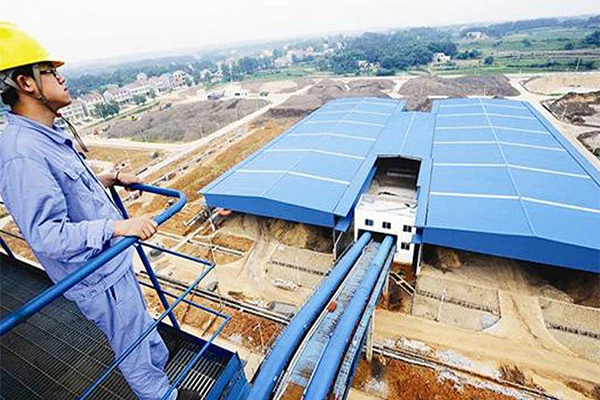
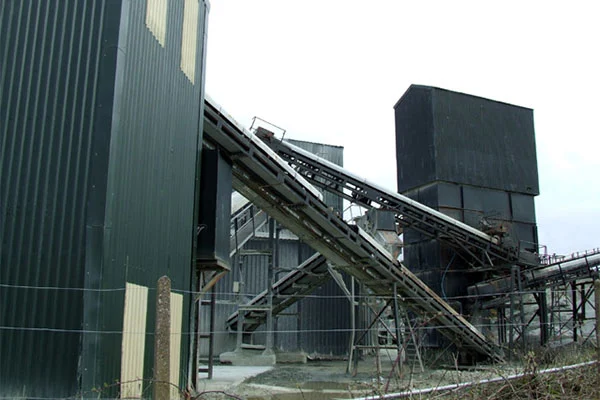
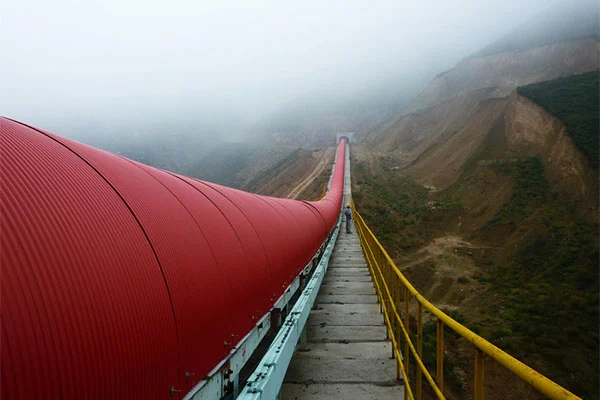
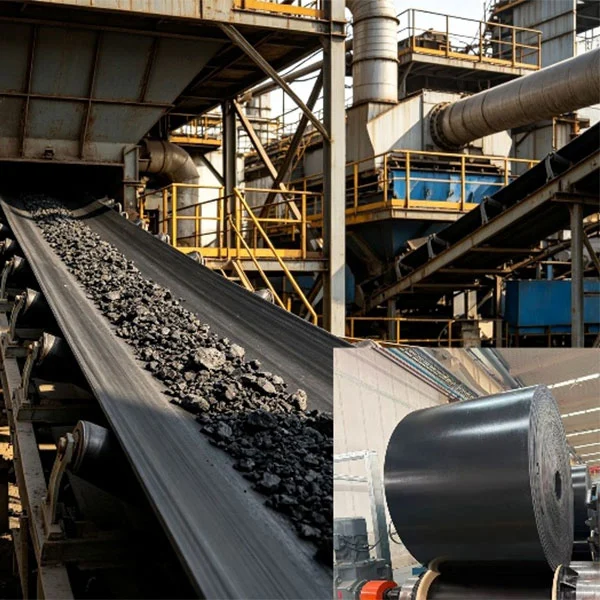
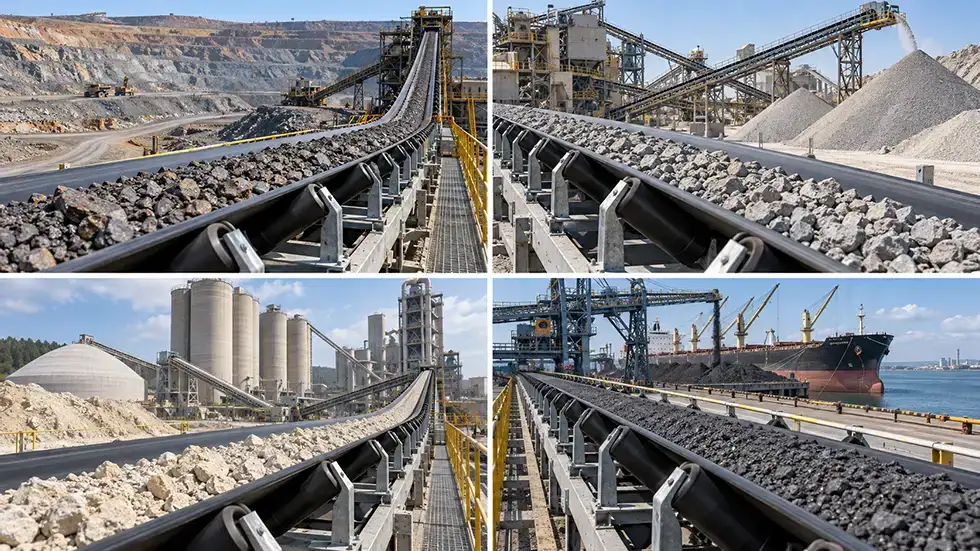
Typical applications include mining, quarrying, aggregate processing, cement raw material handling and bulk loading terminals. Cover grade, belt strength and dimensions should be matched to the actual service conditions.
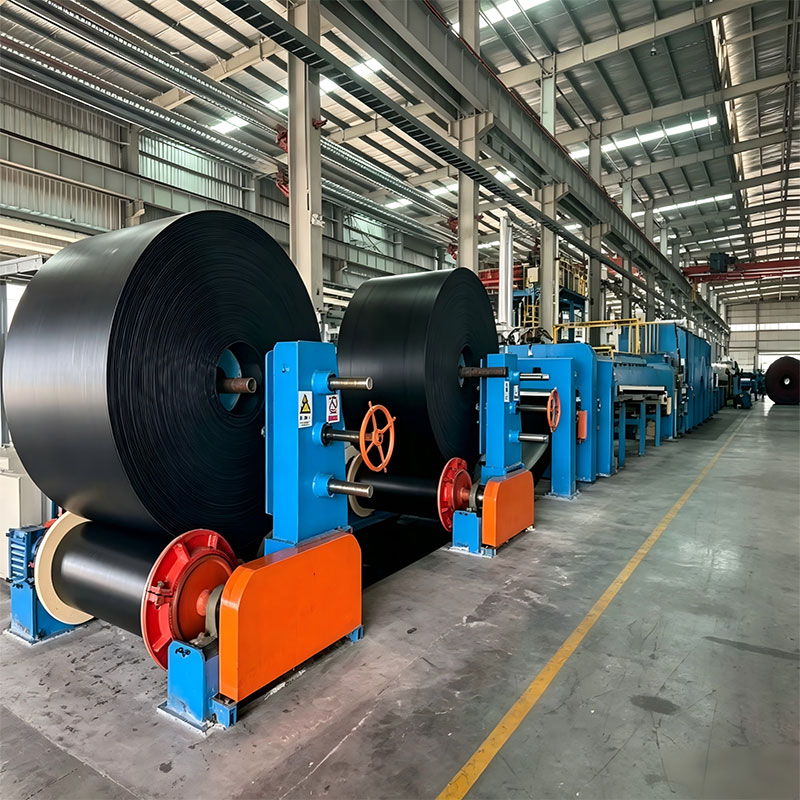
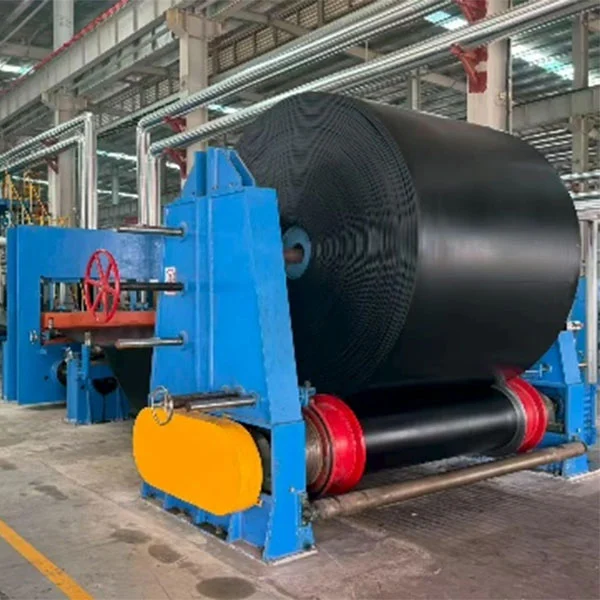
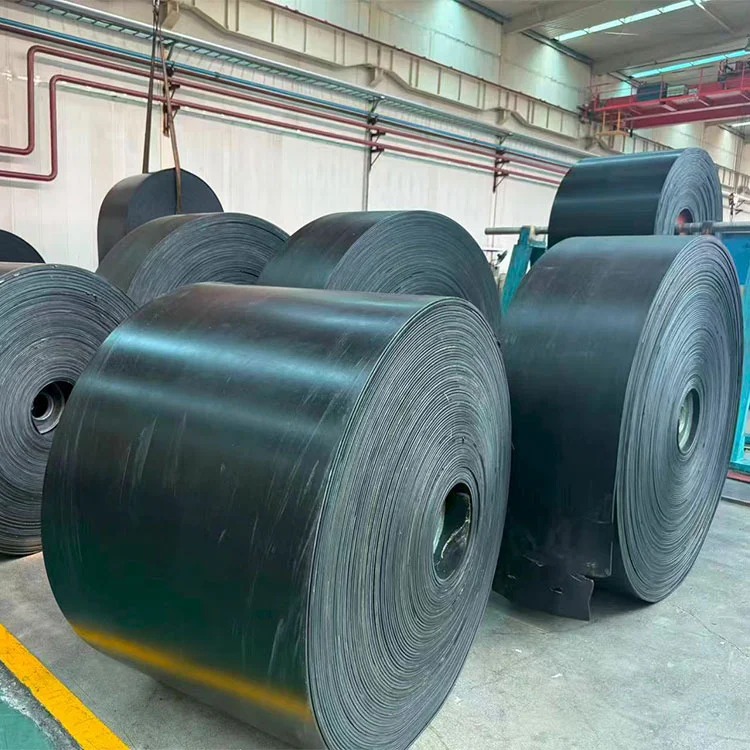
A heavy-duty belt combines a load-carrying carcass with rubber covers selected for wear and material contact. A multi-ply EP fabric construction is a common option. EP reinforcement uses polyester in the longitudinal direction and polyamide in the transverse direction. Other constructions, including steel cord, require a separate design review and confirmation of availability.
Top rubber cover: contacts the load and is selected for abrasion, cutting and gouging conditions at the carrying surface.
Reinforced carcass: carries belt tension and supports the required flexibility and troughing behavior.
Rubber between fabric plies: bonds the reinforcement layers in a multi-ply belt.
Bottom rubber cover: protects the carcass on the running side against contact with idlers and pulleys.
Belt splice: connects belt ends using a method compatible with the construction and operating duty.
Heavy duty describes the application, rather than one universal belt grade. Review material size, sharp edges, abrasion, loading impact, belt tension, pulley diameters and transfer-point conditions together. A thicker cover alone does not establish the correct belt specification.
|
Item |
Specification |
|
Product type |
Heavy Duty NN Rubber Conveyor Belt |
|
Primary construction |
Multi-ply EP fabric belt; final construction subject to design review |
|
Carcass strength |
Specified in N/mm of belt width according to calculated tension and splice requirements |
|
Number of plies |
Selected with strength, flexibility, pulley diameter and troughing requirements |
|
Belt width and length |
Specified for the conveyor layout; available dimensions to be confirmed |
|
Top and bottom cover thickness |
Specified separately according to wear, loading and running conditions |
|
Cover compound |
Abrasion-resistant grade selected for the material; cut and gouge requirements reviewed separately |
|
Special service conditions |
Heat, oil or flame resistance requires a separately selected compound or construction |
|
Pulley diameter |
Confirm minimum diameter for the selected carcass and tension conditions |
|
Splice method |
Hot-vulcanized or mechanical splice, subject to belt construction and duty |
|
Temperature limits |
Confirm for the selected compound and actual material exposure |
|
Inspection requirements |
Agree dimensions, cover properties, adhesion and supporting reports before ordering |
Rubber covers selected to protect the carcass from abrasive bulk materials.
Carcass strength matched to the conveyor’s tension and load requirements.
Cover thickness selected for the expected wear and loading conditions.
Construction reviewed for pulley compatibility and troughed conveyor layouts.
Dimensions and splice requirements specified for the conveyor and maintenance plan.
Service life depends on belt selection, loading arrangement, alignment, cleaning and maintenance. Operating conditions should be reviewed before a replacement belt is ordered.
Conveying ore and other abrasive mineral materials between crushing, screening and stockpiling stages. Large lumps and sharp fragments require specific review of impact and cut resistance.
Moving crushed stone, gravel and sand through processing plants and loading systems. Material size, transfer height and loading-point support influence the required construction.
Transporting limestone and other raw materials used in cement production. Hot clinker and other heated materials require a separately specified heat-resistant belt.
Transferring suitable bulk solids through stockyard, loading and plant conveyors. Identify oil contamination, elevated temperatures or fire-safety requirements before selecting a cover grade.
Application-based specification review: discuss the conveyed material, belt dimensions, carcass strength and cover requirements against the conveyor duty.
Agreed product checks: establish the required inspection items and documentation before production.
Specification identification: agree labeling that identifies the belt construction, dimensions, order and batch details.
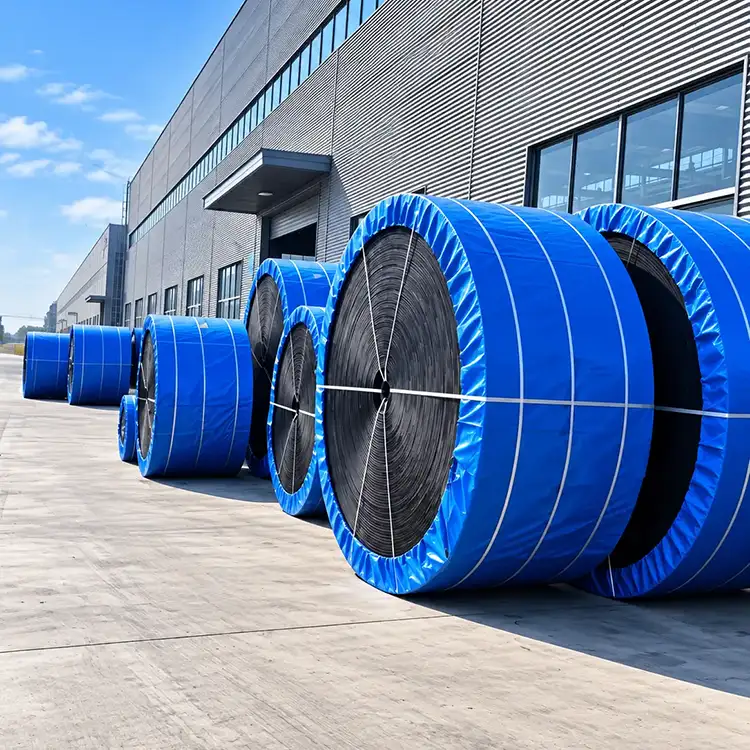
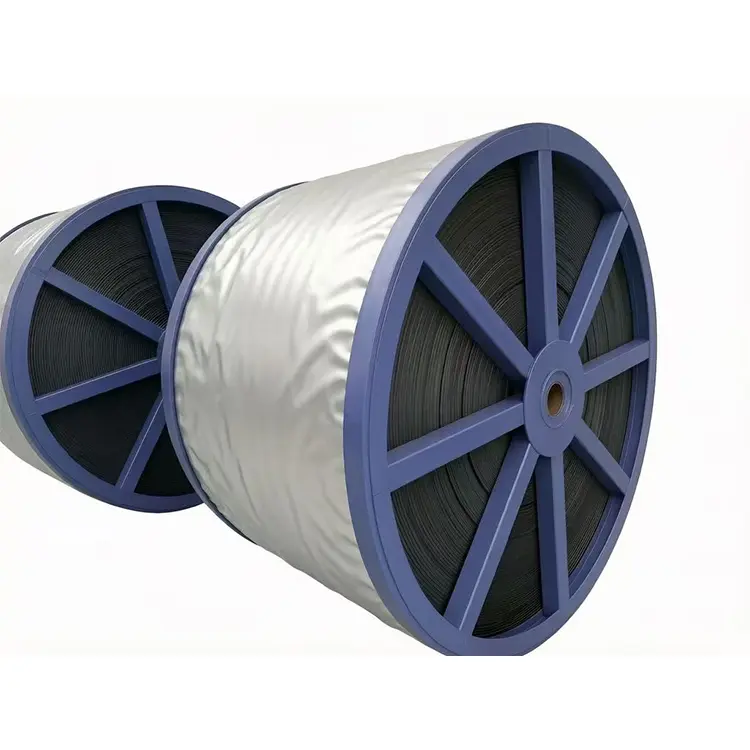
Transport planning: discuss roll dimensions and packing requirements for shipment and site handling.
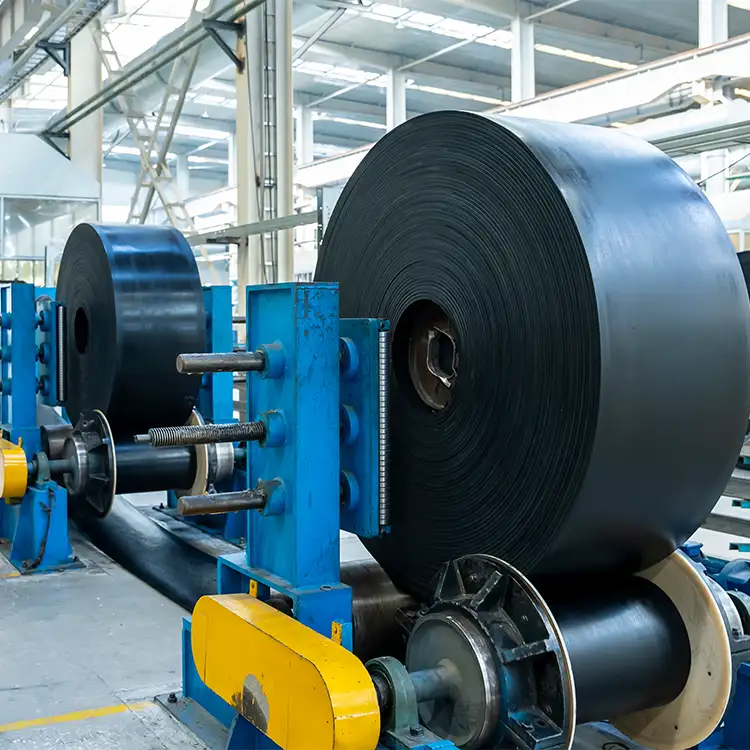
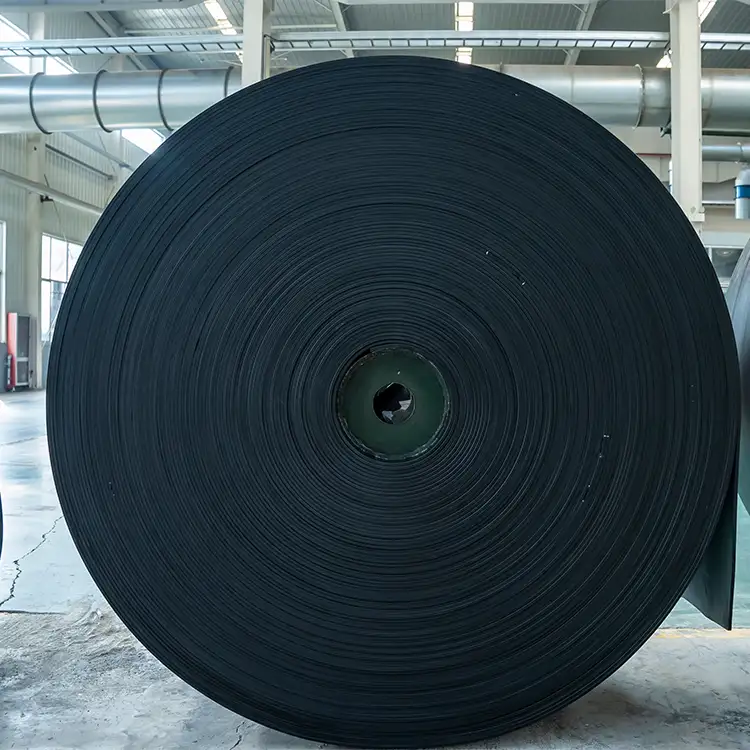
Packing options may include PP woven wrapping, protective film and reinforced outer protection. Pallet fixing or additional securing can be reviewed according to roll weight and the transport method. Confirm the final packing arrangement with the order.
Labels may include product type, belt width, length, carcass specification, cover thickness, order number and batch identification. Customer branding and package printing can be discussed before shipment.
Its construction is selected for demanding loads, wear, impact and operating tension. The term alone does not define a strength, thickness or performance grade.
No. Thickness must be reviewed with carcass strength, pulley diameter, troughing and splice requirements. Additional thickness may affect flexibility without solving the actual wear problem.
These applications require a compatible heat-resistant or oil-resistant compound. A heavy-duty abrasion-resistant cover does not automatically provide these properties.
Compare calculated tension, conveyor length, elongation allowance, pulley arrangement and splice requirements. Confirm the suitable construction and its availability during design review.
Provide belt width and length, existing belt marking, material type and size, capacity, speed, loading height, pulley diameters and operating temperature. Include required cover grades and site conditions.
The method depends on construction, tension and site maintenance needs. For multi-ply fabric belts, mechanical or hot-vulcanized options require review; steel cord belts need a construction-specific splice design.
|
Selection factor |
General purpose selection |
Heavy duty selection |
|
Operating duty |
Routine conveying conditions |
Demanding wear, impact or tension conditions |
|
Cover choice |
Matched to ordinary material contact |
Reviewed for abrasive or sharp material and loading severity |
|
Carcass choice |
Matched to conveyor duty |
Reviewed against tension, splice and impact requirements |
|
Special resistance |
Requires a specific grade |
Also requires a specific grade; not automatic |
Address
Nancun Industrial district, Qingdao, Shandong, China
Tel