Email
WhatsApp

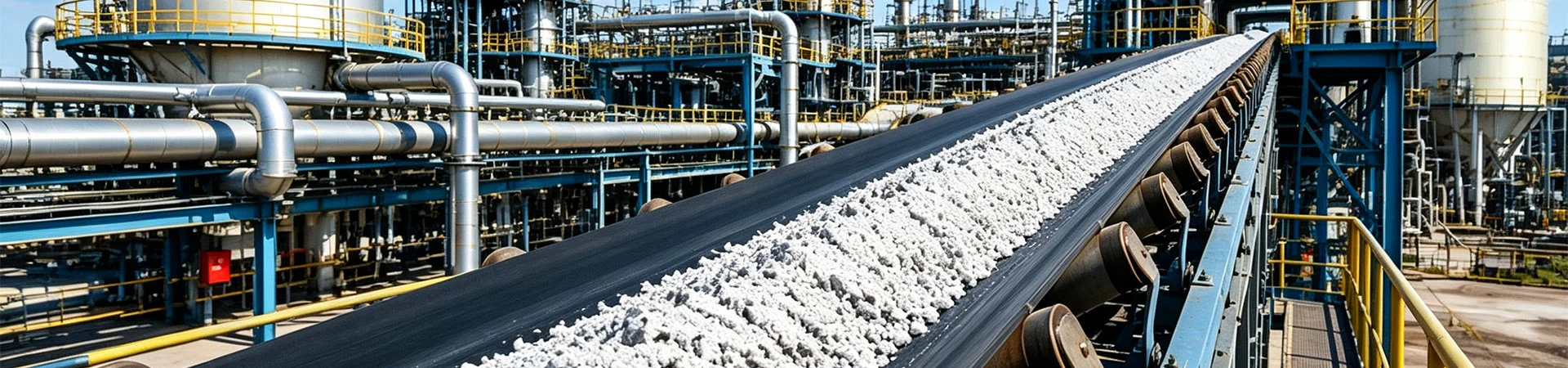
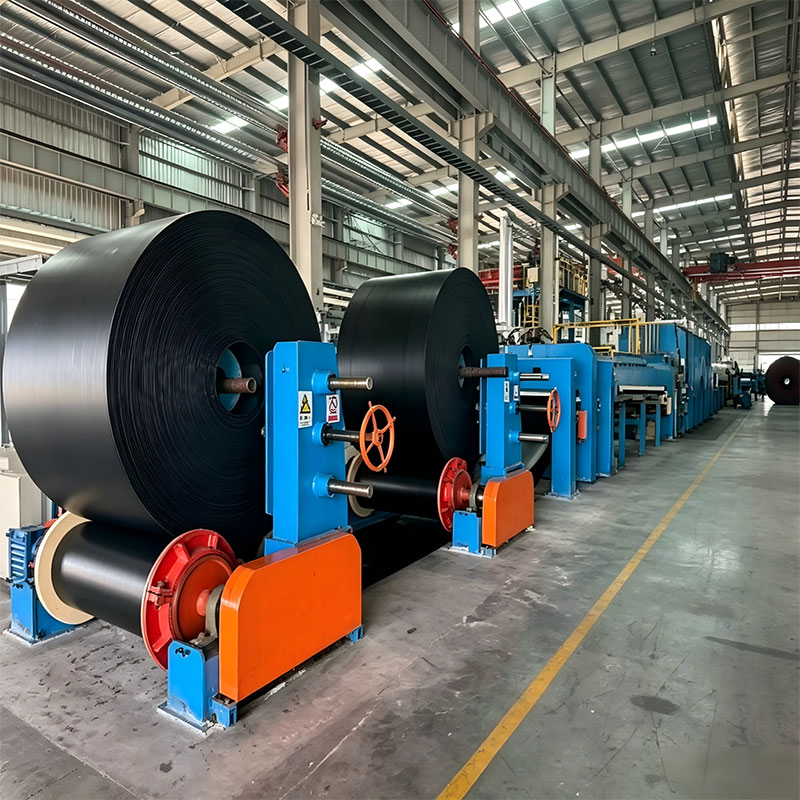
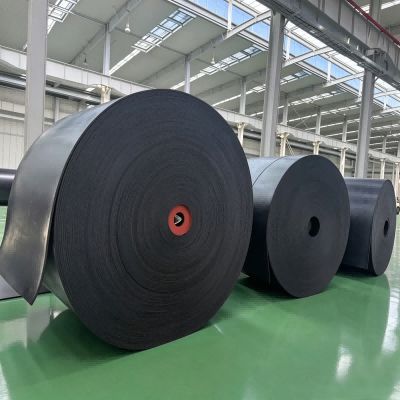
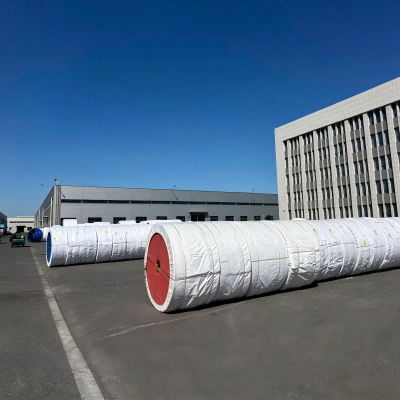
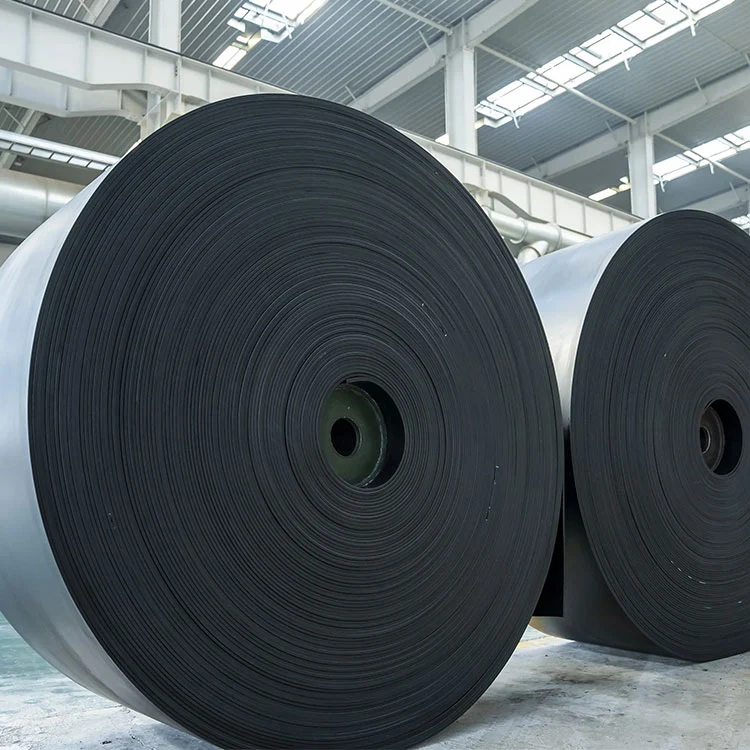
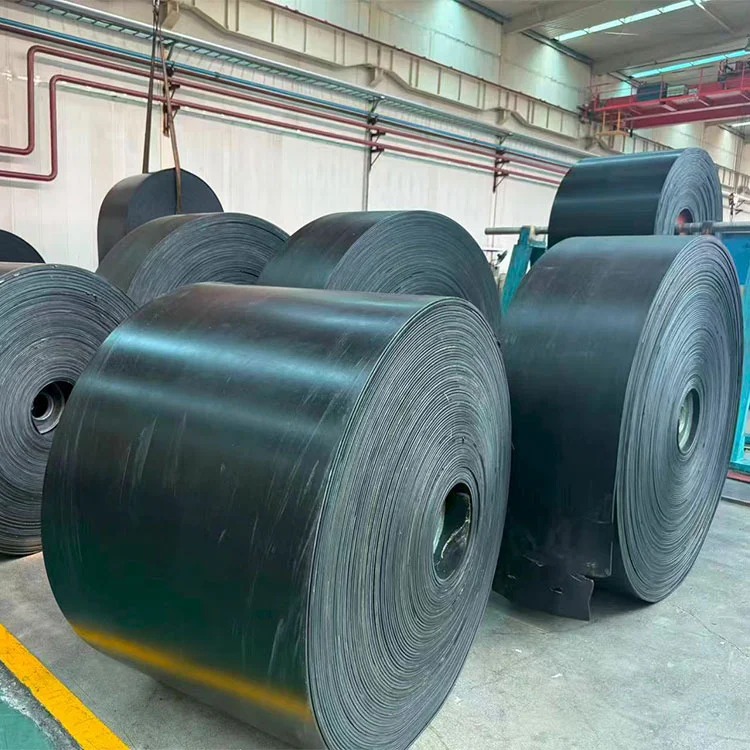
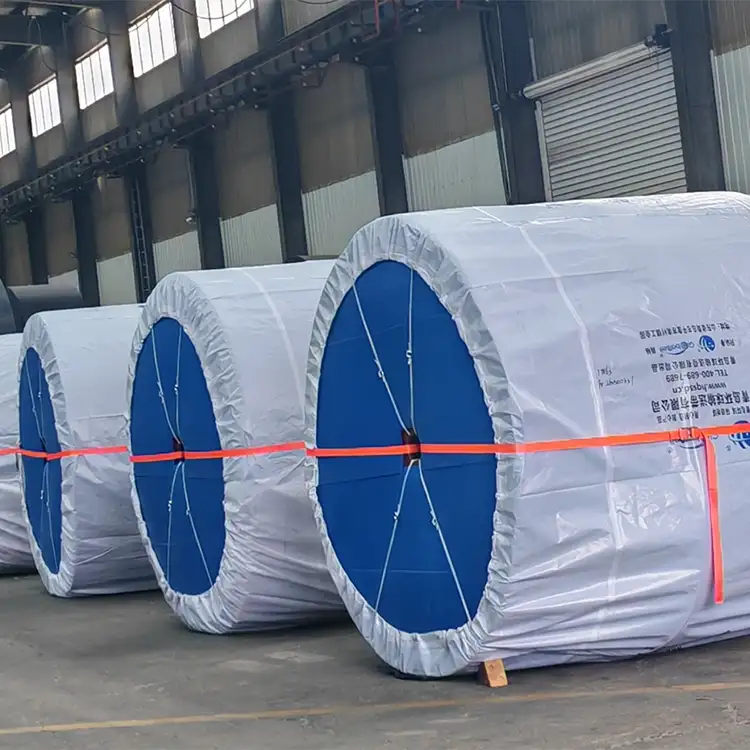
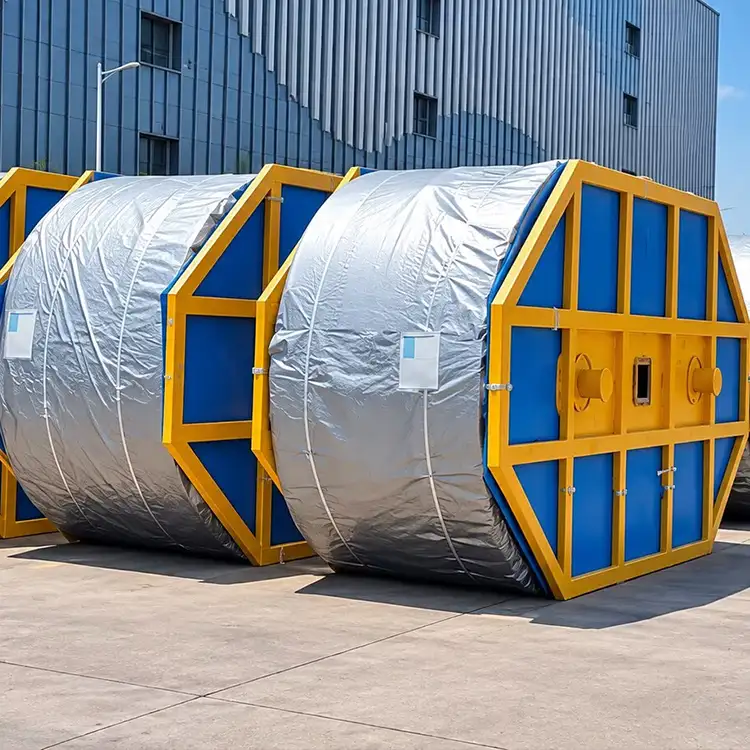
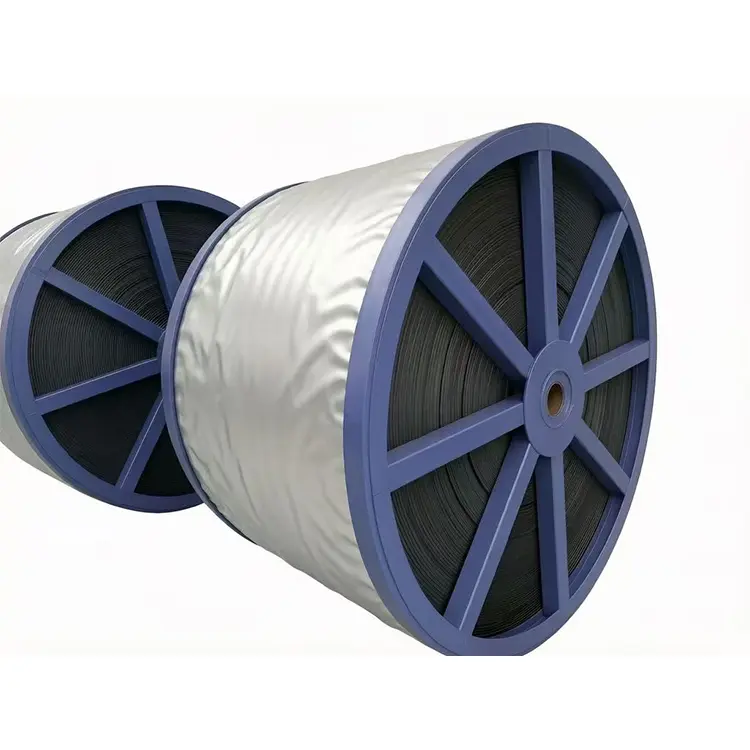
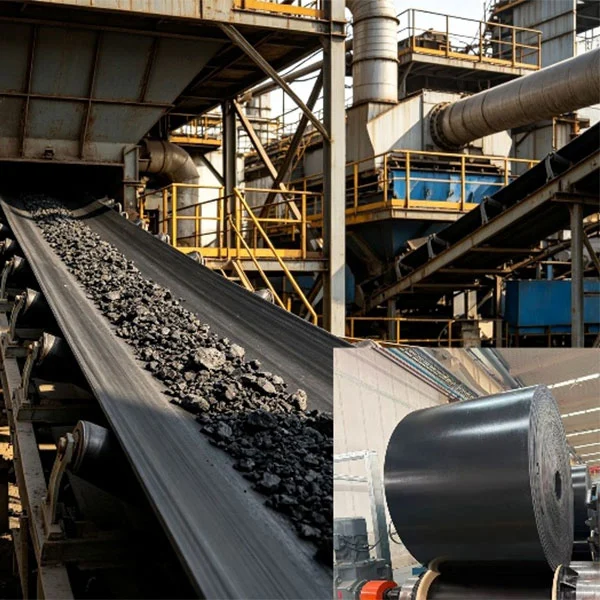
EP Conveyor Belt uses polyester fabric in the warp direction and nylon fabric in the weft direction. The EP carcass provides high tensile strength, low elongation, and good impact resistance, making this durable belting solution suitable for continuous conveying of ore, coal, limestone, clinker, aggregates, and other bulk materials.
Compared with cotton canvas (CC) belts, EP belts deliver superior dimensional stability, lower elongation, and better resistance to moisture. As a specialized EP conveyor belt manufacturer and global supplier, Qingdao Global Belting engineers these belts for medium- and heavy-duty conveyor systems in mining, cement, ports, power plants, aggregate processing, and recycling.
The belt consists of an EP fabric carcass, rubber top cover, rubber bottom cover, and bonding layers. The fabric and rubber are combined through high-pressure vulcanization to form a quality finished belt with strong ply adhesion.
The carcass strength and number of plies are selected according to belt width, conveying distance, material load, belt tension, and loading impact.
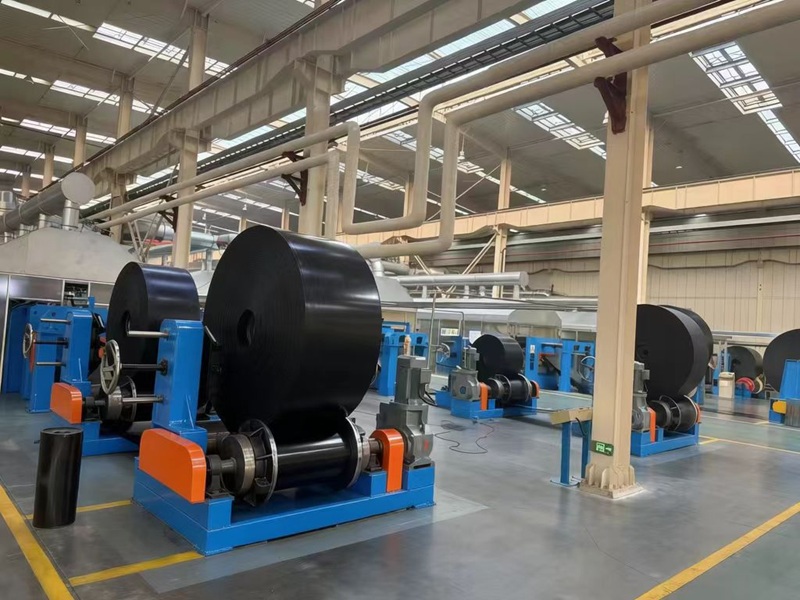
We offer customized specifications from our factory to match exact conveyor engineering requirements, ensuring reliable performance without unnecessary cost.
| Fabric Material | Fabric Code | Tensile Strength | No. of Plies | Width (mm) | Length (m) | Cover Thickness (mm) | |
|---|---|---|---|---|---|---|---|
| Top | Bottom | ||||||
| Polyester canvas | EP100 | 8-25mpa | 1-10 | 350-5000 | 20-500 | customized | customized |
| EP150 | 8-25mpa | 1-10 | 350-5000 | 20-500 | customized | customized | |
| EP200 | 8-25mpa | 1-10 | 350-5000 | 20-500 | customized | customized | |
| EP250 | 8-25mpa | 1-10 | 350-5000 | 20-500 | customized | customized | |
| EP300 | 8-25mpa | 1-10 | 350-5000 | 20-500 | customized | customized | |
| EP400 | 8-25mpa | 1-10 | 350-5000 | 20-500 | customized | customized | |
| EP500 | 8-25mpa | 1-10 | 350-5000 | 20-500 | customized | customized | |
| EP600 | 8-25mpa | 1-10 | 350-5000 | 20-500 | customized | customized | |
The belt should be selected according to the actual conveyor engineering data rather than belt strength alone. For an accurate technical recommendation, provide the material type, material size, bulk density, conveying capacity, belt width, belt speed, conveying distance, inclination, loading height, and operating temperature.
For abrasive materials such as iron ore, crushed stone, and clinker, use a higher abrasion-resistant cover. For high-impact loading, consider a suitable carcass construction and cover thickness. For hot materials, use a heat-resistant grade instead of a standard EP belt.
If the conveyor is long or heavily loaded, belt strength and splice requirements should be checked together with pulley diameter and take-up conditions. You can also request a free sample to verify rubber hardness and fabric adhesion before placing a bulk order.
Different rubber compounds are formulated for specific working conditions. Wear-resistant grades are used for ore, aggregates, coal, and other abrasive materials. Heat-resistant grades are used for hot clinker, sintered materials, and other high-temperature products. Flame-resistant, cold-resistant, oil-resistant, and acid and alkali-resistant grades are available for corresponding operating environments.
Selecting the correct cover compound is critical because premature belt failure is often caused by unsuitable rubber properties rather than insufficient tensile strength.
The EP polyester/nylon carcass has low elongation, helping maintain stable belt tension on long-distance conveyors and reducing the need for frequent take-up adjustments.
The EP fabric structure provides high resistance to impact from loaded materials. For large lump materials and high-drop loading points, the carcass and cover thickness are engineered according to actual impact forces.
For iron ore, limestone, coal, crushed stone, and clinker, high-grade abrasion-resistant rubber covers minimize wear caused by continuous friction with coarse materials.
EP100–EP800 strength grades and multi-ply constructions are available. Belt strength is matched to conveying capacity, belt width, conveyor length, belt speed, and operating tension.
Top and bottom cover thicknesses are configured according to material abrasiveness, impact conditions, and conveyor loading, ensuring a durable service life without over-specifying.
Belt width, tensile strength, ply construction, cover grade, cover thickness, and joint type are customized according to your conveyor design and project budget.
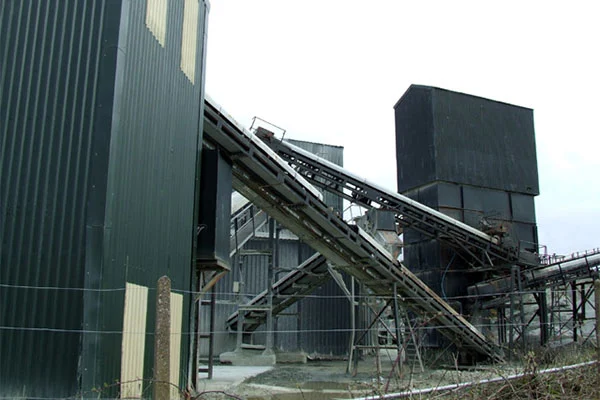
Suitable for transporting crushed stone, ore, coal, aggregates, and tailings under heavy-load conditions.
Widely used for conveying limestone, cement clinker, gypsum, and fly ash in cement production plants.
Provides efficient transportation of wheat, corn, rice, soybeans, and other agricultural products.
Chemical-resistant EP conveyor belts are available for fertilizer granules, mineral powders, and corrosive materials.
Designed for handling demolition waste, recycled aggregates, and construction debris.
Used in cargo loading systems and high-capacity bulk material transfer operations.
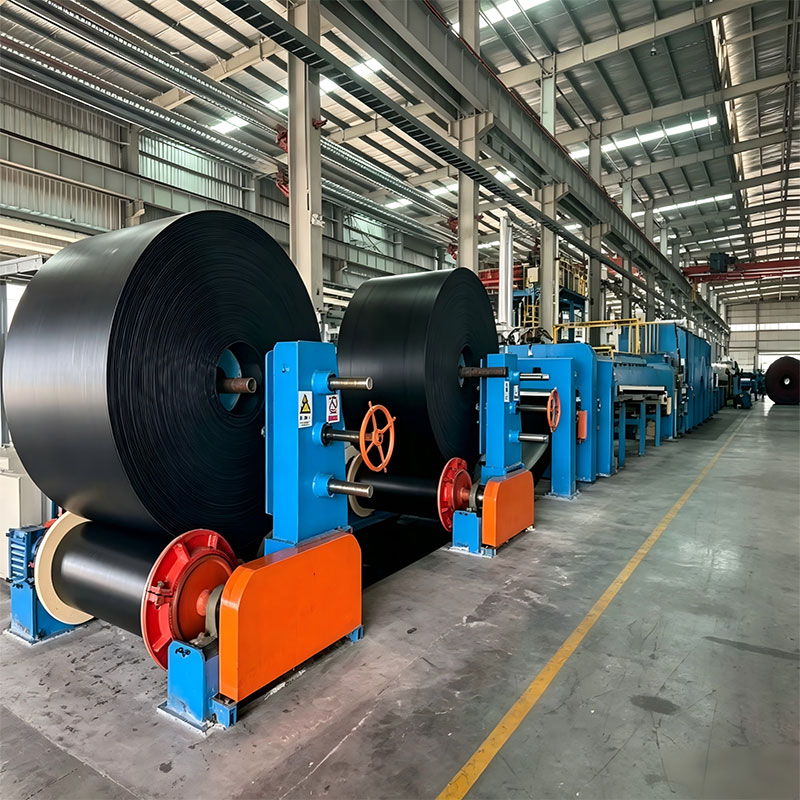
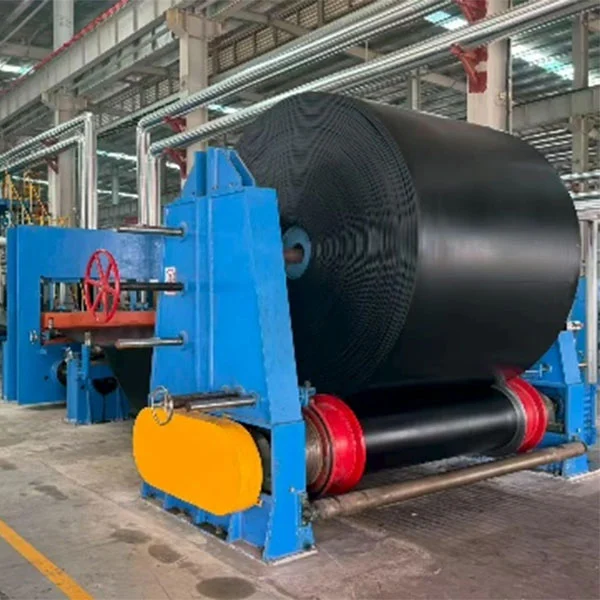
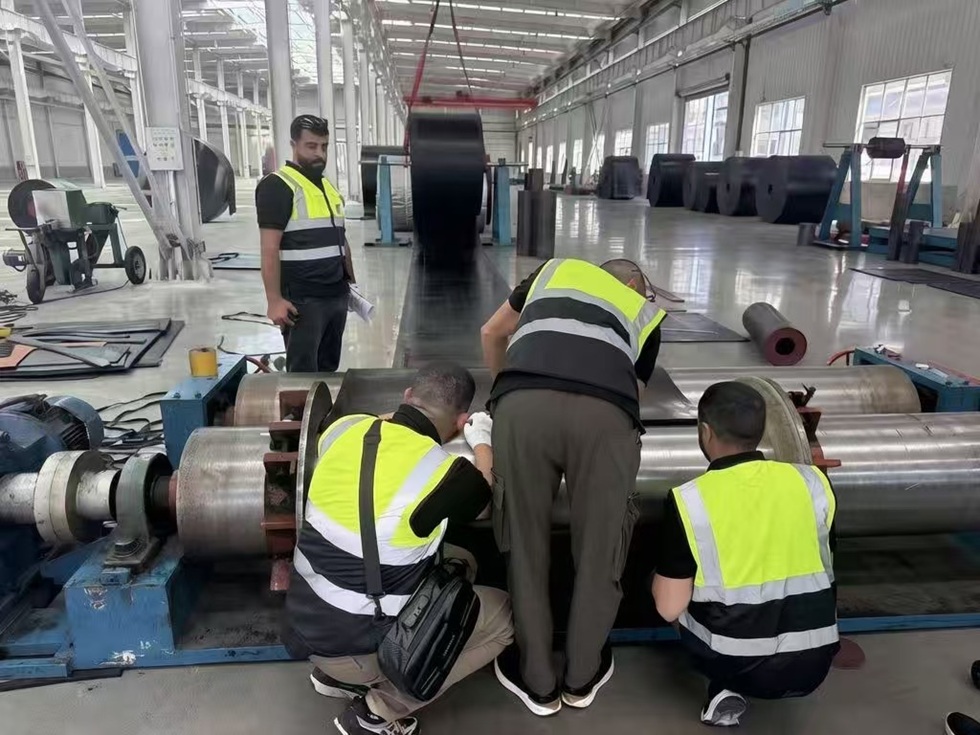
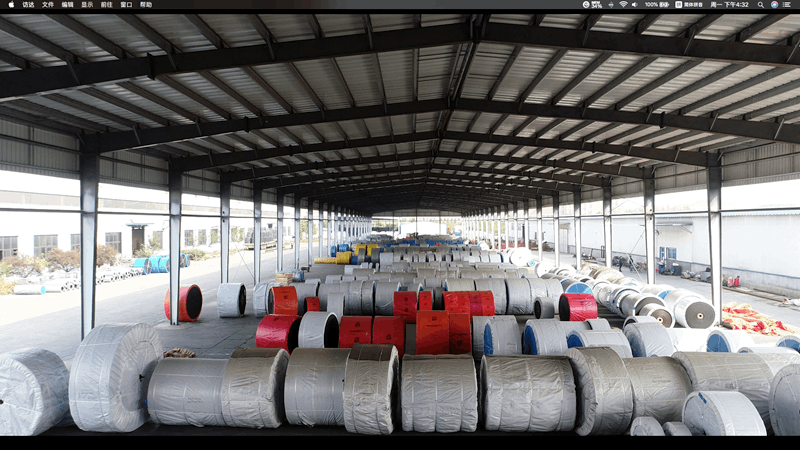
Qingdao Global Belting operates a large-scale manufacturing factory in China, utilizing automated rubber mixing, calendering, belt forming, vulcanization, and finishing lines. Our production base covers 660,000 m², featuring 24 workshops, more than 100 production lines, and an annual conveyor belt capacity of 21 million m².
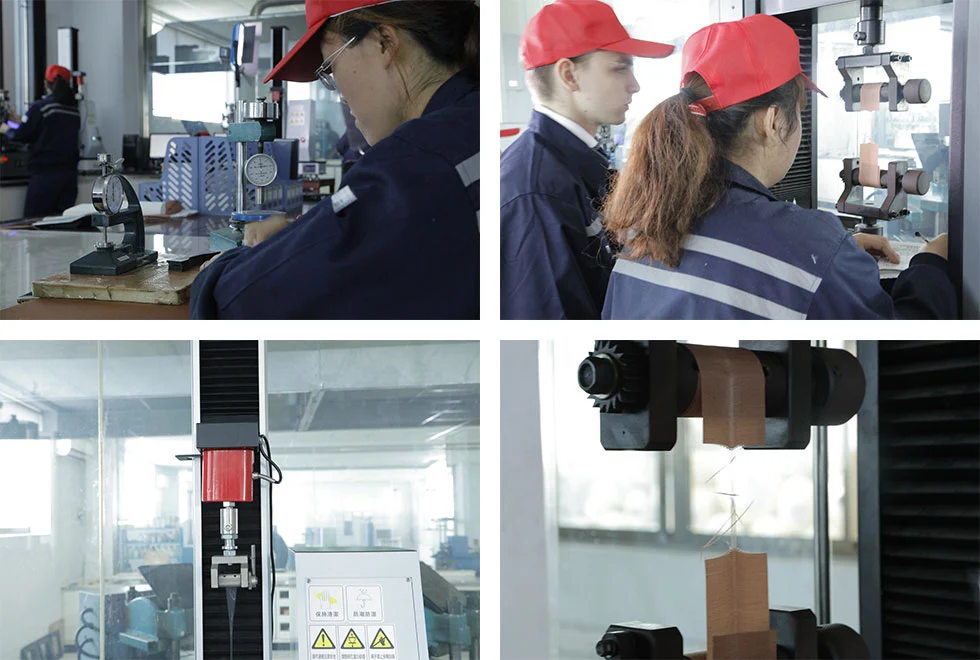
Our in-house laboratory conducts strict batch testing for tensile strength, elongation, adhesion, abrasion, aging, ozone resistance, flame resistance, and low-temperature performance in compliance with GB, DIN, and ISO standards.
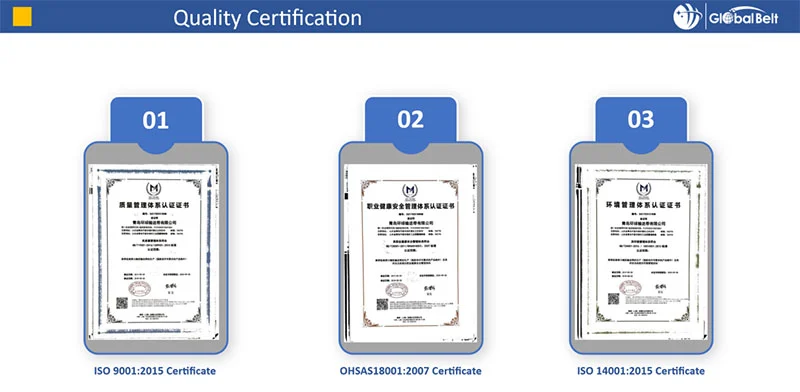
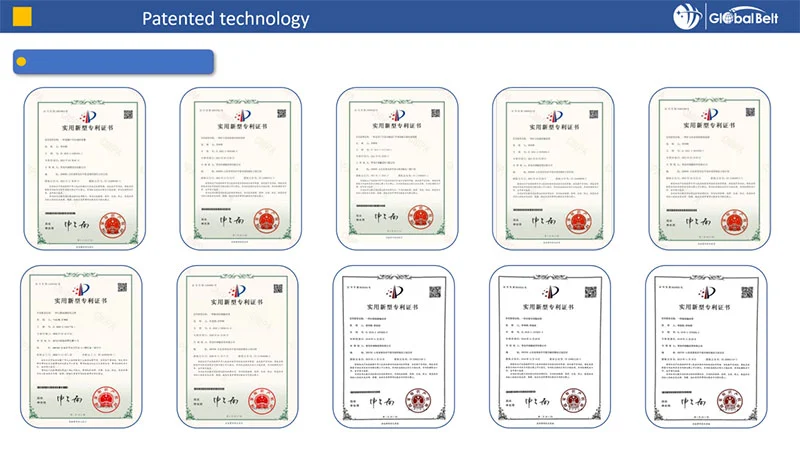
The facility operates under certified ISO 9001, ISO 14001, and ISO 45001 management systems and holds MA Coal Safety Certification, guaranteeing consistent quality for every roll produced.
Every belt undergoes comprehensive laboratory and physical inspection before shipment.
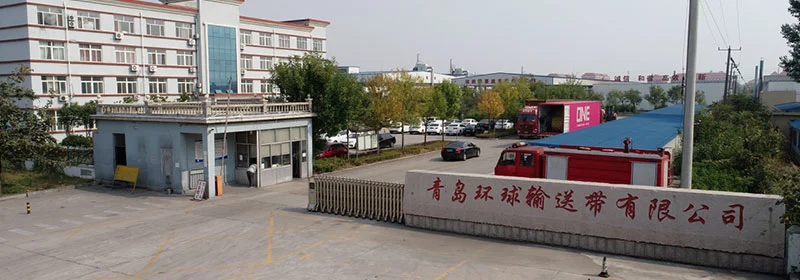
Founded in 2008, Qingdao Global Belting is an established manufacturer and international exporter supplying EP conveyor belts for mining, cement, steel, power generation, ports, aggregates, and recycling applications. With more than 1,300 employees, we export Made in China industrial belting to over 50 countries.
By sourcing through factory direct supply, buyers eliminate middleman markups and secure a low price without sacrificing technical performance. Rather than offering a cheap, under-engineered product that fails early, we provide cost-effective, customized OEM solutions with a free sample available for engineering evaluation.
| Product |
- EP250 Conveyor Belt - ST2000 Steel Cord Belt - Heat Resistant Conveyor Belt |
| Supply Volume | 180,000 m² |
| Application | Sugar Cane Conveying System |
| Cooperation Since | 2019 |
A: An EP belt uses polyester fibers in the warp direction and nylon fibers in the weft. This construction provides high tensile strength, low elongation, good moisture resistance, and stable dimensional performance for industrial material conveying.
A: CC belts use cotton canvas, while EP belts use polyester and nylon fabric. The latter offers higher strength, lower elongation, and better moisture resistance, making it more suitable for heavy-duty applications such as mining, cement, and bulk material handling.
A: Selection depends on conveying distance, material weight and size, belt speed, inclination, loading conditions, and operating environment. Based on these factors, our engineering team determines the appropriate belt width, strength grade, cover thickness, and carcass construction.
A: The number of plies depends on belt strength requirements and pulley diameters. Light-duty systems may use lower-strength constructions, while heavy-duty mining and bulk handling systems generally require higher-strength multi-ply structures.
A: They are widely used in mining, quarrying, cement plants, ports, grain processing, chemical and fertilizer plants, recycling facilities, and power stations.
A: Service life depends on material abrasiveness, belt tension, operating speed, loading conditions, environment, and maintenance. Proper compound selection and regular maintenance significantly extend operating life.
A: Yes. As a factory direct supplier, Qingdao Global Belting provides customized belt widths, cover thicknesses, tensile strengths, rubber compounds (flame-resistant, heat-resistant, cold-resistant, and acid/alkali-resistant), and endless hot-vulcanized joints. We also offer a free sample for quality testing prior to bulk procurement.
A: Standard grades are generally suitable for moderate operating temperatures. For hot materials, a heat-resistant rubber compound should be selected according to the actual material temperature and working conditions.
A: Store it in a dry, ventilated area away from direct sunlight, moisture, chemicals, and heat sources. During operation, regularly check belt alignment, tension, wear, and conveyor components to prevent avoidable damage.
Address
Nancun Industrial district, Qingdao, Shandong, China
Tel