Email
WhatsApp

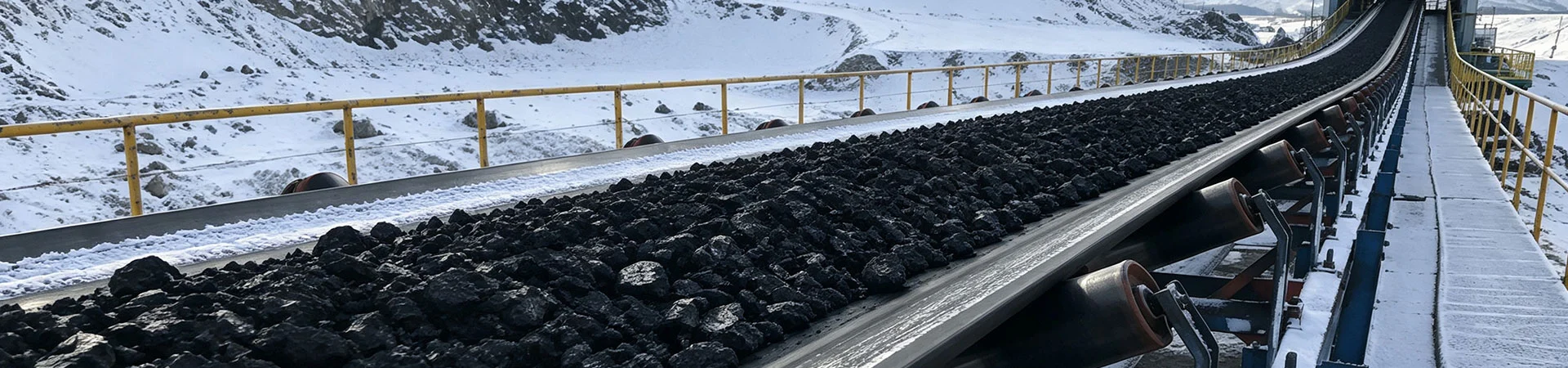
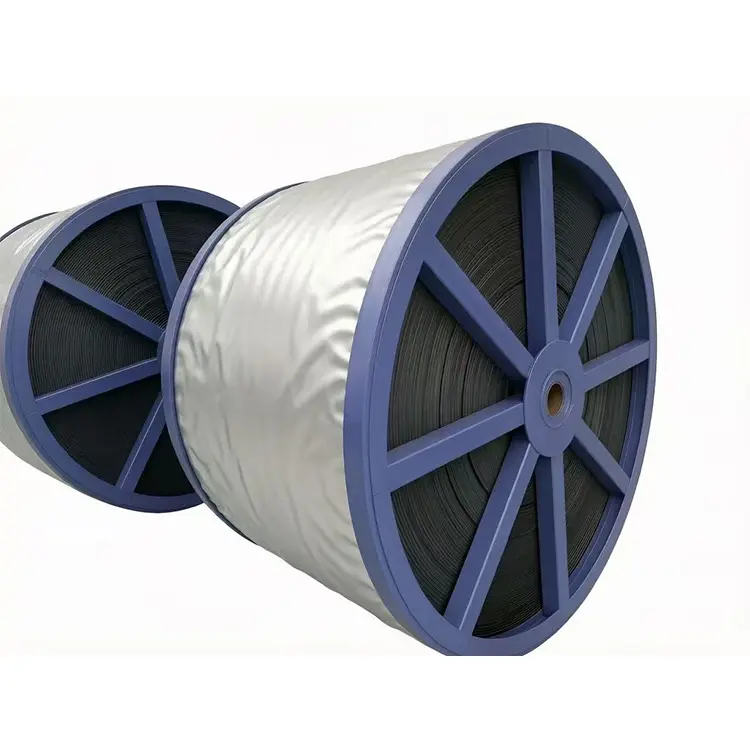
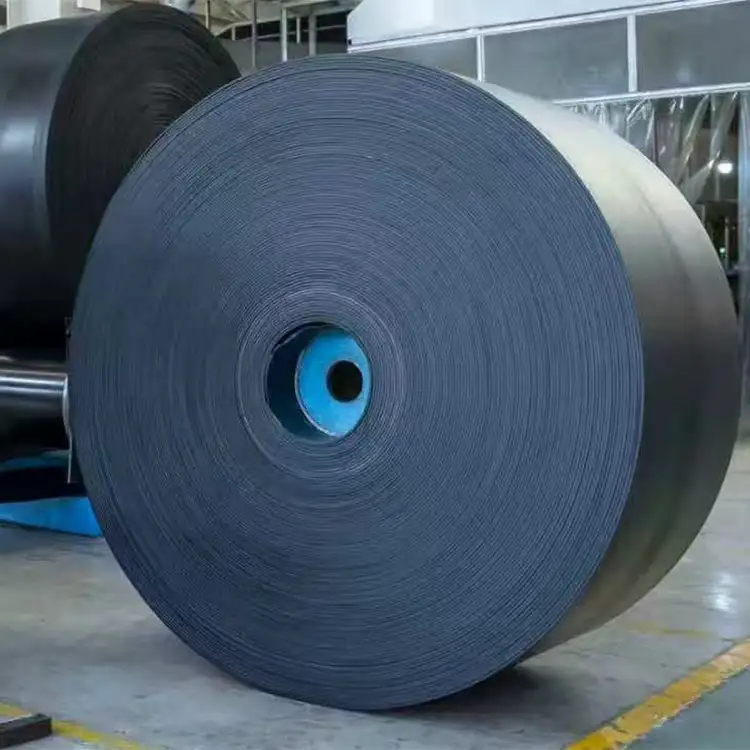
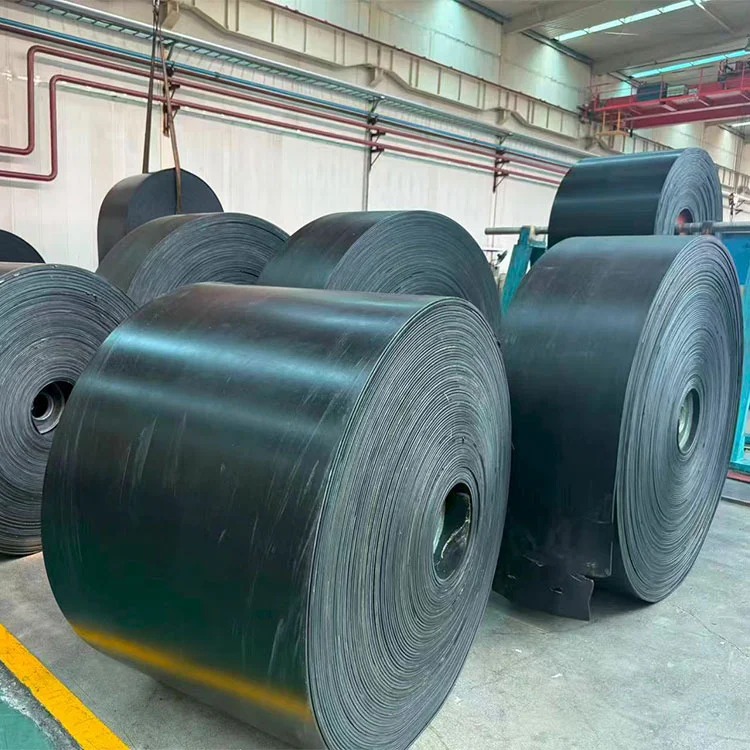
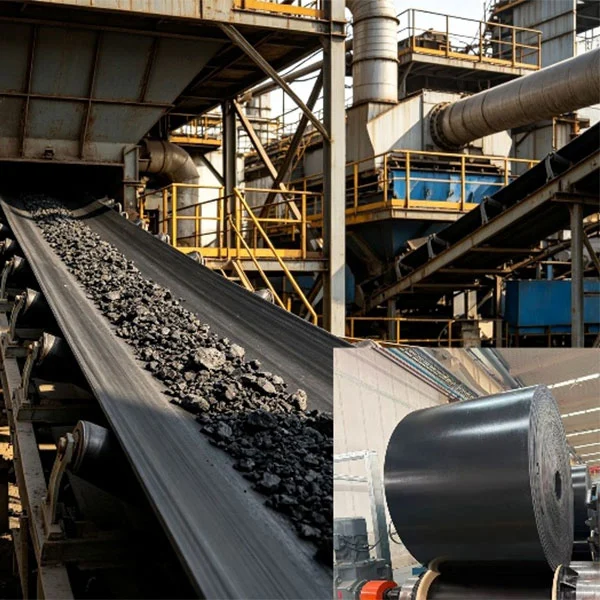
Aramid Conveyor Belts uses aramid fiber reinforcement to achieve high tensile performance with a significantly lighter belt structure. The combination of high-strength aramid yarn and advanced rubber bonding technology provides excellent load carrying capability while reducing belt weight and elongation.
Compared with conventional fabric conveyor belts, Aramid Conveyor Belt offers higher strength and improved durability. Compared with steel cord conveyor belts, it provides a lighter alternative with lower running resistance and easier installation.
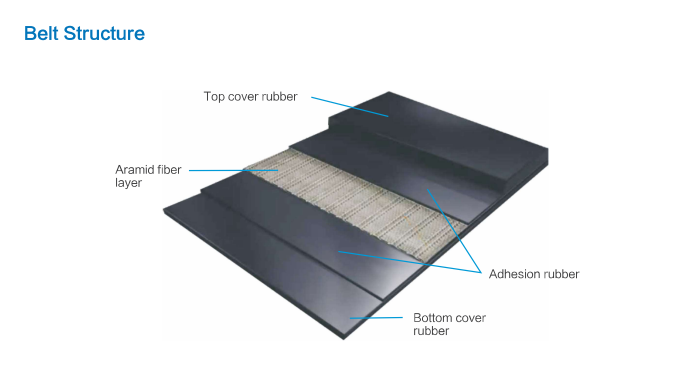
Aramid fiber is a high-performance material known for its exceptional strength-to-weight ratio. When integrated into the conveyor belt carcass, it provides strong longitudinal reinforcement while keeping the belt structure lightweight.
The special reinforcement design allows Aramid Conveyor Belts to handle demanding transportation conditions while reducing the mechanical load placed on conveyor equipment.
This makes the belt particularly suitable for applications where customers need:
| Specifications | Cover Rubber Thickness(mm) | Minimum Pulley Diameter(mm) | |||
| Top Cover | Bottom Cover | Drive/Head | Take-up/Tail | Snub/Bend | |
| DPP800 | 6 | 2 | 600 | 450 | 350 |
| DPP1000 | 6 | 2 | 600 | 450 | 350 |
| DPP1250 | 6 | 2 | 650 | 500 | 400 |
| DPP1500 | 8 | 3 | 700 | 550 | 450 |
| DPP1800 | 8 | 3 | 750 | 550 | 500 |
| DPP2000 | 8 | 3 | 750 | 550 | 500 |
Note: Please contact us for any specifications not included in the above table.
This combination creates a belt structure that balances:
Steel cord conveyor belts are widely used for high-strength applications, but their heavier structure increases installation difficulty and conveyor drive requirements.
Aramid Conveyor Belts provides comparable high-strength performance with lower belt weight. The reduced mass helps decrease operating resistance and may lower the power requirements of conveyor systems.
For projects where energy efficiency and equipment optimization are important, aramid reinforcement provides an effective alternative.
Belt elongation affects take-up requirements and conveyor system adjustment.
The aramid reinforced carcass has low elongation characteristics, allowing shorter take-up strokes and improving belt running stability.
This advantage is especially valuable for:
Heavy material loading can create repeated impact forces on conveyor belts.
The straight-warp aramid structure provides improved resistance against impact and flexural fatigue, helping maintain belt performance under continuous operation.
This makes the belt suitable for applications involving large material handling volumes and demanding working conditions.
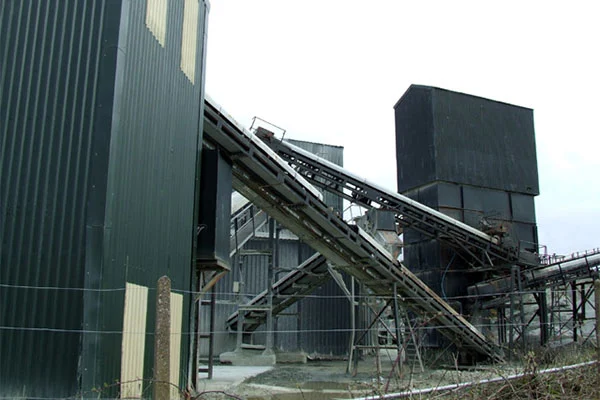
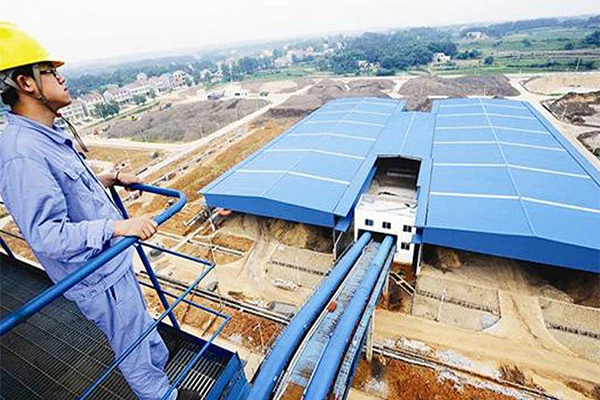
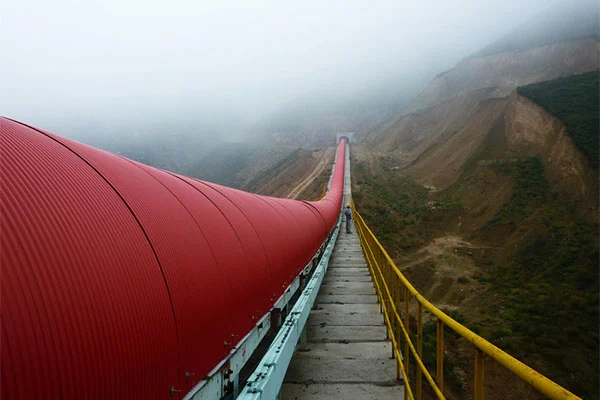
Mining operations often require conveyor belts capable of transporting large quantities of material over long distances. Aramid Conveyor Belt provides high strength with reduced weight, making it suitable for ore, coal and mineral transportation systems.
Bulk terminals require reliable conveyors for continuous loading and unloading operations. The lightweight structure helps improve conveyor efficiency while maintaining the strength required for large-capacity transportation.
Power plants transporting coal or other bulk materials can benefit from reduced belt weight and stable long-term operation.
Steel and metal processing plants require conveyor belts that can withstand heavy loads and repeated impact. Aramid Conveyor Belt provides high-strength reinforcement for demanding material handling applications.
The selection of Aramid Conveyor Belt should be based on the complete conveyor design rather than only tensile strength.
Important factors include conveyor length, transportation capacity, material characteristics, belt speed, temperature conditions and pulley design.
For long-distance systems, the low elongation characteristic of aramid reinforcement can reduce take-up requirements. For high-capacity systems, the lightweight structure can help improve overall conveyor efficiency.
Qingdao Global provides engineering support to select suitable belt structures according to actual operating conditions.
Qingdao Global Belting Group Co., Ltd. specializes in manufacturing high-performance conveyor belts for global bulk material handling industries.
With production facilities covering 660,000 square meters, more than 100 production lines and annual production capacity of 21 million square meters, Qingdao Global provides customized conveyor belt solutions for mining, cement, metallurgy, ports, power generation and recycling industries.
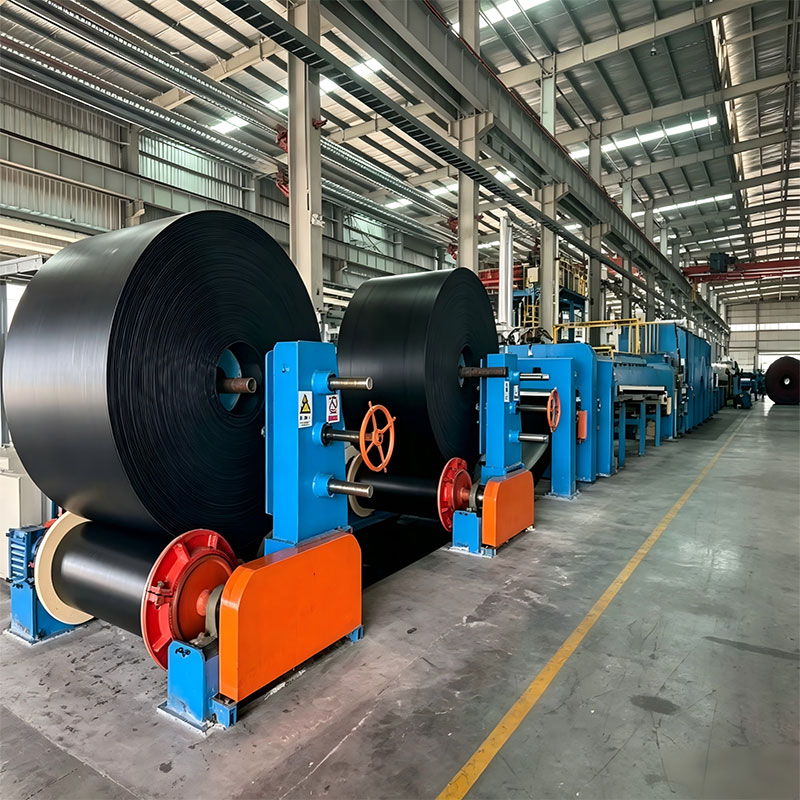
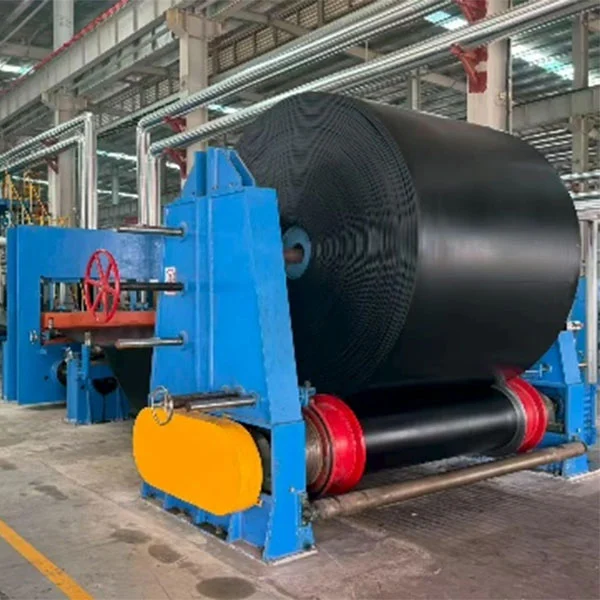
The production process includes rubber mixing, reinforcement preparation, calendering, belt forming, vulcanization and finished belt inspection.
Quality control covers tensile strength, elongation, adhesion, abrasion resistance and aging performance.
Qingdao Global combines advanced conveyor belt manufacturing technology with engineering experience for demanding industrial applications.
The company provides:
Products are supplied to customers in more than 50 countries across mining, energy, metallurgy, ports and bulk material industries.