Email
WhatsApp

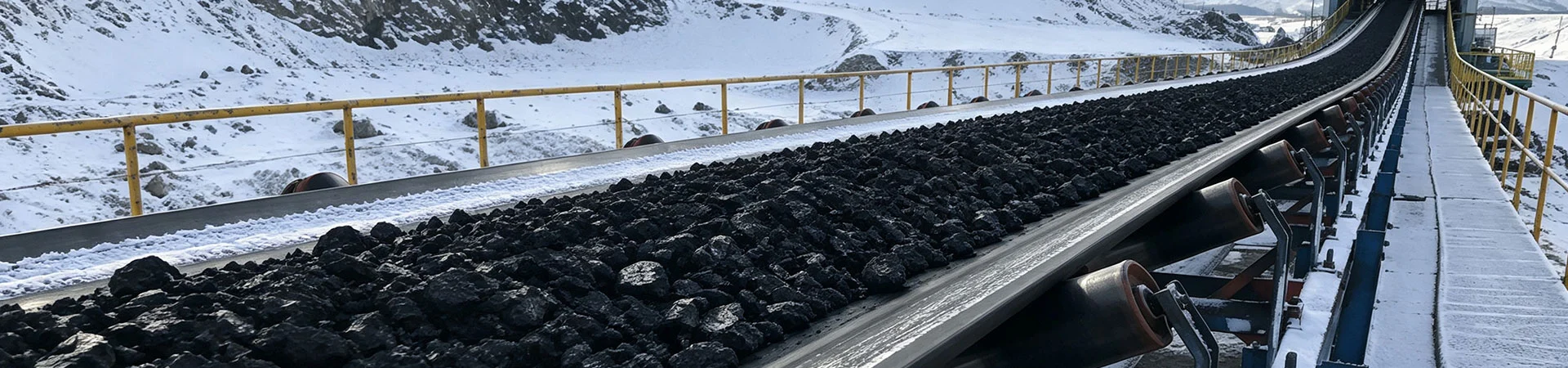
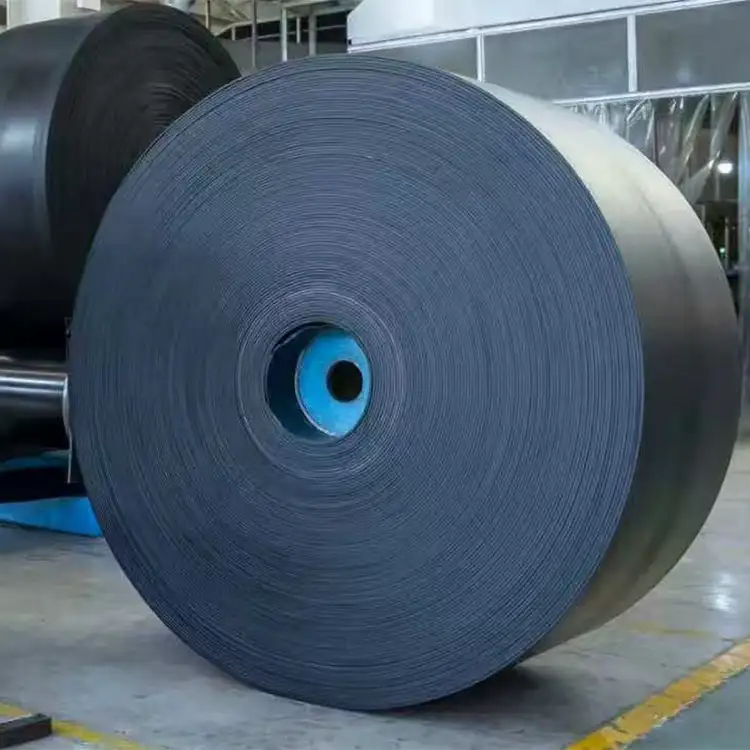
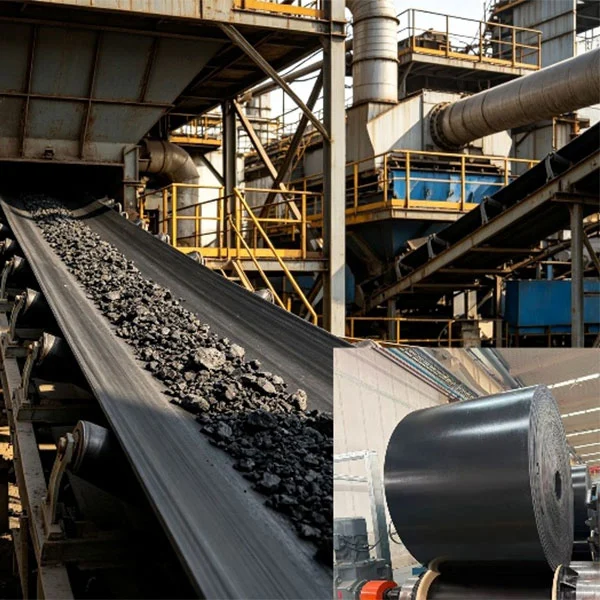
Typical applications include mining, quarrying, aggregate processing, cement raw material handling and bulk loading terminals. Cover grade, belt strength and dimensions should be matched to the actual service conditions.
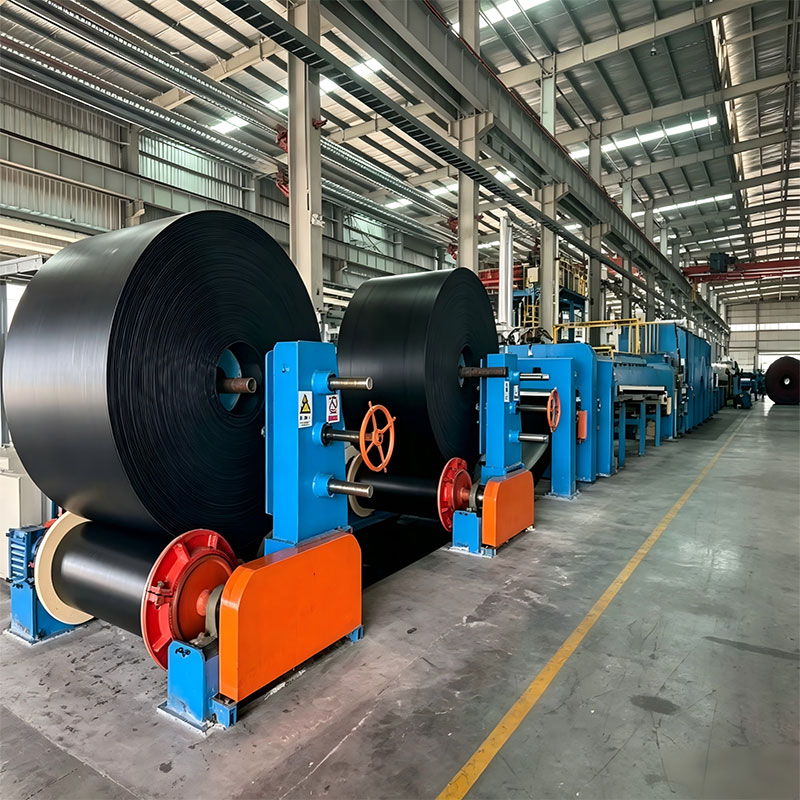
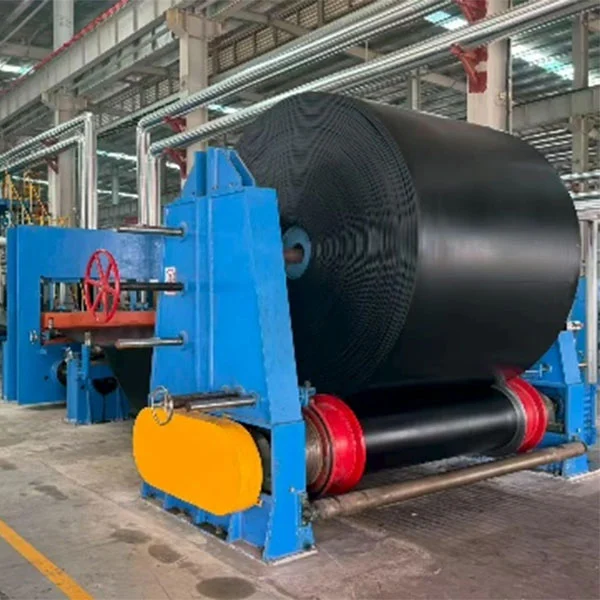
An abrasion-resistant belt combines a load-carrying carcass with rubber covers selected to withstand surface wear from the conveyed material. A multi-ply EP fabric construction is a common option. EP reinforcement uses polyester in the longitudinal direction and polyamide in the transverse direction. Other constructions, including steel cord, require a separate design review and confirmation of availability.
Top rubber cover: contacts the load and is selected for abrasion, cutting and gouging conditions at the carrying surface.
Reinforced carcass: carries belt tension and supports the required flexibility and troughing behavior.
Rubber between fabric plies: bonds the reinforcement layers in a multi-ply belt.
Bottom rubber cover: protects the carcass on the running side against contact with idlers and pulleys.
Belt splice: connects belt ends using a method compatible with the construction and operating duty.
Abrasion resistance concerns the loss of cover material through rubbing and sliding contact. Cutting, gouging and impact are different damage mechanisms and should be reviewed separately. Identify the material, particle size, sharp edges, loading conditions and observed wear pattern before selecting the compound and cover thickness. A thicker cover alone does not ensure better abrasion resistance.
|
Item |
Specification |
|
Product type |
Aramid Abrasion Resistant Conveyor Belt |
|
Primary construction |
Multi-ply EP fabric belt; final construction subject to design review |
|
Carcass strength |
Specified in N/mm of belt width according to calculated tension and splice requirements |
|
Number of plies |
Selected with strength, flexibility, pulley diameter and troughing requirements |
|
Belt width and length |
Specified for the conveyor layout; available dimensions to be confirmed |
|
Top and bottom cover thickness |
Specified separately according to wear, loading and running conditions |
|
Cover compound |
Abrasion-resistant rubber selected for the material; cutting, gouging and impact reviewed separately |
|
Abrasion performance |
Agree the test method and maximum abrasion loss with the order; confirm supporting test data |
|
Special service conditions |
Heat, oil or flame resistance requires a separately selected compound or construction |
|
Pulley diameter |
Confirm minimum diameter for the selected carcass and tension conditions |
|
Splice method |
Hot-vulcanized or mechanical splice, subject to belt construction and duty |
|
Temperature limits |
Confirm for the selected compound and actual material exposure |
|
Inspection requirements |
Agree dimensions, cover properties, adhesion and supporting reports before ordering |
Rubber covers selected to protect the carcass from abrasive bulk materials.
Cover compound reviewed against rubbing and sliding wear from abrasive solids.
Top cover thickness selected for the expected wear duty; bottom cover specified separately.
Construction reviewed for pulley compatibility and troughed conveyor layouts.
Carcass strength, dimensions and splice requirements matched to the conveyor design.
Service life depends on belt selection, loading arrangement, alignment, cleaning and maintenance. Operating conditions should be reviewed before a replacement belt is ordered.
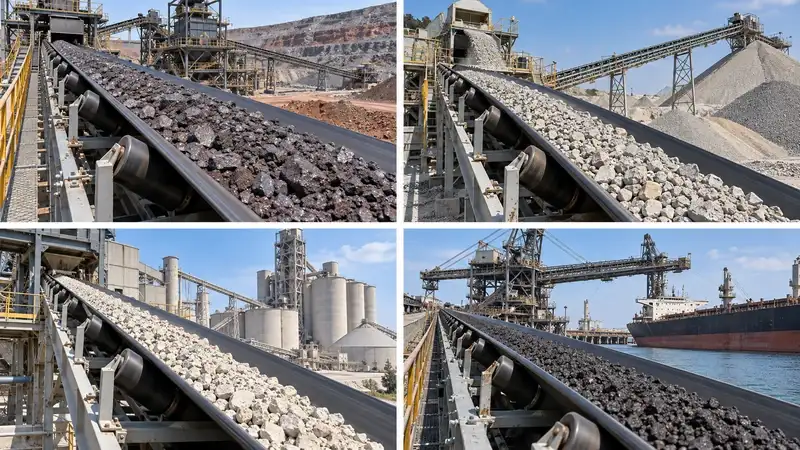
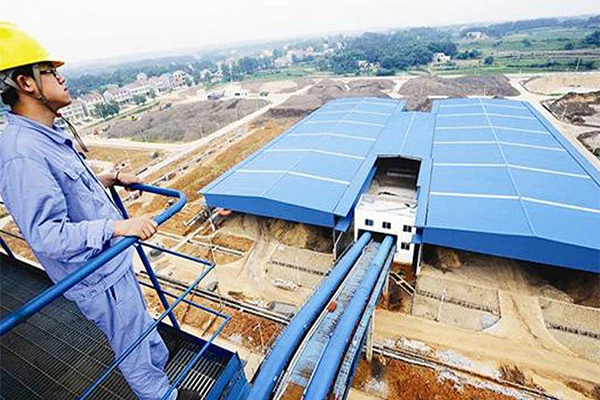
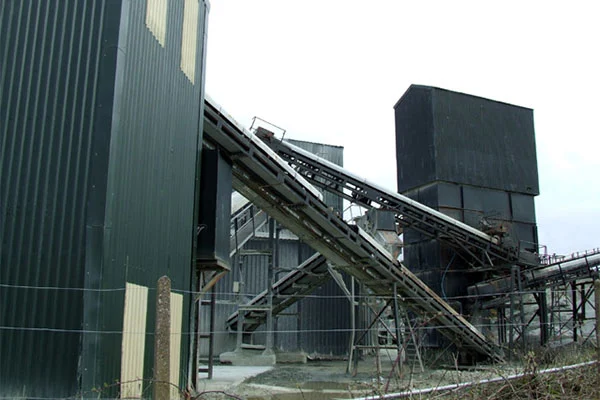
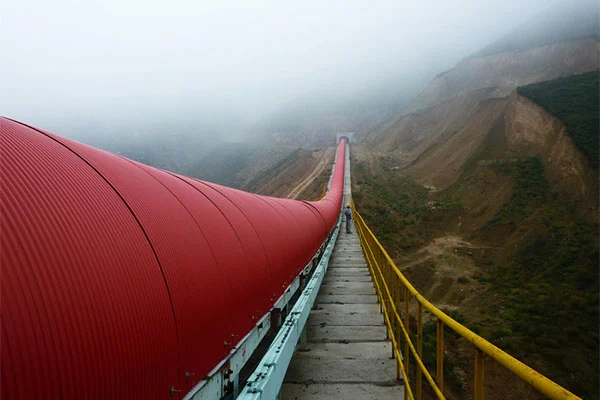
Illustrative application scenes for mining, aggregates, cement raw materials and bulk terminals.
Conveying ore and other abrasive mineral materials between crushing, screening and stockpiling stages. Abrasive ore can wear the cover during repeated handling. Large lumps and sharp fragments also require separate impact and cut-resistance review.
Moving crushed stone, gravel and sand through processing plants and loading systems. Repeated contact with sand, gravel and crushed stone creates cover wear. Select the cover compound alongside material size, transfer height and loading-point support.
Transporting abrasive limestone and other raw materials used in cement production. Hot clinker and other heated materials require a separately specified heat-resistant belt.
Handling abrasive mineral solids through stockyard and loading conveyors, with cover selection matched to the material and transfer conditions. Identify oil contamination, elevated temperatures or fire-safety requirements before selecting a cover grade.
Application-based specification review: discuss the conveyed material, belt dimensions, carcass strength, abrasion requirements and cover thickness against the conveyor duty.
Agreed product checks: establish the required inspection items and documentation before production.
Specification identification: agree labeling that identifies the belt construction, dimensions, order and batch details.
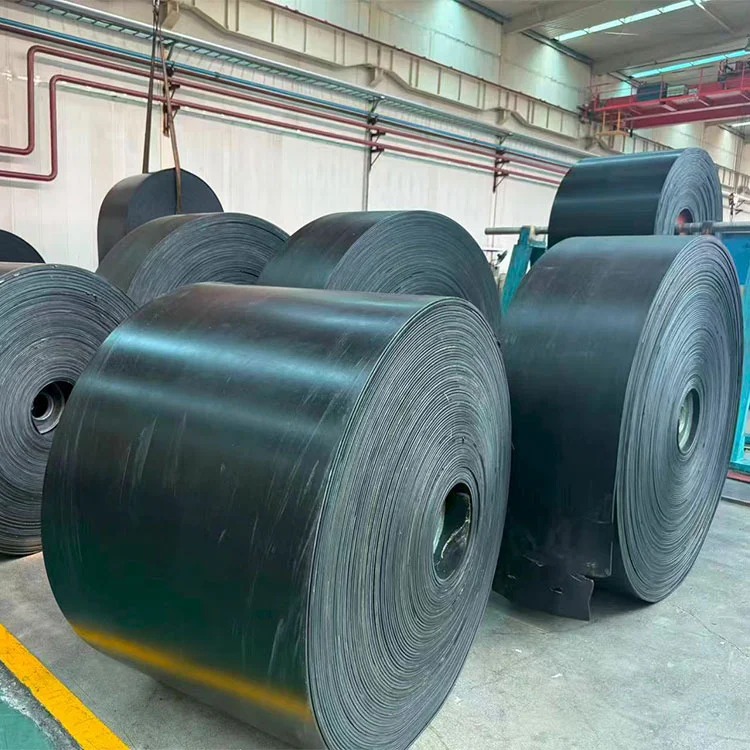
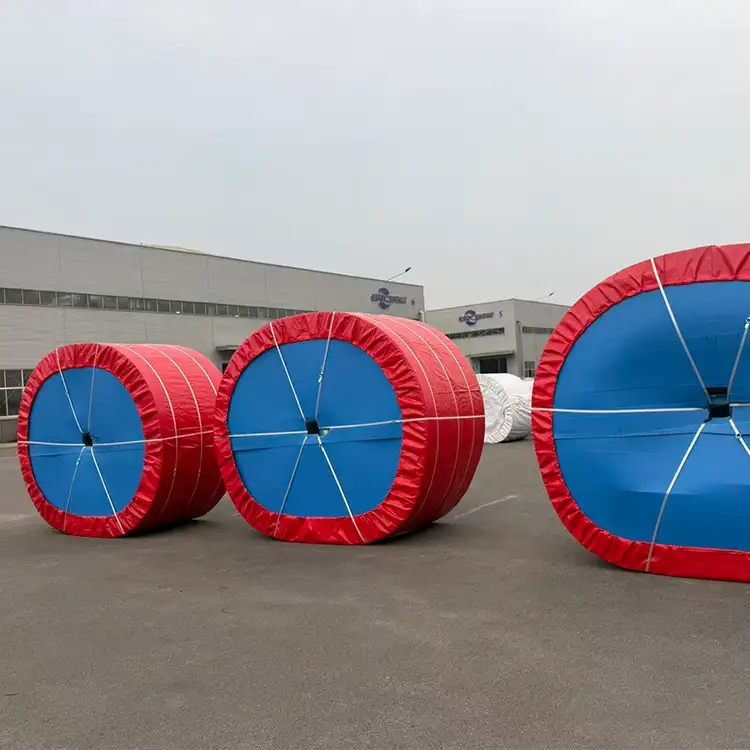
Transport planning: discuss roll dimensions and packing requirements for shipment and site handling.
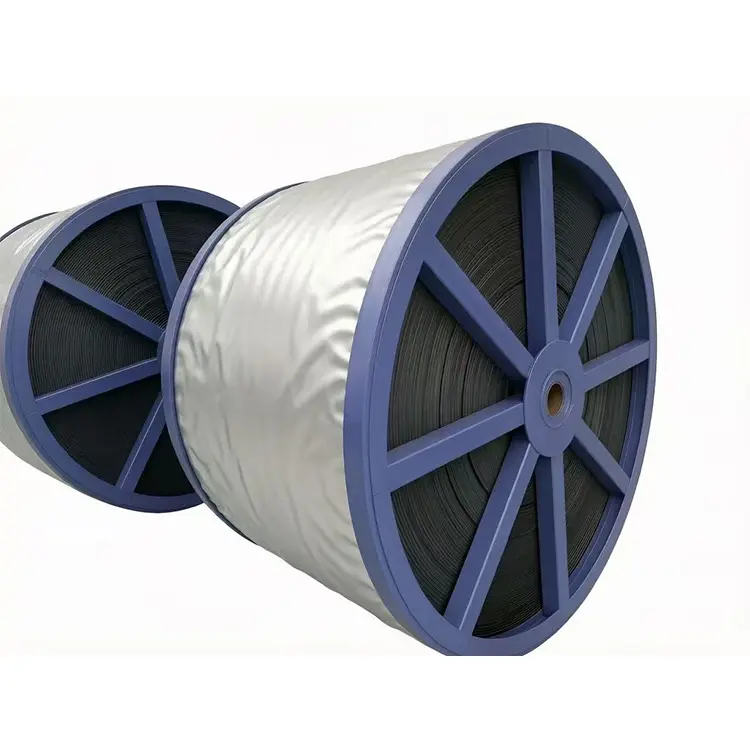
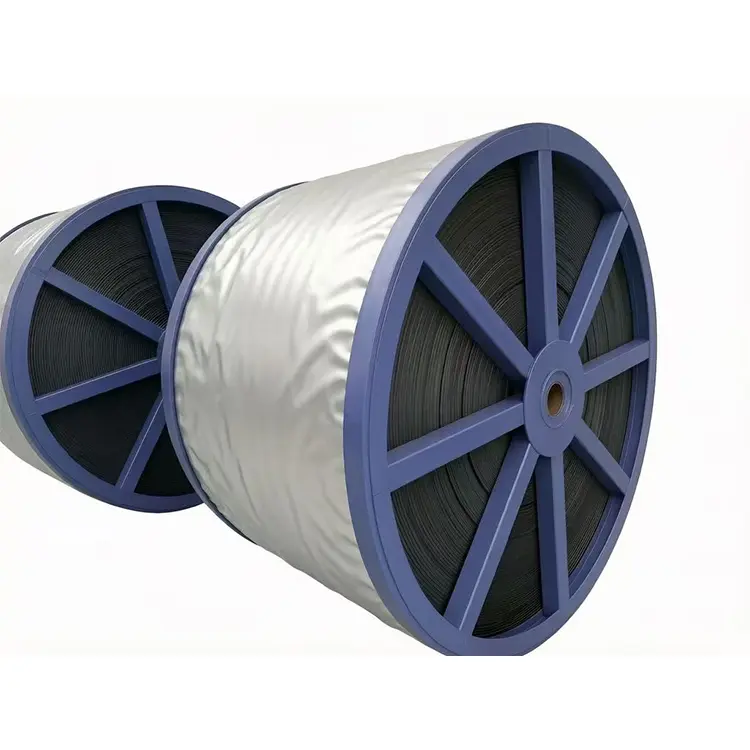
Packing options may include PP woven wrapping, protective film and reinforced outer protection. Pallet fixing or additional securing can be reviewed according to roll weight and the transport method. Confirm the final packing arrangement with the order.
Labels may include product type, belt width, length, carcass specification, cover thickness, order number and batch identification. Customer branding and package printing can be discussed before shipment.
It is a conveyor belt with a rubber cover selected to resist surface wear caused by abrasive materials. The cover grade and carcass must both suit the application.
Not automatically. Abrasion, cutting, gouging and impact are different damage mechanisms. Sharp or large material requires review of these properties alongside abrasion resistance.
These applications require a compatible heat-resistant or oil-resistant compound. An abrasion-resistant cover does not automatically provide these properties.
Compare results obtained using the same test method and conditions. For a volume-loss abrasion result, a lower value indicates less material loss in that test; it does not by itself predict service life. Ask for the method, unit and supporting report.
Provide belt width and length, existing belt marking, material type and size, capacity, speed, loading height, pulley diameters and operating temperature. Include required cover grades and site conditions.
The method depends on construction, tension and site maintenance needs. For multi-ply fabric belts, mechanical or hot-vulcanized options require review; steel cord belts need a construction-specific splice design.
|
Selection factor |
General purpose selection |
Abrasion resistant selection |
|
Operating duty |
Routine material handling |
Repeated contact with abrasive solids |
|
Cover choice |
Matched to ordinary material contact |
Compound selected for abrasion; cuts and impact reviewed separately |
|
Carcass choice |
Matched to conveyor duty |
Also matched to tension, pulleys and splice requirements |
|
Special resistance |
Requires a specific grade |
Also requires a specific grade; not automatic |
Address
Nancun Industrial district, Qingdao, Shandong, China
Tel