Email
WhatsApp

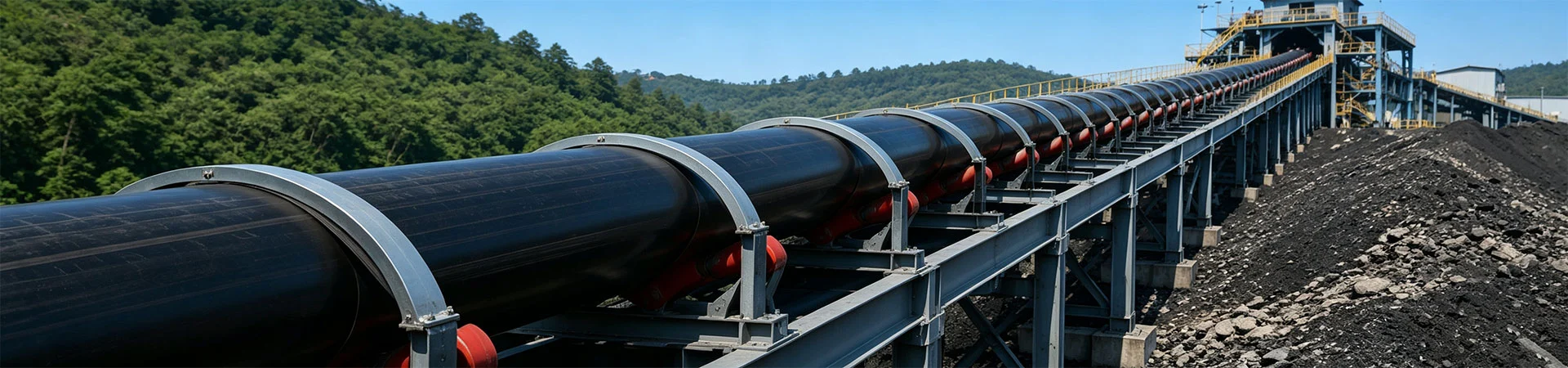
Pipe conveyor systems can reduce the need for transfer points and can be routed around site constraints. Belt selection must account for conveying capacity, material characteristics, route geometry, belt speed and actual operating conditions.
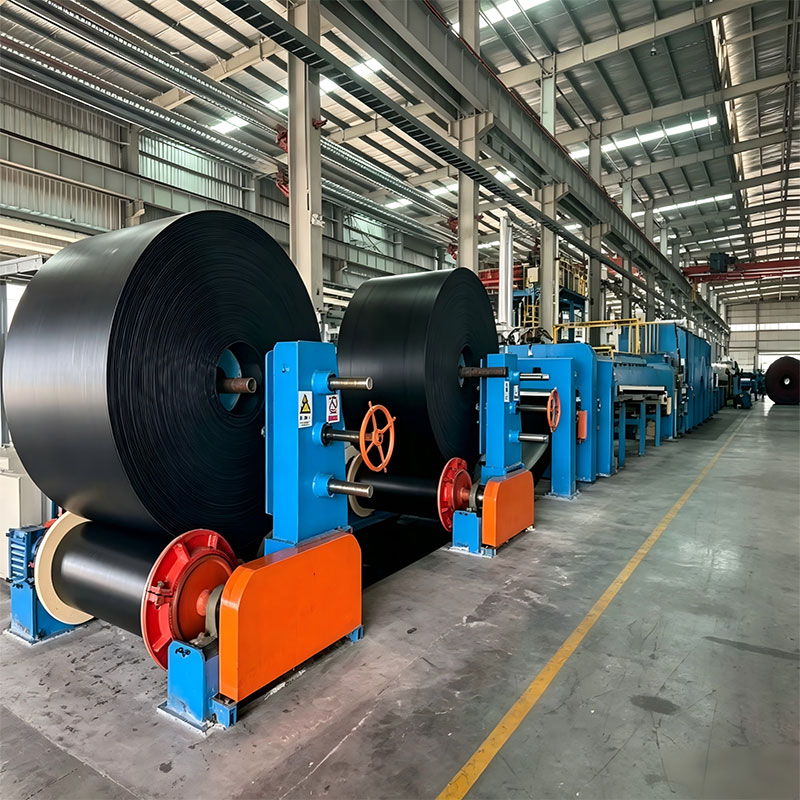
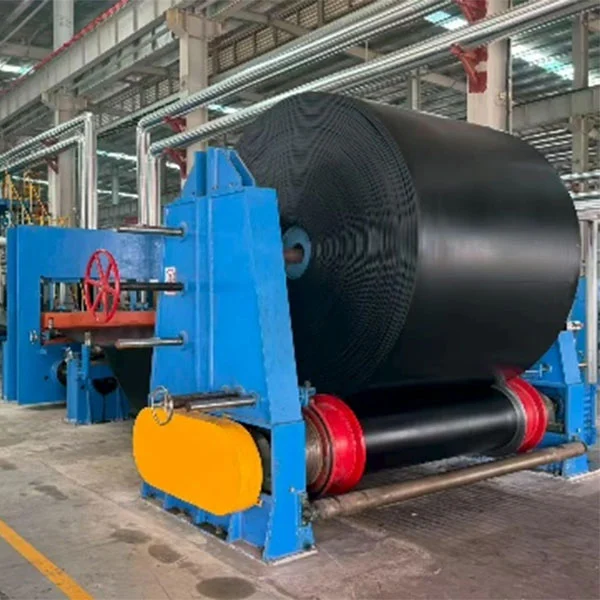
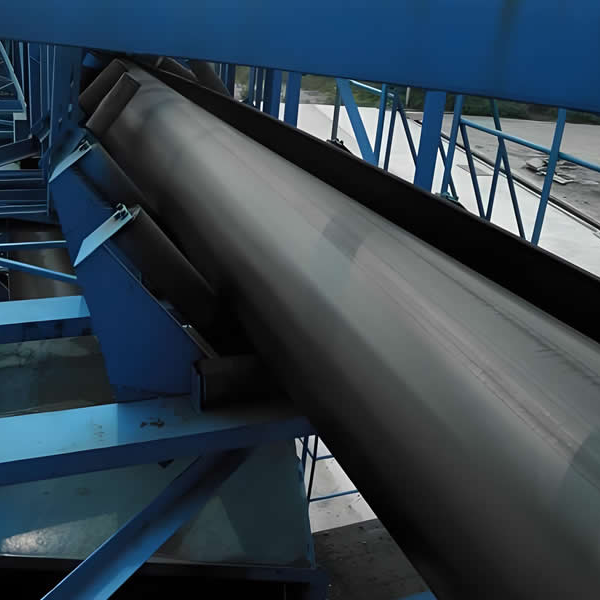
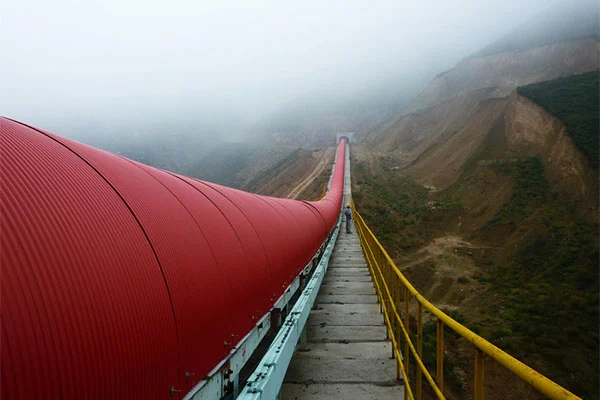
Tubular conveying structure: The Large Capacity Pipe Conveyor Belt is formed into a closed tube by the conveyor idler arrangement, helping contain bulk material during transport.
Carcass construction: The supplied reference table applies to textile-carcass belts. EP or NN fabric reinforcement may be specified where supported by project requirements. Steel-cord construction requires separate engineering data.
Cover rubber: Top and bottom cover compounds should be selected for the conveyed material, abrasion level, temperature, oil or chemical exposure, and environment.
Flexibility and tube stability: The belt needs suitable flexibility to form and maintain the required tubular shape while meeting conveyor tension and stability requirements.
System matching: Selection should consider tube diameter, belt width, idler spacing, transition distance, curve radius, lump size, belt speed, loading and conveyor layout.
The table below transcribes the values shown in the supplied Pipe Conveyor Belt reference image. They are indicative reference values for textile-carcass rubber conveyor belts only, not guaranteed ratings. Confirm all dimensions, units and performance through project-specific engineering before publication or quotation.
| Nominal Tube Diameter | Indicative Belt Width | Standard Idler Spacing | Minimum Transition Distance | Minimum Curve Radius | Max Lump Size | Max Speed | Volumetric Capacity |
| mm | mm | mm | mm | mm | mm | m/sec | m³/h |
| 100 | 450 | 1.10 | 2.5 | 30 | 33 | 2.2 | 21.2 |
| 150 | 600 | 1.10 | 4.0 | 45 | 45 | 2.2 | 46.9 |
| 200 | 800 | 1.30 | 5.0 | 60 | 60 | 2.5 | 84.7 |
| 250 | 1000 | 1.45 | 6.5 | 75 | 75 | 2.5 | 132.4 |
| 300 | 1200 | 1.60 | 7.5 | 90 | 95 | 3.0 | 190.7 |
| 350 | 1400 | 2.00 | 9.5 | 105 | 110 | 3.5 | 256.2 |
| 400 | 1600 | 2.20 | 10.0 | 120 | 125 | 4.0 | 339.1 |
| 450 | 1800 | 2.30 | 11.0 | 135 | 140 | 4.5 | 429.2 |
| 500 | 1900 | 2.40 | 12.5 | 150 | 160 | 5.0 | 530.0 |
| 550 | 2100 | 2.50 | 13.5 | 160 | 180 | 5.5 | 641.2 |
* Important source note: the supplied reference image labels standard idler spacing, minimum transition distance and minimum curve radius in mm. These units appear unusual for these parameters and must be verified against the original engineering source. They have been retained as printed and must not be silently converted.
Belt tensile strength and carcass type
Number of fabric plies or steel-cord construction details
Top and bottom cover thickness
Total belt thickness and edge construction
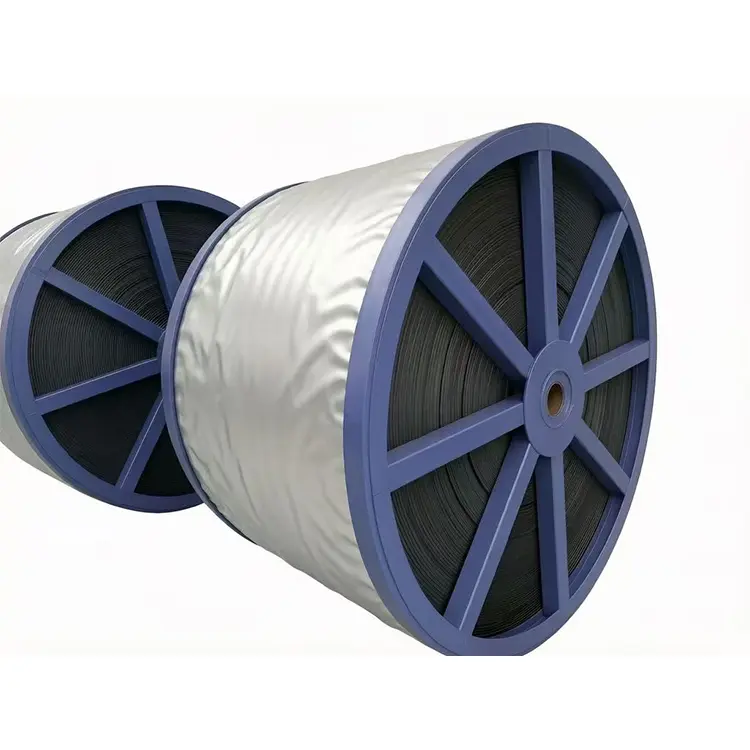
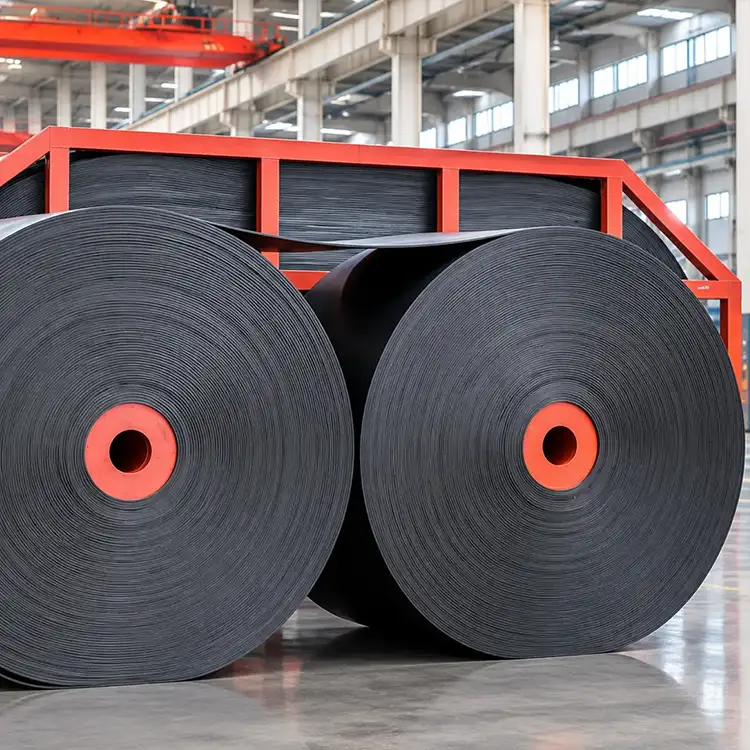
Belt length, roll diameter and reel requirements
Rubber grade and applicable test standards
Enclosed material transport: The tubular arrangement helps reduce spillage and dust escape along the conveying route.
Large-volume handling: The system can be designed for high-volume continuous bulk transport; actual capacity depends on system design and operating conditions.
Curved route capability: Pipe conveyor systems can accommodate horizontal and vertical curves within engineered limits.
Reduced transfer points: A continuous route may reduce intermediate transfer points and associated material handling.
Project-specific construction: Carcass, cover compounds and dimensions are selected to meet the conveyor duty.
Mining and mineral processing: Iron ore, copper ore, coal and other bulk minerals between extraction, crushing, screening and processing areas.
Cement plants: Limestone, clinker and other raw or processed materials between storage and production stages.
Power generation: Coal and other suitable bulk fuels within plant material-handling systems.
Ports and terminals: Bulk material movement between ship unloading, stockyards, storage and loading facilities.
Steel plants: Iron ore, coke and other bulk raw materials within integrated industrial sites.
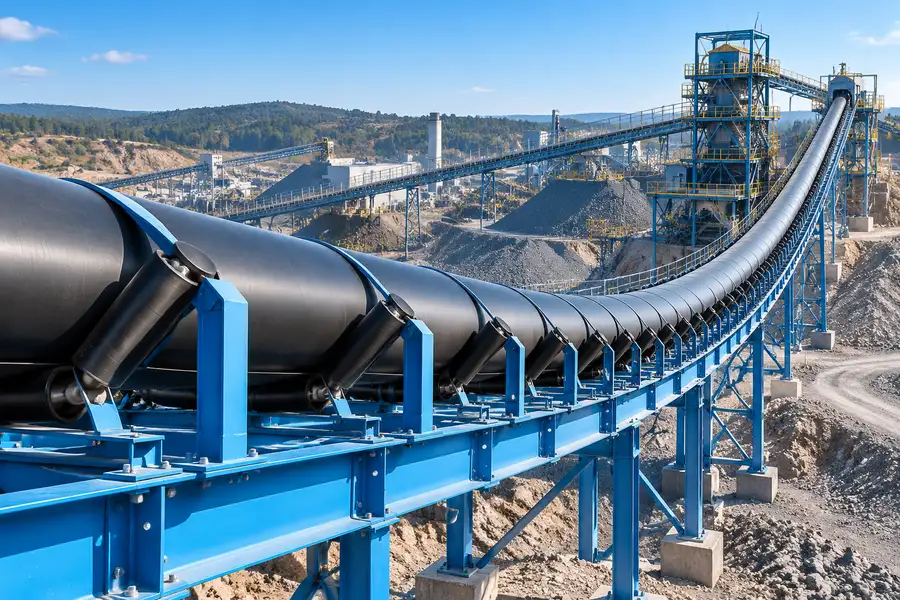
Conveyor review: Review conveying capacity, material properties, route profile, curves and operating environment.
Belt selection: Assess carcass construction, tensile strength, belt width, tube diameter, cover thickness and rubber compound.
Geometry and flexibility: Check transition distance, idler spacing, minimum curve radius and the belt's ability to form and maintain a stable tube.
Inspection and quality: Agree dimensional, appearance, adhesion and mechanical inspection requirements, applicable standards and batch identification.
Installation and maintenance: Provide agreed guidance for storage, handling, installation, splicing, tracking and routine inspection.
Product selection based on the actual conveyor layout and bulk material characteristics.
Construction and rubber-cover options confirmed against project requirements and manufacturing scope.
Technical coordination on belt dimensions, reinforcement, tube-forming requirements and operating conditions.
Agreed inspection criteria and product identification for order traceability.
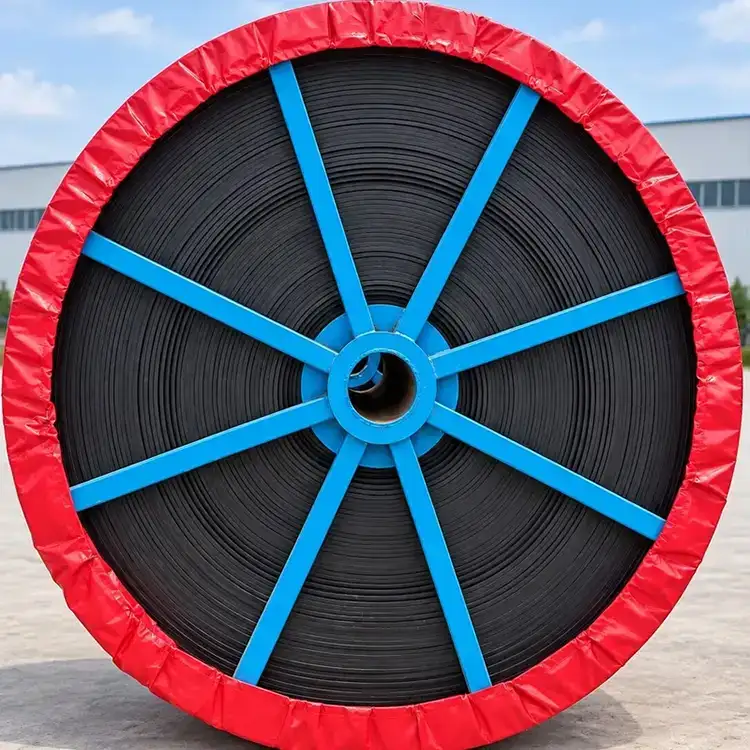
Export packing and roll-handling arrangements matched to shipment requirements.
Roll protection: Protect the belt surface and edges against moisture, contamination, impact and handling damage.
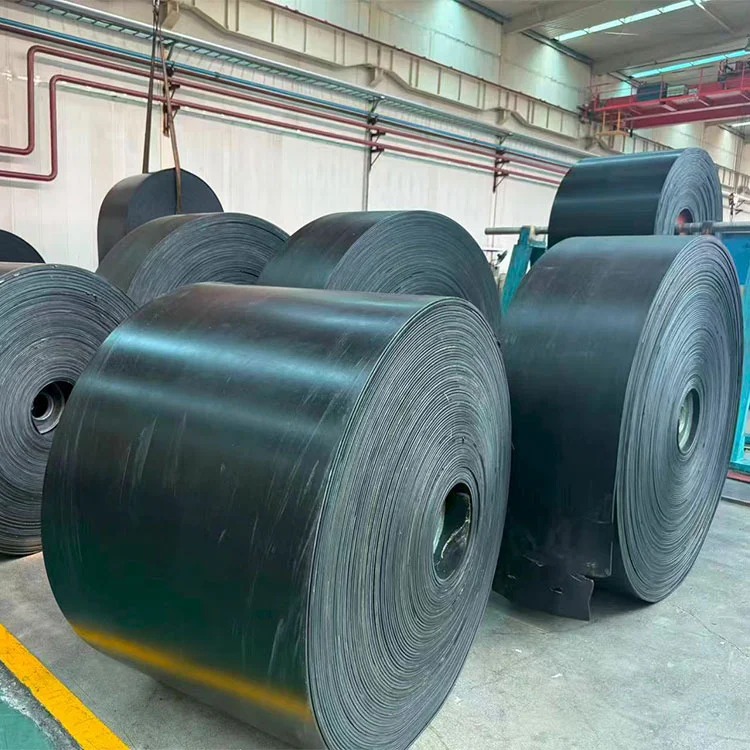
Reel and support: Agree reel dimensions, roll weight, lifting points and support structure according to belt size and shipment method.
Identification: Use labels showing order reference, belt specification, roll length and batch or roll number.
Transport securing: Block and secure each roll to prevent movement and damage during handling and transit.
A: It is a conveyor belt designed to form a closed tubular shape during operation, allowing bulk materials to be transported in an enclosed system.
A: Depending on belt construction and system design, applications may include ores, coal, limestone, clinker, aggregates and other bulk materials.
A: Pipe conveyor systems can be designed for horizontal and vertical curves. The permissible curve radius must be established by engineering review.
A: Capacity depends on tube diameter, belt speed, material bulk density, fill level, lump size and system design. A project-specific calculation is required.
Address
Nancun Industrial district, Qingdao, Shandong, China
Tel