Email
WhatsApp

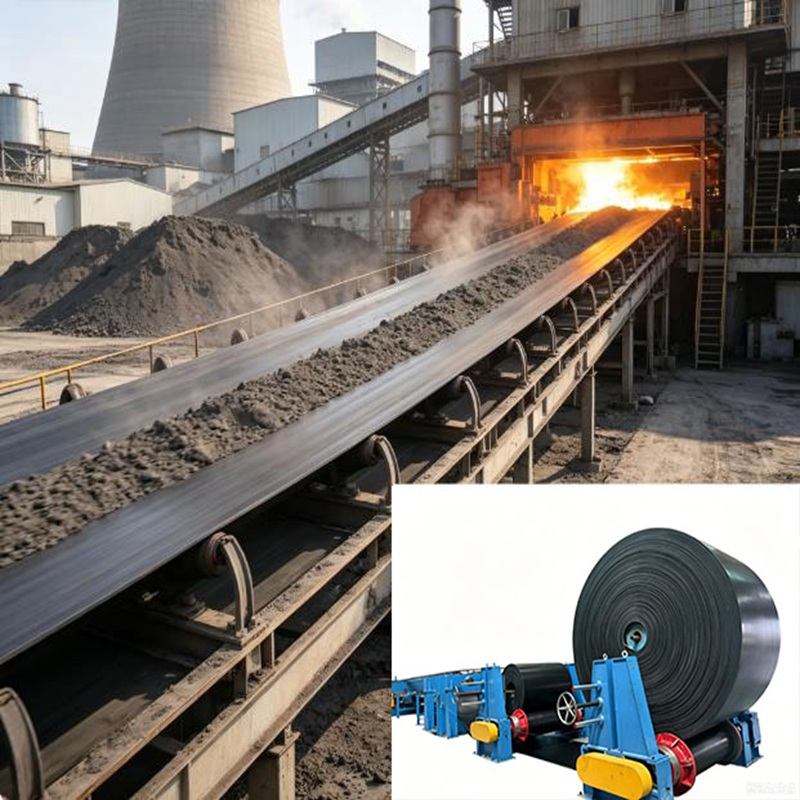
Cover construction: the cover is the only part that meets hot material, so it carries the thermal duty alone. Compound grade and cover thickness are selected from measured material temperature, lump size and abrasion at the transfer point. A thicker cover buys wear life; the correct compound buys heat life. Both are specified separately.
Carcass selection: heat resistance does not decide carcass type—tension, pulley diameter, troughability and splice method do. EP or NN suits shorter centres and smaller pulleys; steel cord suits long, high-tension runs. Choosing carcass from temperature alone is a common cause of premature failure in steel plant conveying.
Thermal duty: continuous temperature, peak temperature and peak duration are recorded separately in the supply specification. Particle size, loading depth, belt speed and dwell time under the chute shift the actual belt surface temperature—and that surface figure, not the material figure, is what the cover is designed against.
Conveyor compatibility: transfer impact, trough transitions, pulley diameters, cleaner pressure and return-run cooling are reviewed before the specification is fixed. Prolonged contact between hot material and a stationary belt is the most damaging condition in steel plant service, so shutdown and restart procedures belong in the installation plan.
| Item | Specification |
| Product Name | Heat Resistant Conveyor Belt for Steel Plants |
| Cover Compound | Special heat resistant rubber formulation, selected by temperature band |
| Carcass and Strength | EP, NN or steel cord, selected for conveyor tension, pulley geometry and thermal duty |
| Belt Width | Matched to conveyor layout, throughput and material size |
| Continuous Material Temperature | Up to 200°C for a confirmed grade and duty |
| Short-Duration Peak Temperature | Up to 250°C; allowable duration and frequency confirmed per application |
| Cover Thickness | Selected for heat exposure, abrasion and impact together |
| Standard Compliance | DIN 22102 / ISO 14890 / GB/T 20021 as agreed in the technical annex |
| Test Records | Heat-ageing, adhesion, tensile and elongation data supplied per order |
| Standard Lead Time | 25–30 days |
| Certification | ISO 9001, ISO 14001, ISO 45001, MA coal safety certification |
| Item | What It Means in Service |
| Heat Resistant Covers | Cover compounds are selected for the confirmed temperature band, and each batch is checked for tensile and elongation retention after heat ageing—measured, not assumed. |
| Adhesion Performance | Cover-to-carcass and ply-to-ply adhesion are tested to the agreed standard. Poor adhesion is the usual root cause of cover stripping under heat, so it is a release criterion. |
| Retained Mechanical Properties | Acceptance criteria are set on retained tensile and elongation after ageing, giving a measurable basis for comparing belt life between suppliers. |
| Combined Heat and Wear Assessment | Heat softens rubber and abrasion then removes it faster. Cover thickness and compound are chosen against both loads together, because either one alone gives a misleading answer. |
| Application-Specific Construction | Carcass, splice materials and pulley compatibility are matched to the actual conveyor, not to a stock list. |
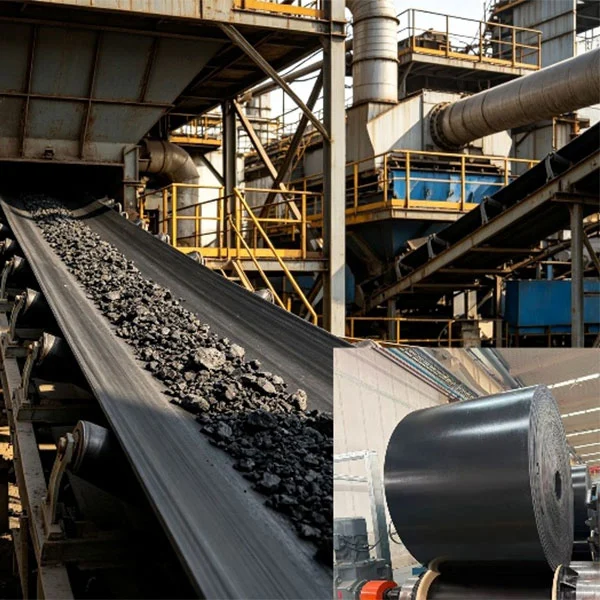
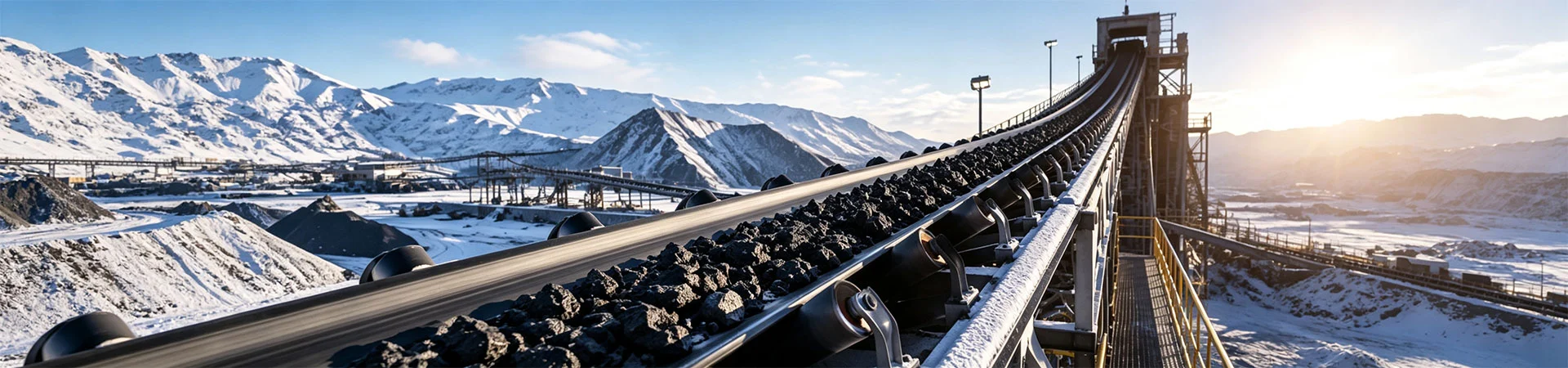
Sinter plant discharge: sinter is conveyed after suitable cooling, with residual heat and local hot spots assessed against the selected belt limits. Discharge height and lump size at the transfer point usually set cover thickness more than average temperature does.
Pellet handling: cooled pellets move between processing, storage and furnace feed preparation, where residual temperatures still require heat resistant covers. Trough transitions and pulley diameters on these routes are often tighter than on sinter lines, which affects carcass choice.
Coke handling: coke is moved after cooling, with residual hot particles, abrasion and any separate flame-performance requirement checked independently. Heat resistance and flame resistance are different properties and are specified as such.
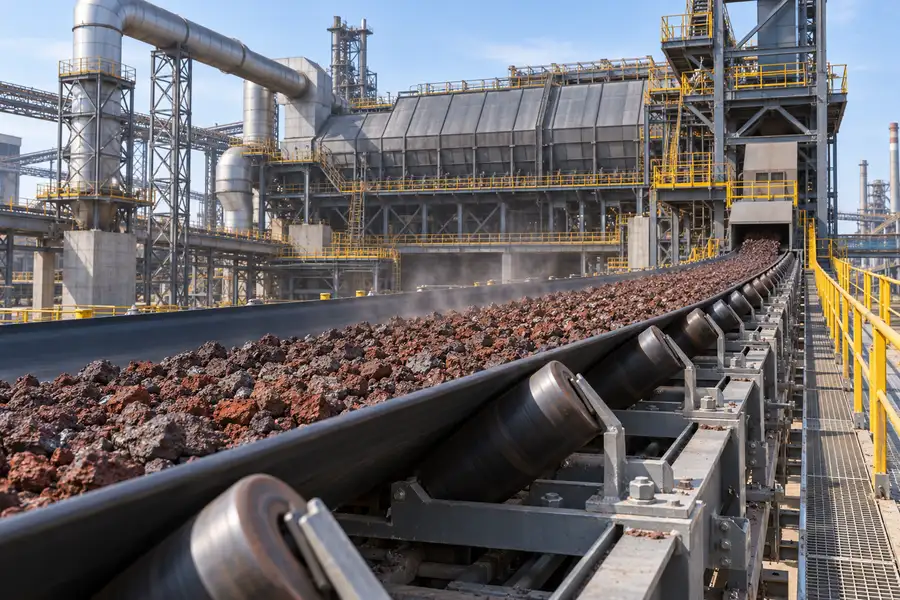
Engineering capability: selection support covers material temperature, abrasion and impact assessment, belt strength calculation, conveyor tension checks and field splicing guidance. The service scope is confirmed per project, so there is no ambiguity about what is included.
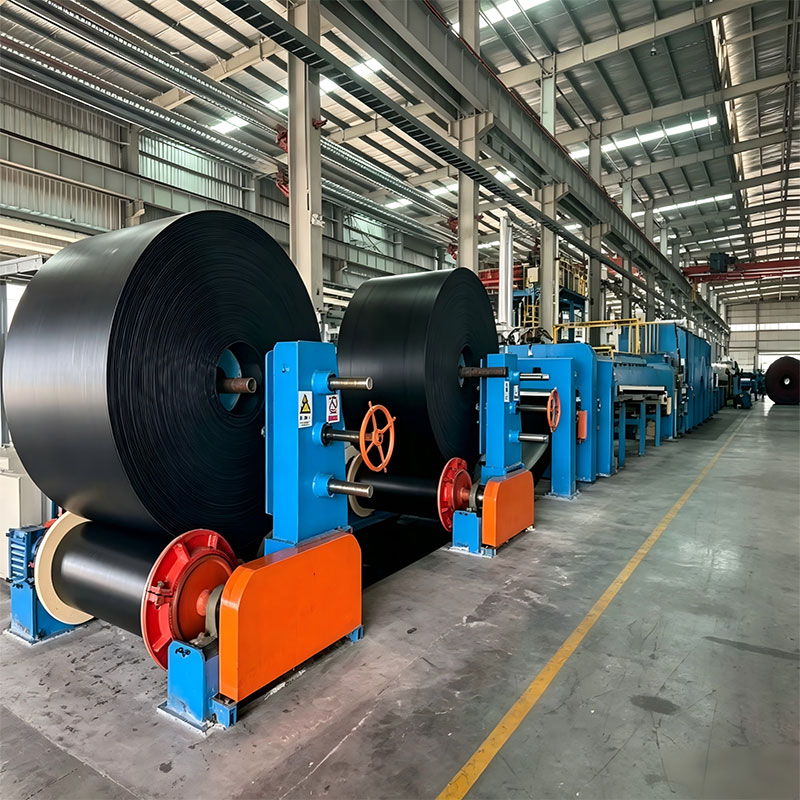
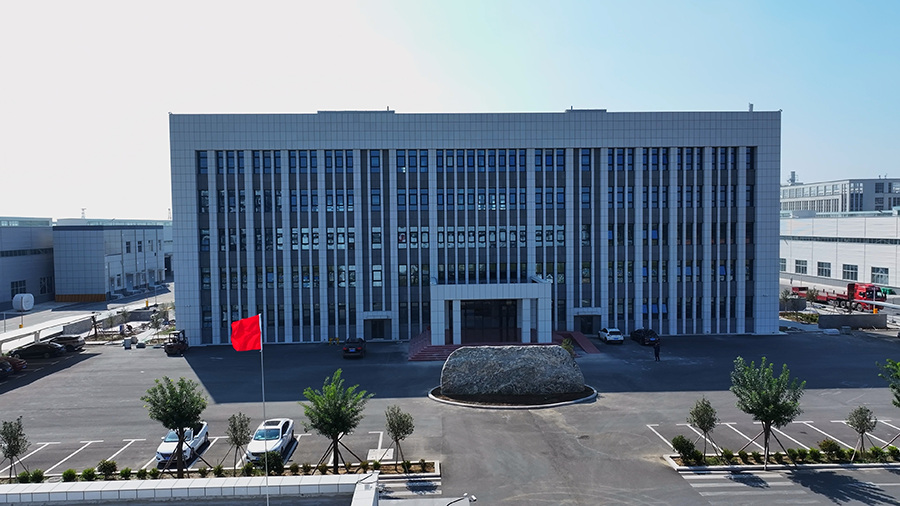
Manufacturing base: production runs across four domestic branches and an overseas plant in Thailand, with 660,000 m² of manufacturing area, 24 workshops, more than 100 production lines and 1,300+ staff. Annual capacity of 21 million m² supports large project volumes without stretching lead times, and products are exported to more than 50 countries.
R&D and testing: a 36-person engineering and research team works on heat-resistant and wear-resistant rubber formulations, backed by more than 20 manufacturing patents. The in-house laboratory runs DIN abrasion, servo-controlled tensile, ozone resistance, low-temperature, Mooney viscometer and rheometer testing, so heat-ageing and adhesion data come from our own equipment rather than a third-party queue.
Product compliance: applicable DIN, ISO or GB/T requirements are defined in the technical agreement for the selected product. Material and performance documentation—including heat-ageing and adhesion records—forms part of the agreed delivery scope.
Technical service: support covers pre-sales operating-condition assessment, installation and splicing consultation, and follow-up on belt performance after commissioning, with attention to hot material contact, cooling conditions and maintenance practice.
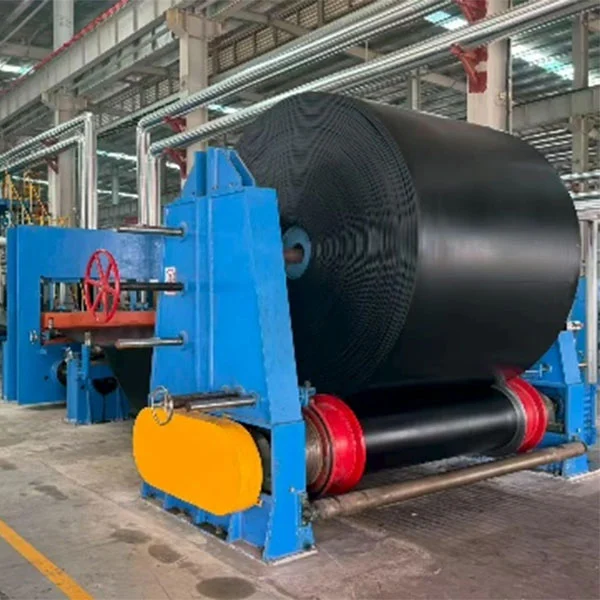
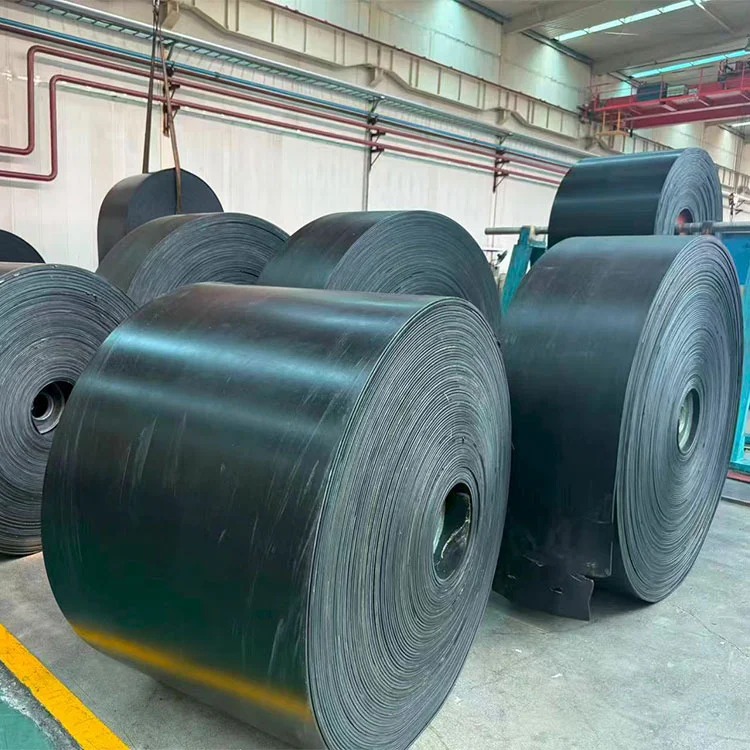
Production and inspection: belt construction, cover compound and thickness are specified for the steel plant duty. Pre-shipment inspection covers dimensions, appearance and the agreed mechanical, adhesion and heat-resistance tests, with batch traceability defined in the order.
Cover formulation matched to duty: special rubber compounds are selected to limit heat-related deterioration under the specified steel plant duty, rather than applying one heat grade across every application.
Thermal and mechanical matching: temperature is evaluated together with abrasion, particle size and impact, so cover and carcass work as one belt system instead of two independent choices.
Operating limits written down: continuous temperature, short-duration peaks and contact conditions are recorded in the supply specification—what was agreed is what gets tested before shipment.
Maintenance-focused selection: cooling opportunities, belt cleaning, shutdown procedures and access for splice inspection are considered at the planning stage, because installation conditions decide how long the belt actually lasts.
Verified supply base: ISO 9001, ISO 14001 and ISO 45001 certification, MA coal safety certification, 21 million m² annual capacity and a Thailand production base give buyers a documented supply chain to audit, not just a quotation.
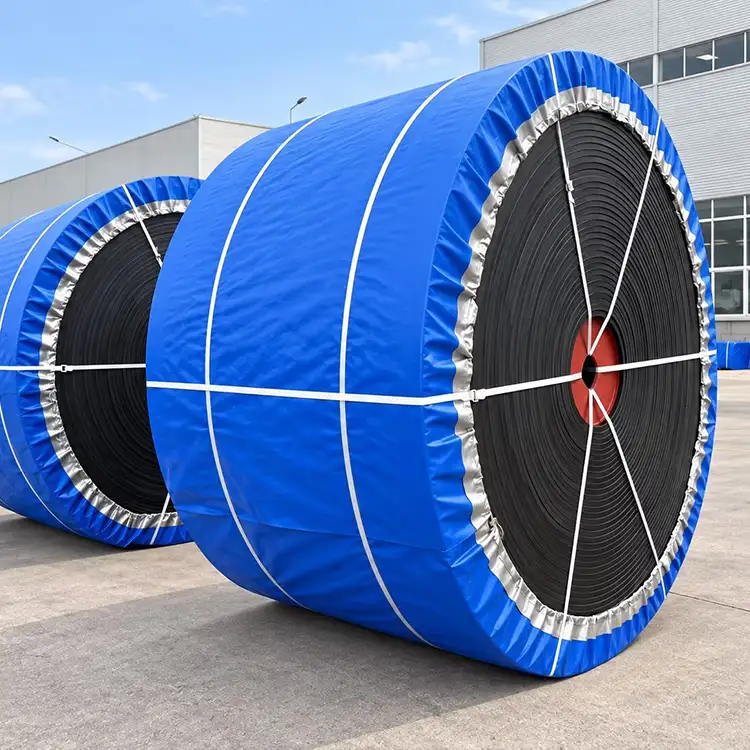
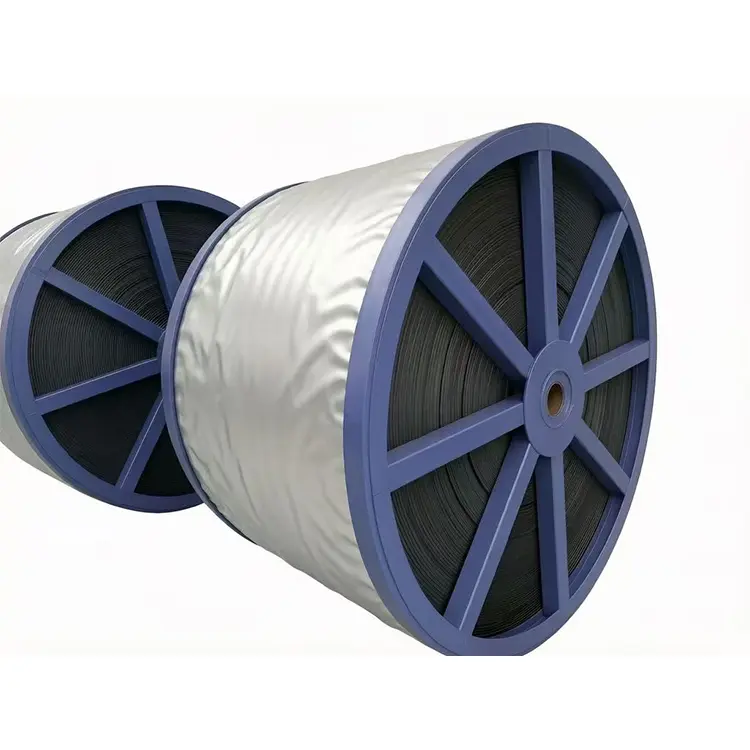
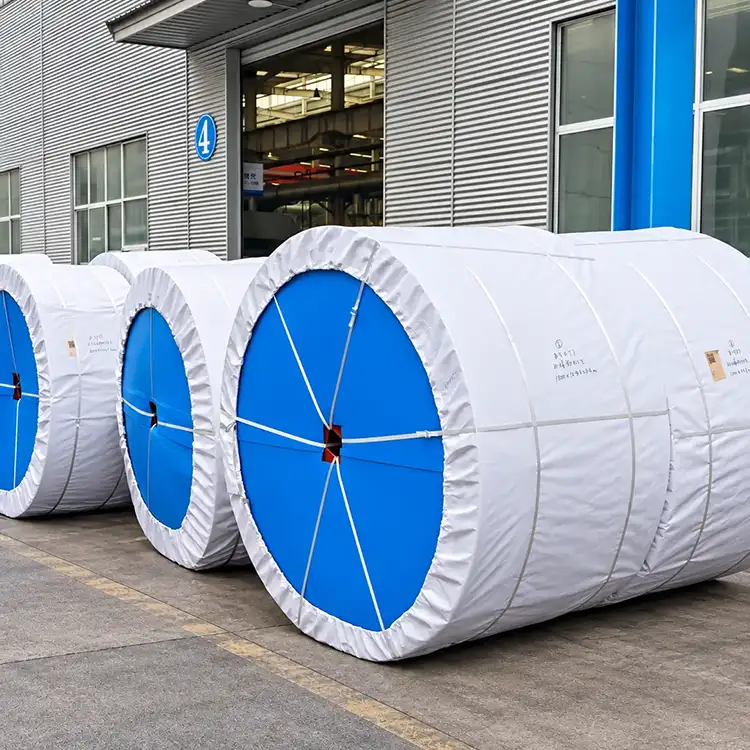
Roll protection: protective wrapping suitable for transport and storage. Rolls are stored away from direct sunlight, heat sources, standing water and damaging chemicals.
Handling arrangement: reel or support structure, lifting method and allowable roll dimensions are agreed in advance to suit shipment and site access.
Identification: roll labels show the order reference, belt specification, roll length and traceable batch or roll number, so a roll can be traced back to its test records.
Transport securing: blocking and securing are specified to prevent roll movement and damage in transit.
A1: Suitable grades handle material temperatures up to 200°C continuously, with short-duration peaks up to 250°C. These limits are confirmed for the selected construction and actual contact conditions. Peak duration, lump size and belt surface temperature all affect suitability.
A2: No. Material must be sufficiently cooled before loading and must stay within the confirmed operating limits. Molten slag and direct furnace discharge need a different conveying solution, and saying so upfront avoids a failed installation.
A3: Heat resistance and flame resistance are different properties. Where flame performance is required, the relevant tests are specified separately and a construction meeting both requirements is confirmed.
A4: Heat-ageing, adhesion, tensile and elongation records are supplied as agreed in the technical annex, together with batch traceability. For buyers running supplier audits this is usually the first document requested, and it is prepared from in-house laboratory data.
A5: 25–30 days for standard specifications. Project volumes above that are scheduled against the 21 million m² annual capacity across the domestic branches and the Thailand plant.
Address
Nancun Industrial district, Qingdao, Shandong, China
Tel