Email
WhatsApp

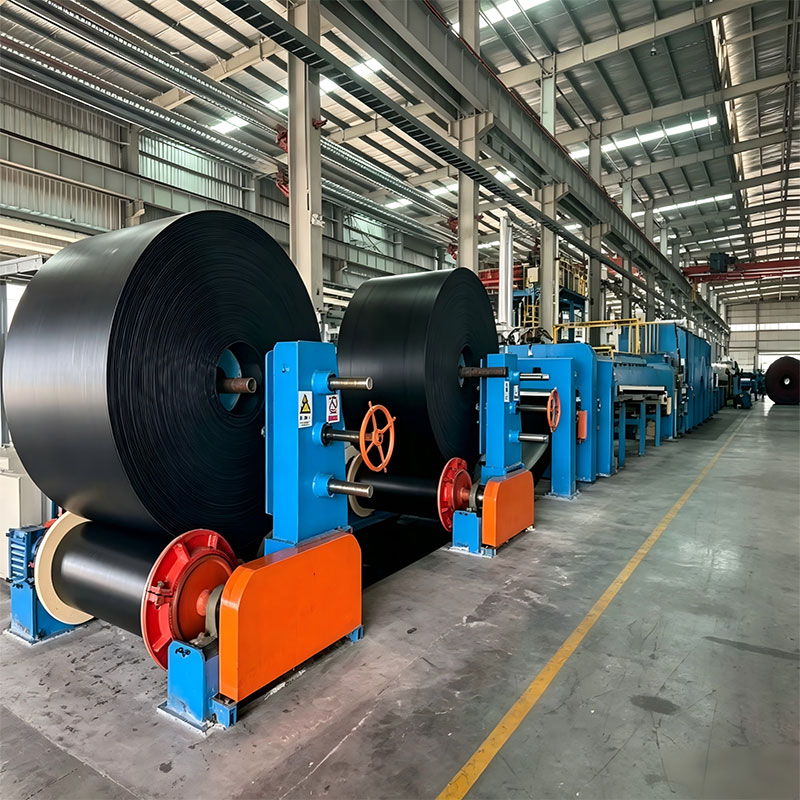
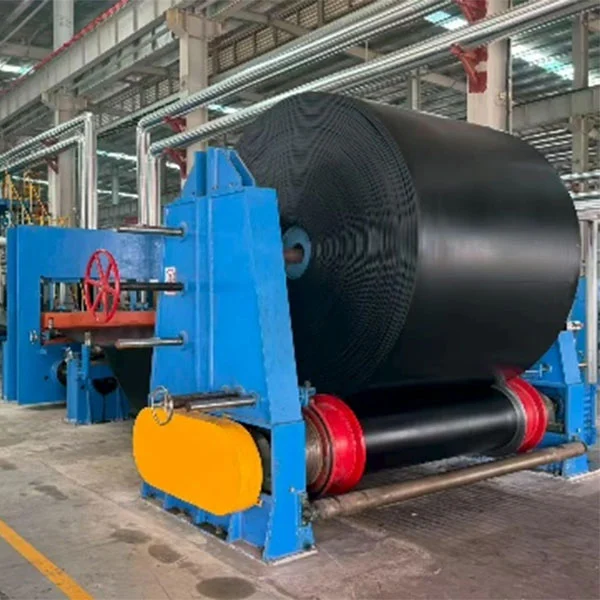
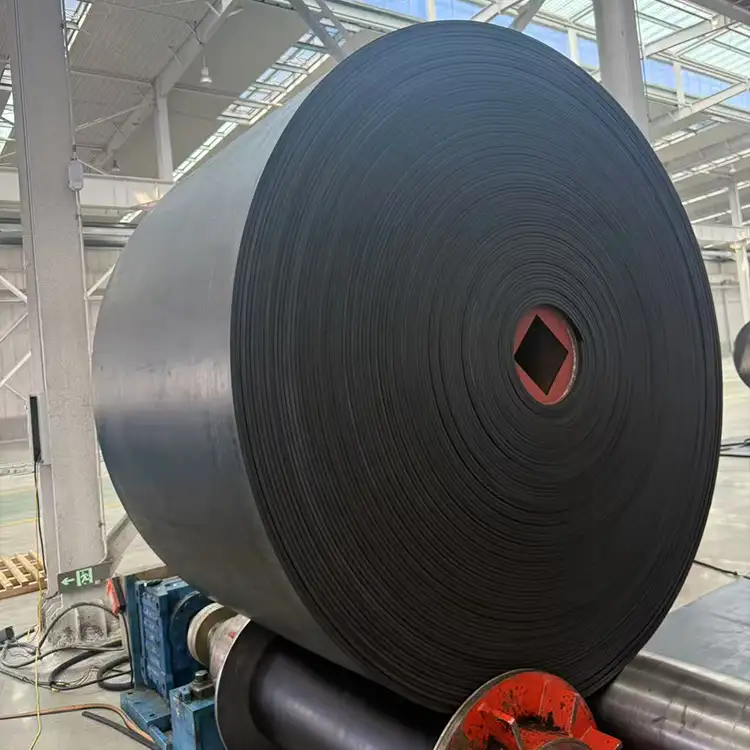
Qingdao Global Belting Group Co., Ltd. builds cross rigid conveyor belts for cement plants at its own factory in Qingdao, Shandong, China. Carcass, transverse reinforcement and cover compound are produced and tested under one quality plan, so the belt that leaves the plant is the construction that was quoted.
Most enquiries reach us with a plant layout drawing, a belt marking from the line being replaced, or a tender schedule. We read it, confirm the ply count and cover grade that fit, and quote against it.
Four values decide both the price and whether the belt will last on a cement line. Send them with the enquiry and the quotation does not need a second round of questions.
Widths from 500 mm to 2400 mm and most wear and heat-resistant compounds are standard for us, so those orders move to production quickly. Anything tied to a plant approval or a non-standard ply count is scheduled once the documents are agreed. The full range sits under cross rigid conveyor belts.
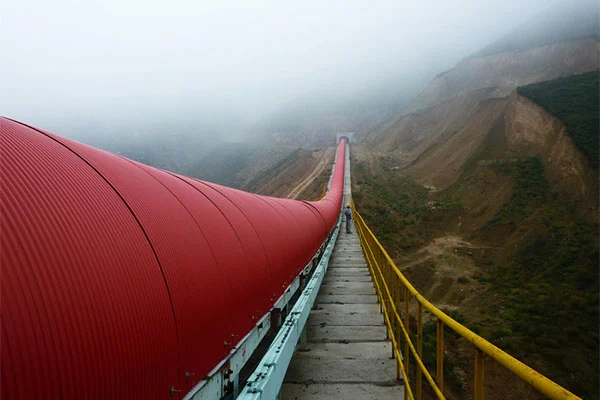
An ordinary fabric belt sags between idlers once the span widens or the load gets heavy. The trough closes up, coal or clinker spills at the edges, and the belt starts to run off centre. The fix is not a thicker cover — it is stiffness in the wrong direction, added inside the carcass.
Transverse steel or synthetic cords are laid across the carcass during building. They resist bending across the width, which is exactly the direction a sagging belt bends, while leaving the belt free to flex lengthwise over pulleys.
Fabric plies and transverse layers are calendered and vulcanised together. Adhesion between them is controlled in production rather than inspected afterwards, which is what stops the reinforcement separating under repeated flexing at the pulleys.
Wear-resistant compound handles raw meal and crushed rock. For kiln discharge and cooler duty, a heat-resistant compound is used so the cover does not crack and harden under repeated thermal cycling. That compound is selected under our heat resistant conveyor belts range.
A splice in a cross rigid belt is not the same as a splice in a plain fabric belt. Step length and splice material follow the carcass, and both are quoted with the belt rather than sourced on site.
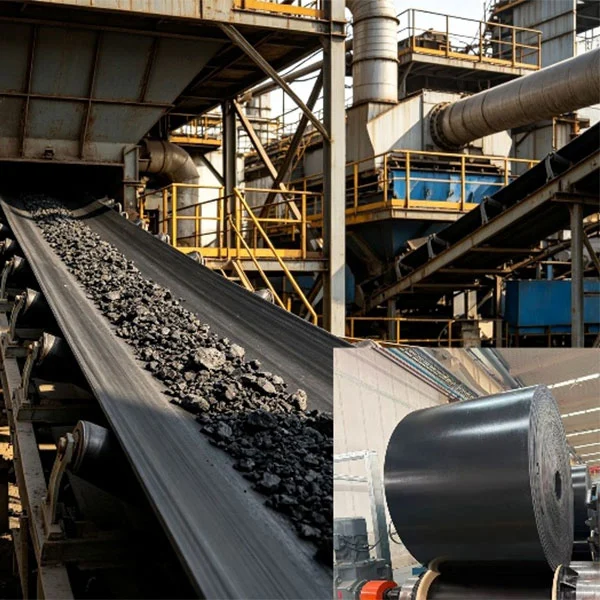
Material suitability. Recommended for clinker, raw mix and abrasive aggregates. Heat-resistant grades are used for hot clinker handling.
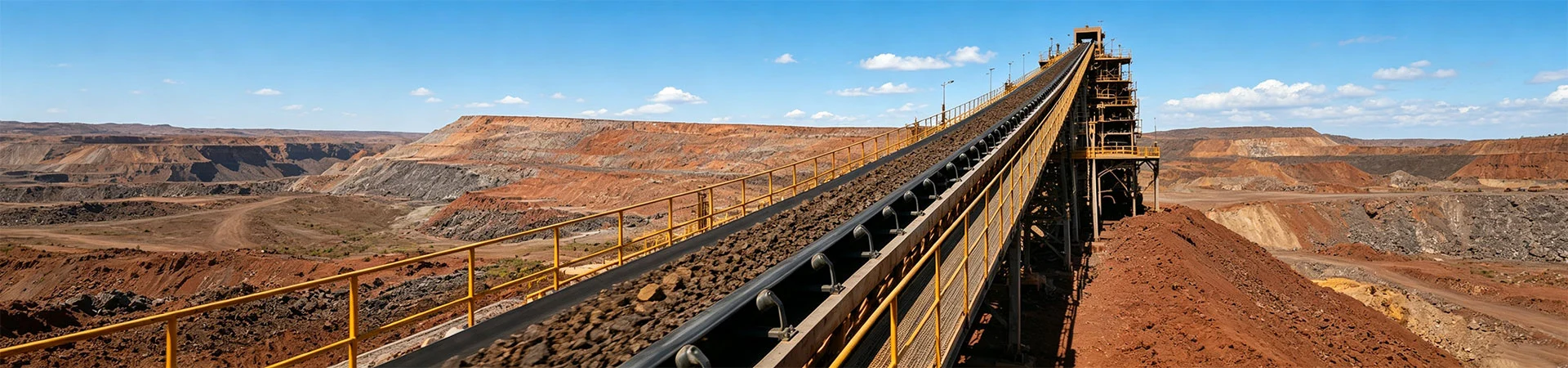
Tensile rating. The belt rating is set by conveyor center distance, lift height, material lump size and hourly throughput, not by a single number in a catalogue.
Rubber grade selection. Standard wear-resistant compounds suit raw meal and aggregates. Heat-resistant formulations are used where clinker temperatures are elevated.
Operating conditions. The belt is designed for continuous cement plant operation. State both the normal and the surge material temperature when enquiring, because a belt specified on the average temperature alone is a belt that fails at the kiln discharge.
|
Item |
Specification |
|
Product Name |
Cross Rigid Belt for Cement Plant |
|
Carcass Structure |
Fabric plies with cross-rigid reinforcement |
|
Belt Width |
500 mm – 2400 mm |
|
Mechanical Properties |
High transverse stiffness, controlled sag between idlers |
|
Cover Rubber |
Wear-resistant or heat-resistant grades; customizable thickness |
|
Roll Lengths |
Cut and spliced to project length requirements |
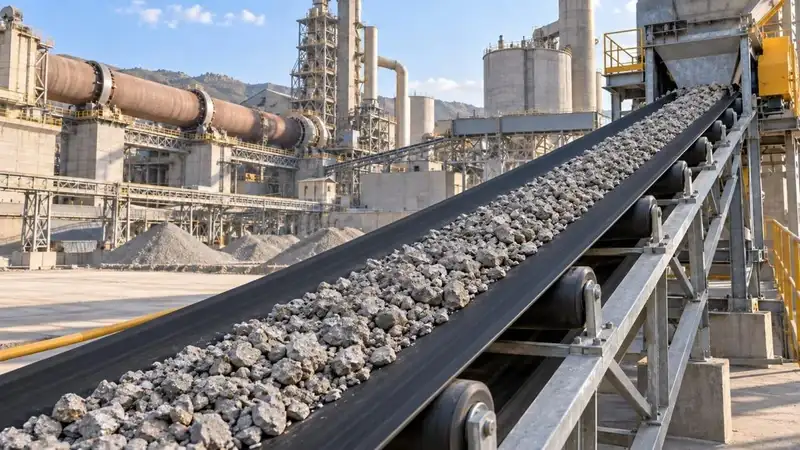
Technical capability. We have supplied cross rigid belt systems for complete cement production lines. Support covers belt selection, power and tension calculations, and on-site splicing procedure.
Manufacturing standards. Belts are produced to DIN, ISO and GB/T specifications. Material certificates and factory test reports are issued with the shipment, not held back until someone asks.
Engineering support. Pre-sale technical evaluation, hot splicing guidance and operational monitoring support are part of the order, not a paid extra.
Quality control. Production is in-house, and every batch is tested for tensile strength, elongation, adhesion and cover abrasion loss before dispatch. Quality is signed off batch by batch at the factory rather than claimed on a data sheet.
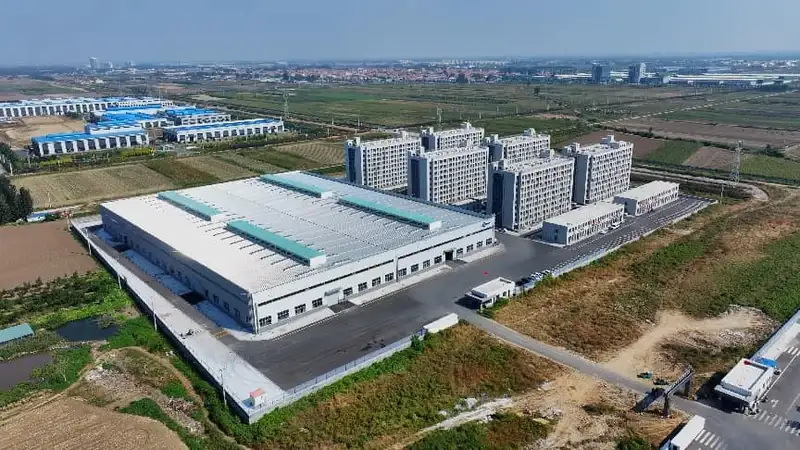
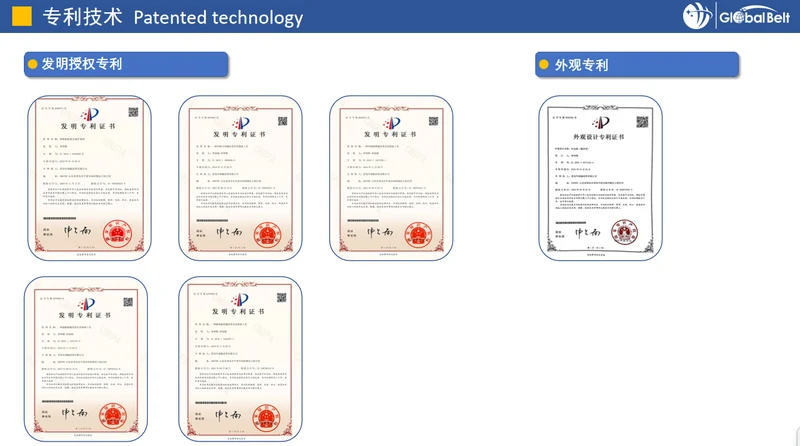
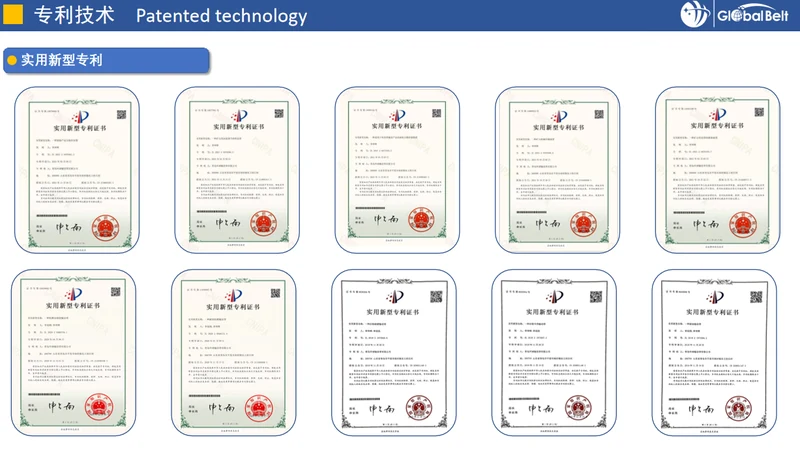
A low price on a cross rigid belt comes from where it is made, not from what has been left out of it. Because the carcass is built and vulcanised in our own factory in China, standard widths and cover grades can be offered at factory direct pricing, and customized specifications are quoted when the plant standard requires them.
Cheap belts are cheap for a reason, and the reason is usually a missing ply or a thinner cover. A belt replaced twice on a clinker line costs more than a belt bought once, and the stoppage never appears on the price list. If one quotation is far below the others, ask which layer changed.
A free sample of the available cover compound can be sent for evaluation, and a short length for splice trials where the order size supports it. Sample dispatch is normally 5–7 working days. As the supplier of record we handle the technical review before quotation, and as the exporter we issue the shipping documents on FOB and CIF terms, with rolls marked Made in China and packed for sea freight.
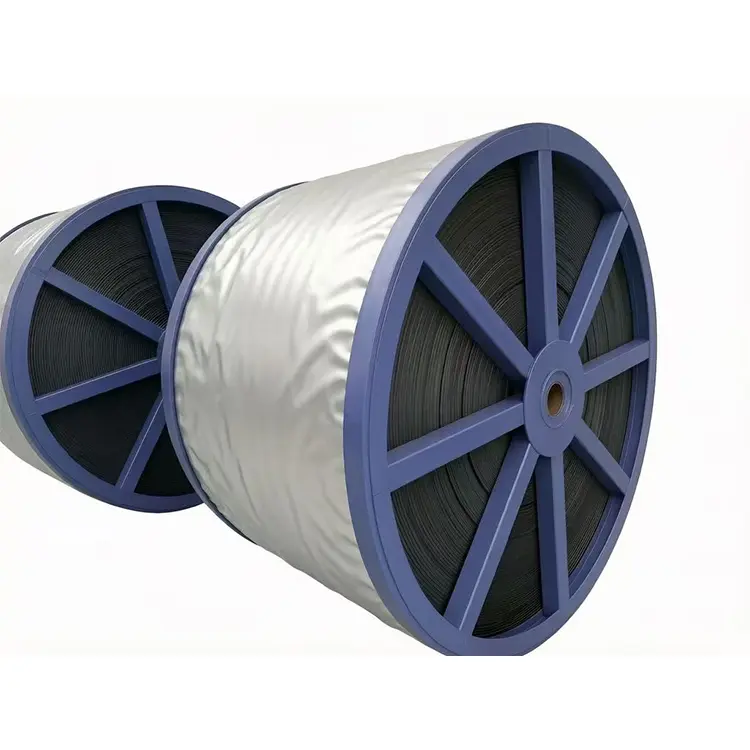
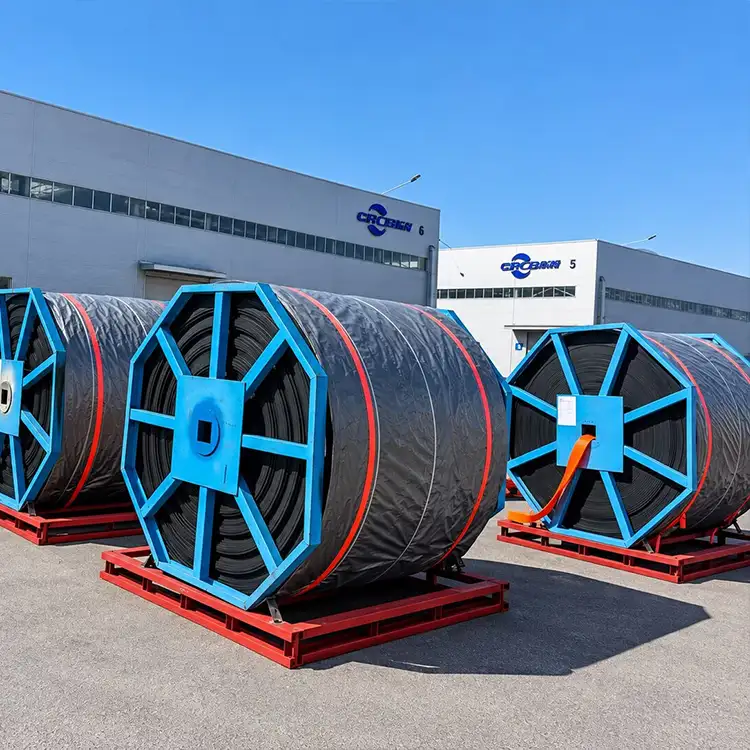
Standard packaging. Belt rolls are wrapped in moisture-proof plastic film with an outer woven poly-bag to keep dust and humidity out during transit.
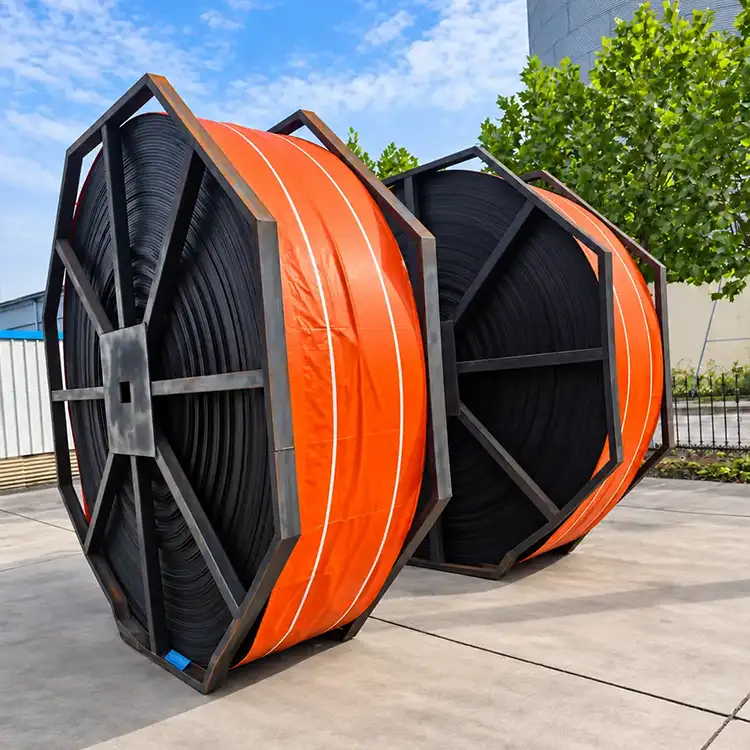
Custom packaging. Cassette reels, steel cradles and octagonal wooden frames are available where the site needs simpler handling and unrolling.
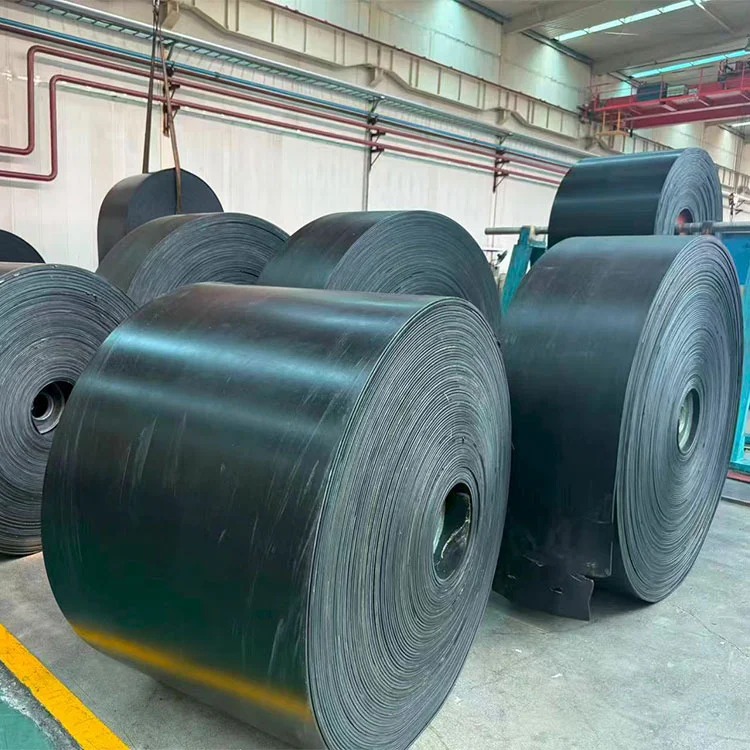
Marking and labelling. Each roll carries weather-proof stencilling showing specification, roll width, total length, batch number and manufacture date.
Container loading. Rolls are blocked, braced and strapped inside export containers so nothing moves during ocean transport.
A cross rigid belt carries transverse steel or synthetic reinforcement inside the carcass. That raises lateral stiffness and limits sag between idlers, while the belt keeps normal longitudinal flexibility over pulleys. The practical result is less material spillage along the line.
Yes. Heat-resistant EPR/EPDM cover compounds are selected against the operating material temperature, and typically handle continuous service up to 180 °C with peak surges to 200 °C. Tell us the surge temperature, not just the average.
Yes. Belt width, tensile rating, ply count and both top and bottom cover thickness are set from bulk density, lump size, drop height and hourly capacity. Where the plant standard calls for a specific construction, send the belt marking from the line being replaced.
Center distance, lift height, capacity, lump size, material temperature, belt width, roll length and the plant standard if one applies. Standard widths and cover grades usually move into production within a few days; orders tied to a specific approval are scheduled once the documents are agreed.
Send the plant layout, material and temperature, capacity, belt width, roll length, cover grade and the plant standard that applies. If a belt marking or drawing from the existing line is available, attach it — that shortens the technical review considerably. For long overland runs, tell us the center distance so we can compare a cross rigid fabric construction against steel cord conveyor belts before quoting.
Address
Nancun Industrial district, Qingdao, Shandong, China
Tel