Email
WhatsApp

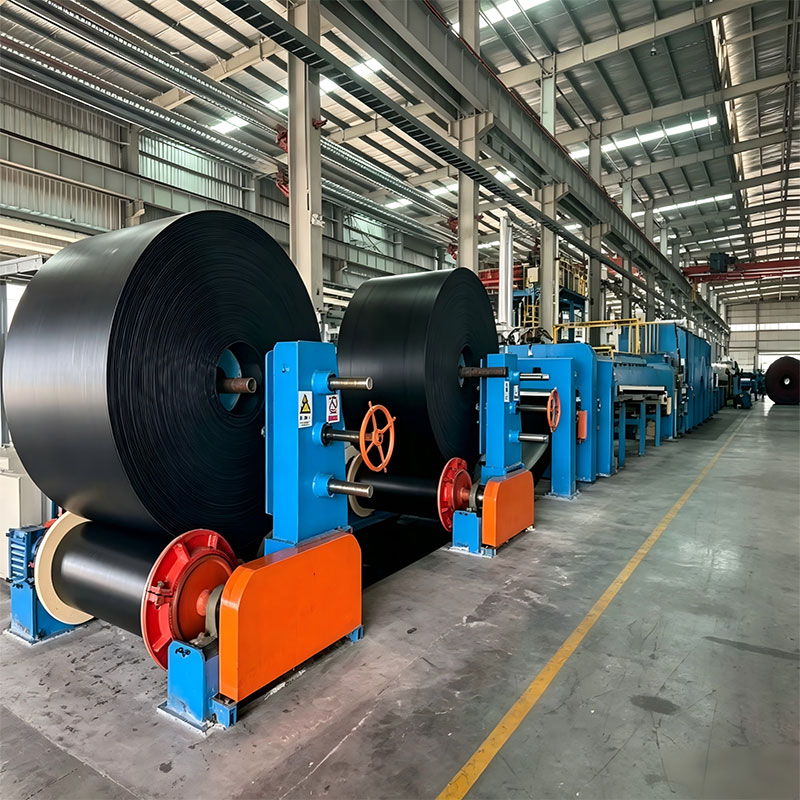
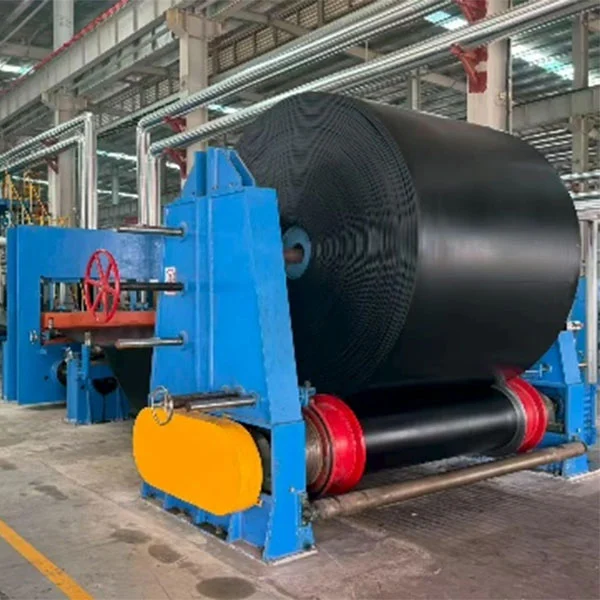
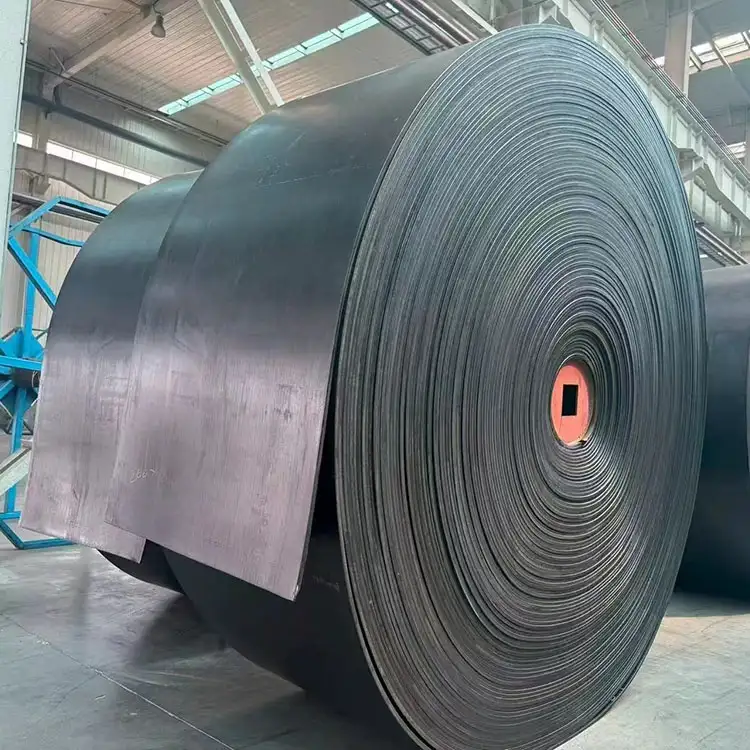
On an abrasion-resistant straight-warp belt, two jobs sit in two different layers. The carcass carries tension and holds the belt's shape; the rubber cover absorbs the wear. Abrasion Resistant Straight Warp Conveyor Belts from Global Belt Group are built on that split: cover compound and cover thickness are chosen separately, according to the material being conveyed and the conditions it runs in.
Straight-warp carcass: longitudinal polyester warp yarns run in the direction of belt travel, polyamide weft yarns cross the belt, and binder yarns lock the reinforcement into one structure.
Carcass construction: mono-ply and dual-ply versions are both available. The right choice depends on belt strength, conveyor tension and the duty the belt has to handle.
Flexibility and fatigue performance: the straight-warp layout is built for repeated bending around pulleys, so the belt keeps flexing without cracking through the carcass.
Shock and impact resistance: transfer points drop material onto the belt with force. The straight-warp structure is designed to take that loading without losing shape or integrity.
Troughability: the carcass forms a stable trough on standard idler sets and keeps material centred along the carry side. Idler configuration, belt width and conveyor geometry should be checked against the selected construction.
Abrasion-resistant cover: cover compound and thickness are matched to material abrasiveness, particle size, drop height, loading impact and expected wear. Cover grade and test requirements are fixed in the product specification.
The table below lists what defines an Abrasion Resistant Straight Warp Conveyor Belt for a given conveyor. Each order is built to these values rather than to a single stock specification.
| Specification Item | Selection / Confirmation |
| Carcass type | Straight-warp construction |
| Reinforcement arrangement | Longitudinal polyester warp / transverse polyamide weft with binder yarns |
| Ply construction | Mono-ply or dual-ply; availability and suitability confirmed per order |
| Belt tensile strength | Matched to conveyor design |
| Belt width | Cut to conveyor layout |
| Top cover compound | Abrasion-resistant rubber; grade specified per application |
| Top cover thickness | Set by wear duty |
| Bottom cover compound and thickness | Selected for pulley and support conditions |
| Total belt thickness | Fixed once the construction is selected |
| Pulley diameter | Checked against belt construction and operating tension |
| Operating conditions | Material, lump size, throughput, speed, temperature and impact conditions |
| Test requirements | Abrasion test method and acceptance criteria agreed in the technical specification |
Note: strength grades, belt-width ranges, cover grades and abrasion test results are set per order. They are agreed in the technical specification and confirmed before production, not assumed from a catalogue page.
Straight-warp reinforcement: polyester warp, polyamide weft and binder yarns form one locked carcass.
Flexural fatigue resistance: built for repeated bending; service life depends on the selected construction and the conveyor's geometry.
Shock and impact resistance: the carcass takes drop loading at transfer points and keeps its structure.
Troughability: the design supports clean trough formation on compatible conveyor systems.
Application-matched abrasion protection: cover compound and thickness are specified to the material and wear conditions. Abrasion Resistant Straight Warp Conveyor Belts are therefore configured per project, not pulled from a single grade.
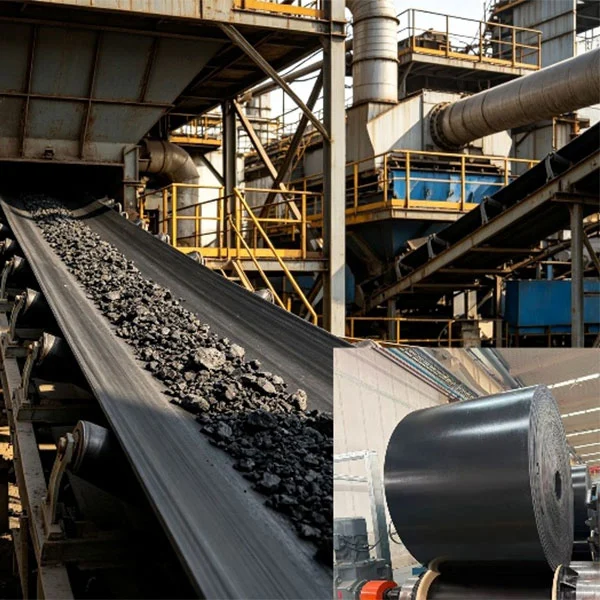
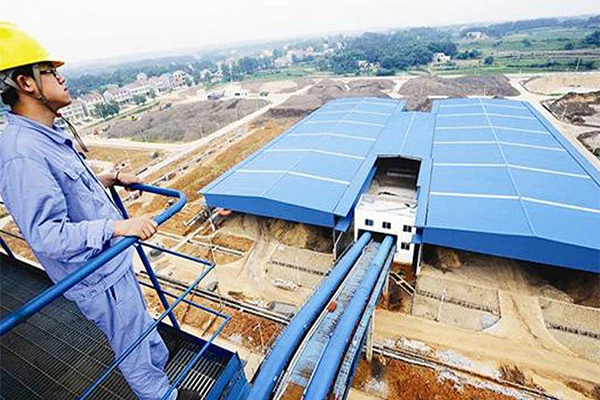
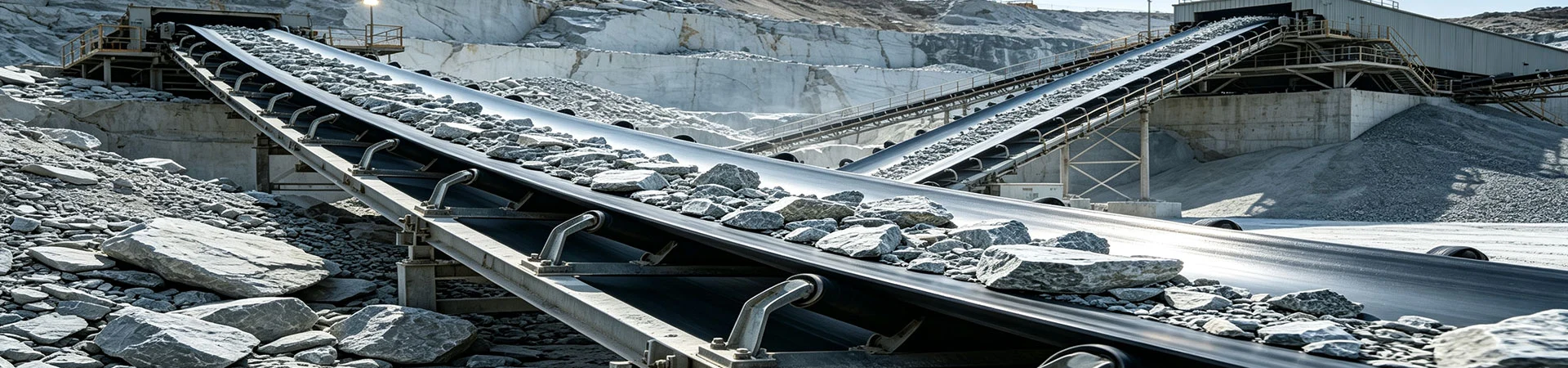
Mining and mineral processing: ores and mined material through crushing, screening, stockpiling and processing.
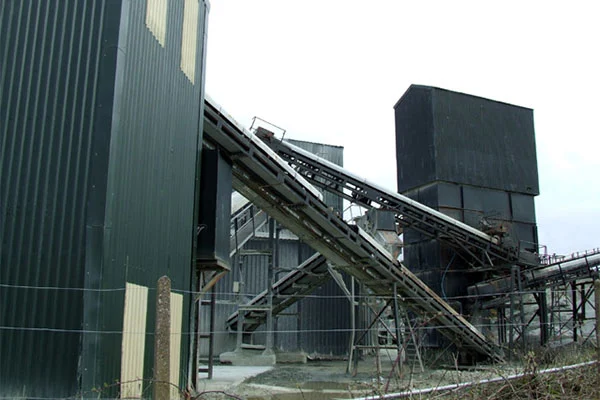
Quarries and aggregates: crushed stone, gravel and other abrasive material in heavy-duty conveying systems.
Ports and bulk terminals: bulk transfer between unloading, stockyard, storage and loading facilities.
Steel and metallurgical plants: raw materials and bulk feedstocks where impact and abrasion are part of the operating duty.
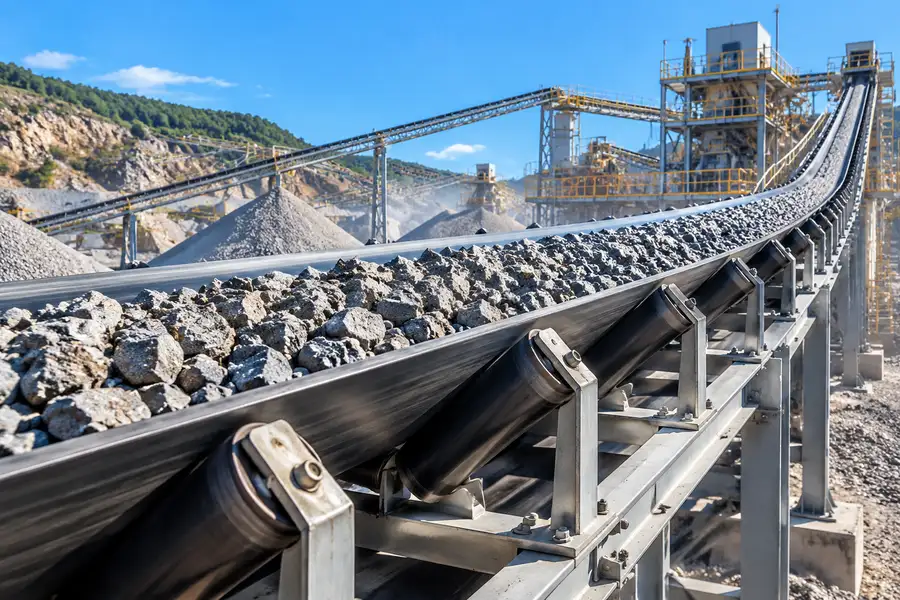
Application assessment: review material type, particle size, bulk density, throughput, drop height, loading impact and operating environment.
Carcass selection: match the straight-warp reinforcement and mono-ply or dual-ply construction to conveyor tension and required belt performance.
Cover selection: define the abrasion-resistant cover compound, thickness, test method and acceptance criteria against the actual wear duty.
Conveyor compatibility: review troughability, idler arrangement, pulley diameters, transition areas, belt speed and splice design.
Production and inspection: agree dimensional, appearance, adhesion and mechanical inspection requirements, together with product identification and batch traceability.
Straight-warp carcass options for demanding bulk material conveying.
Mono-ply and dual-ply constructions matched to project requirements.
Abrasion-resistant cover selection based on the actual conveyed material and wear conditions.
Technical coordination on belt construction, troughability and conveyor geometry.
Agreed inspection requirements, product identification and export packing arrangements.
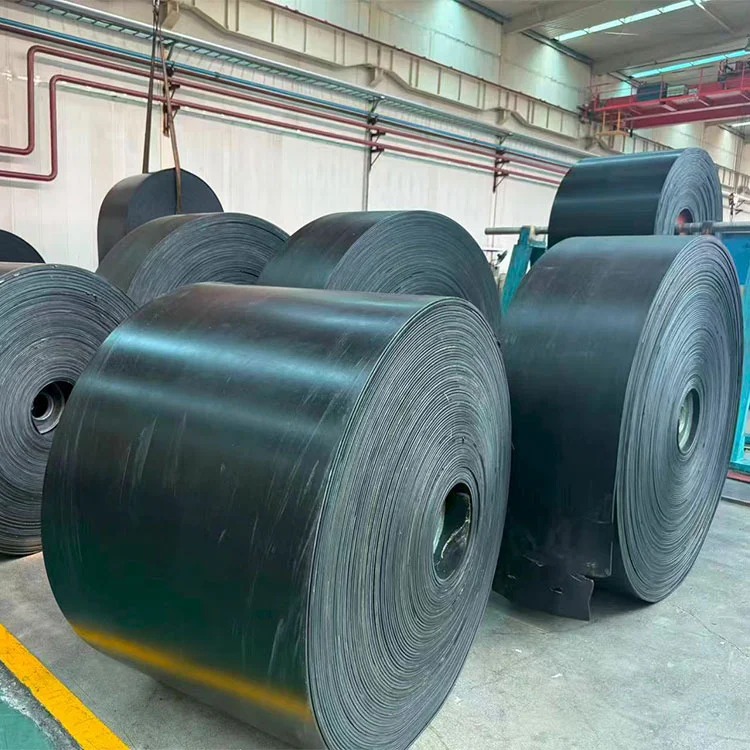
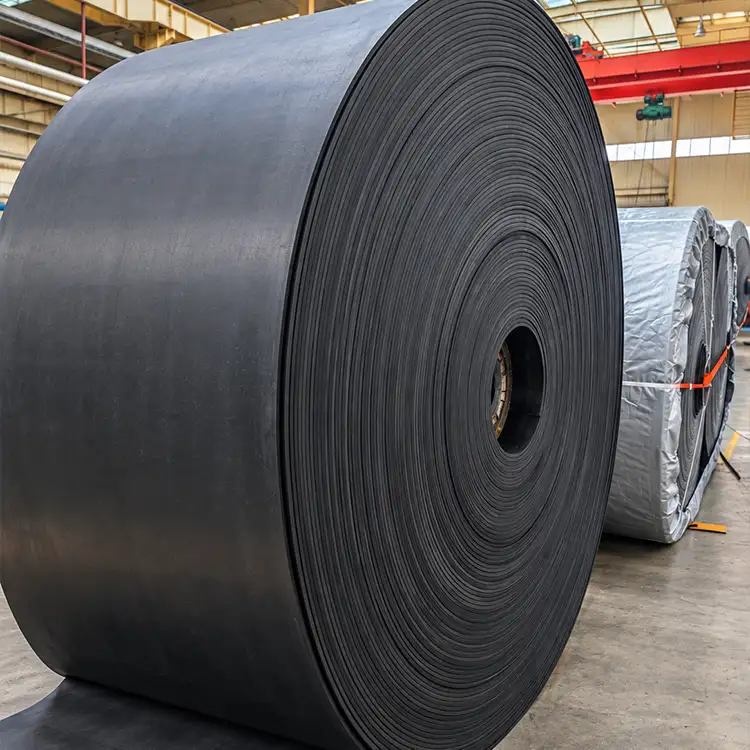
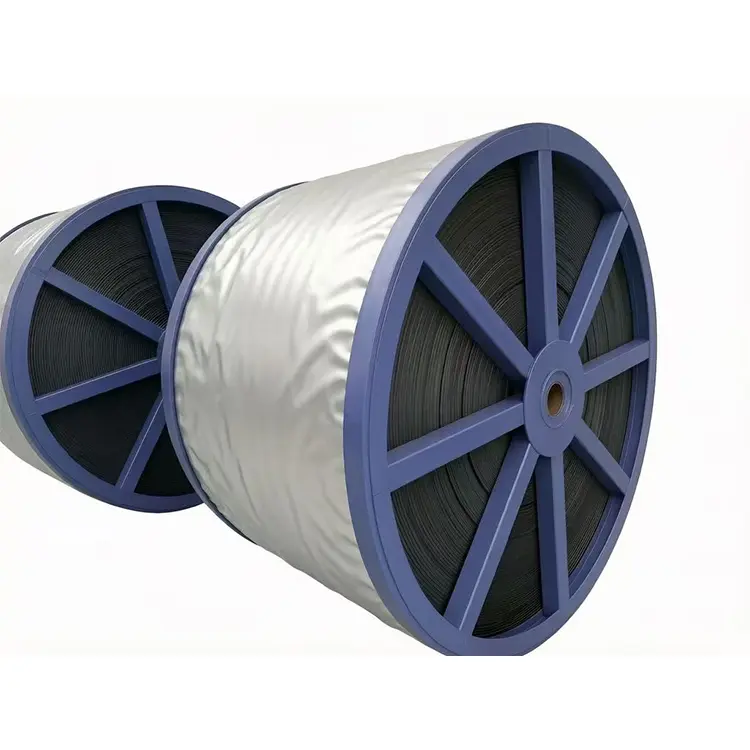
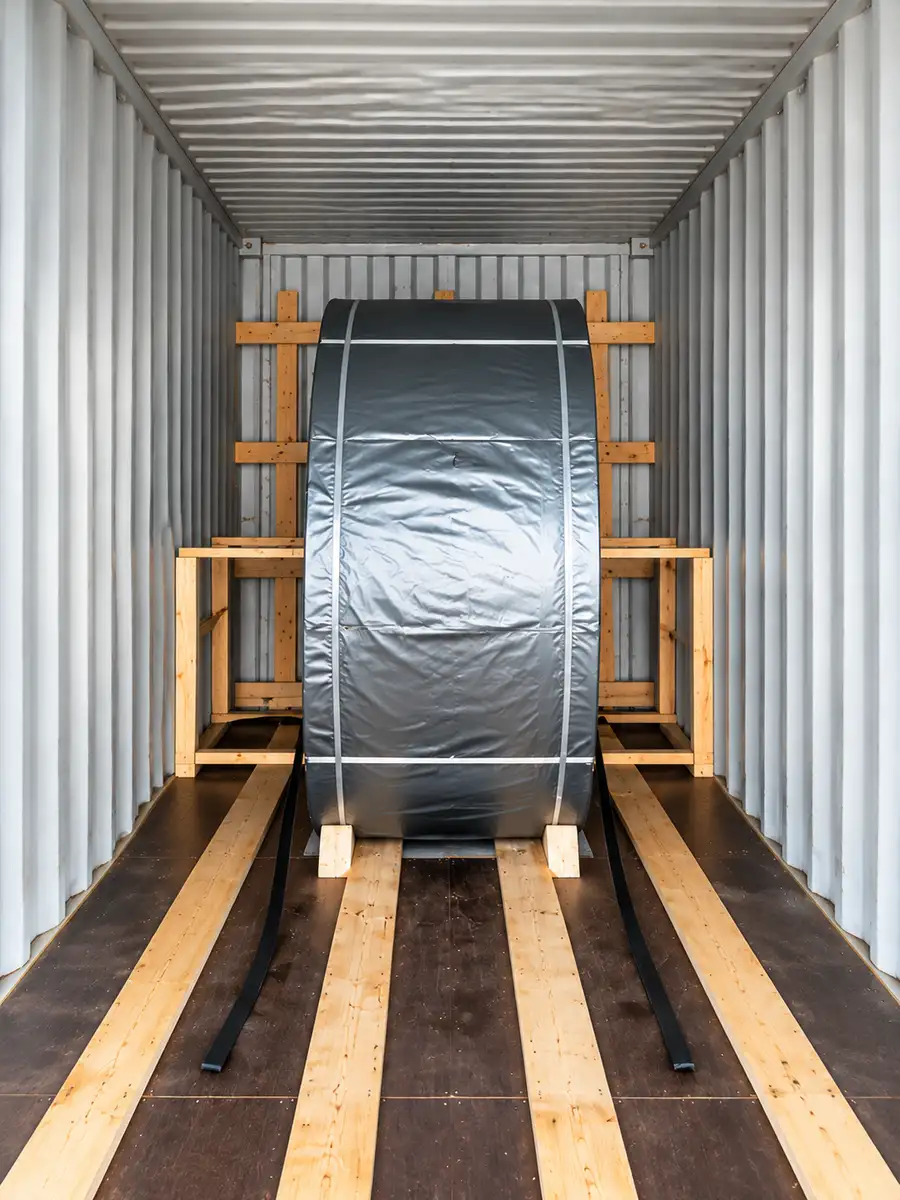
Roll protection: belt covers and edges are protected against moisture, contamination, impact and handling damage during storage and transport.
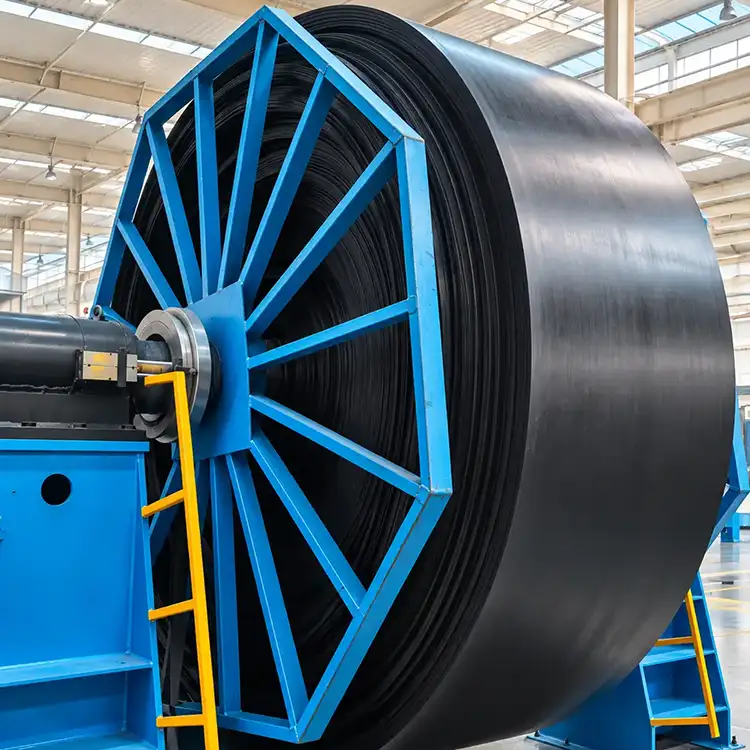
Reel and support: roll dimensions, reel or support arrangement, lifting method and roll weight are confirmed before shipment.
Identification: each roll is labelled with order reference, belt construction, dimensions, cover specification, roll length and batch or roll number.
Transport securing: rolls are blocked and secured to prevent movement, deformation and damage in transit.
A: It is a carcass built from polyester warp yarns running along the belt, polyamide weft yarns running across it, and binder yarns holding the structure together.
A: It carries the belt's tension and holds its shape. The rubber covers protect the surfaces and are selected for the wear conditions.
A: Yes. Both constructions are offered, and the right one is confirmed against belt strength, conveyor tension and application requirements.
A: It resists flexural fatigue, takes shock and impact loading, and troughs reliably. Final performance depends on the belt specification and the conveyor design.
A: Through the cover compound and its test requirements. Cover grade and acceptance criteria are confirmed in the technical specification for each order.
A: Yes. Construction, dimensions and cover configuration are selected to the conveyor layout, material characteristics and operating conditions.
Address
Nancun Industrial district, Qingdao, Shandong, China
Tel